
GFAP Rabbit Polyclonal Antibody

Specifications
| Product Data | |
| Application | WB |
|---|---|
| Recommended Dilution | WB:1/1000 |
| Reactivity | Human |
| Antibody Host | Rabbit |
| Isotype | IgG |
| Clonality | Polyclonal |
| Immunogen | This GFAP antibody is generated from rabbits immunized with a KLH conjugated synthetic peptide between 10-40 amino acids from the N-terminal region of human GFAP. |
| Specificity | This GFAP antibody is generated from rabbits immunized with a KLH conjugated synthetic peptide between 10-40 amino acids from the N-terminal region of human GFAP. |
| Buffer | Purified polyclonal antibody supplied in PBS with 0.09% (W/V) sodium azide. |
| Concentration | lot specific |
| Purification | Purified polyclonal antibody supplied in PBS with 0.09% (W/V) sodium azide. This antibody is prepared by Saturated Ammonium Sulfate (SAS) precipitation followed by dialysis against PBS. |
| Conjugation | Unconjugated |
| Storage | Store at -20°C as received. |
| Stability | Shelf life: one year from despatch. |
| Shipping | Blue Ice |
| Predicted Protein Size | 49.9 kDa |
| Gene Name | glial fibrillary acidic protein |
| Database Link | |
| Background | GFAP is one of the major intermediate filament proteins of mature astrocytes. It is used as a marker to distinguish astrocytes from other glial cells during development. Mutations in this gene cause Alexander disease, a rare disorder of astrocytes in the central nervous system. |
| Synonyms | ALXDRD |
| Reference Data | |
| Protein Families | ES Cell Differentiation/IPS |
Reviews


Documents
| Product Manuals |
| FAQs |
| SDS |
Citations
Expandable Sendai-Virus-Reprogrammed Human iPSC-Neuronal Precursors: In Vivo Post-Grafting Safety Characterization in Rats and Adult Pig
Kobayashi, Shigyo, Platoshyn et al
Cell Transplant (2023) 32, 9636897221107009 DOI: 10.1177/09636897221107009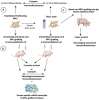
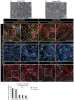
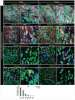
Kobayashi, Shigyo, Platoshyn et al
Cell Transplant (2023) 32, 9636897221107009 DOI: 10.1177/09636897221107009
Cited by 5
AI Summary: In this study, the OriGene Human GFAP antibody (catalog # TA302094) was used to assess glial differentiation of grafted human iPSC-derived neural precursor cells, contributing to the evaluation of cell fate after transplantation.
Snippet: …Similarly, spinal grafting of iPSC-derived glial-rich NPCs improved survival of ALS SOD1-mice. Grafted cells differentiated preferentially into as;SC-8066 DCX Santa Cruz biotechnology Ab16667 Ki67 abcam MMS-435P TUJ Covance Ab36999 Human NuMA abcam TA302094 Human GFAP Origene 134014 NeuN Abcam
Derivation of Sendai-Virus-Reprogrammed Human iPSCs-Neuronal Precursors: In Vitro and In Vivo Post-grafting Safety Characterization
Shigyo, Kobayashi, Platoshyn et al
Cell Transplant (2023) 32, 9636897231163232 DOI: 10.1177/09636897231163232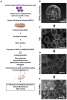
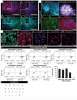
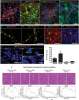
Shigyo, Kobayashi, Platoshyn et al
Cell Transplant (2023) 32, 9636897231163232 DOI: 10.1177/09636897231163232
Cited by 5
AI Summary: OriGene’s Human GFAP antibody (TA302094) was used in this study to identify and characterize human glial cells derived from induced pluripotent stem cell-derived neuronal precursors, contributing to the assessment of cell identity and safety post-grafting.
Snippet: ABN78 NeuN Millipore Sigma S4403 MAP2 Sigma Sc-8066 DCX Santa Cruz G3893 GFAP Sigma AB5541 GFAP Chemicon TA302094 Human GFAP Origene 50-6525-80 Synaptophysin eBioSciences VP-S285 Synaptophysin Vector laboratories Sc-73650 GAD65 Santa Cruz biotechnology AB5905 VGLUT1 Millip
Spinal parenchymal occupation by neural stem cells after subpial delivery in adult immunodeficient rats
Marsala, Kamizato, Tadokoro et al
Stem Cells Transl Med (2019) 9 (2), 177-188 DOI: 10.1002/sctm.19-0156
Marsala, Kamizato, Tadokoro et al
Stem Cells Transl Med (2019) 9 (2), 177-188 DOI: 10.1002/sctm.19-0156
Cited by 14
The alpha-melanocyte-stimulating hormone acts as a local immune homeostasis factor in experimental allergic asthma
Webering, Lunding, Vock et al
Clin. Exp. Allergy (2019) 49 (7), 1026-1039 DOI: 10.1111/cea.13400
Webering, Lunding, Vock et al
Clin. Exp. Allergy (2019) 49 (7), 1026-1039 DOI: 10.1111/cea.13400
AI Summary: OriGene products, specifically the MC5R antibody (Acris Antibodies, now part of OriGene), were used for immunohistochemical staining to assess receptor expression in lung tissue, contributing to the study’s investigation of α-MSH’s role in immune regulation during experimental allergic asthma.
Snippet: Immunohistochemical staining was performed using 2 µm tissue sections with polyclonal antibodies against α-MSH (Phoenix Pharmaceuticals Inc., Burlingame, USA;1:500) and MC5R (Acris Antibodies GmbH, Herford, Germany;1:200). Prior to staining against α
Chemotherapy accelerates age-related development of tauopathy and results in loss of synaptic integrity and cognitive impairment
Chiang, Huo, Kavelaars et al
Brain Behav. Immun. (2019) 79, 319-325 DOI: 10.1016/j.bbi.2019.04.005
Chiang, Huo, Kavelaars et al
Brain Behav. Immun. (2019) 79, 319-325 DOI: 10.1016/j.bbi.2019.04.005
AI Summary: No OriGene products were mentioned or used in this paper.
Snippet: … Slides were incubated with the following antibodies: mouse anti-Tau-1 (1:200, Millipore), mouse anti-phospho-Tau (AT8) (1:100, Thermo Scientific), rabbit anti-GFAP (1:1000, Acris Antibodies), rabbit anti-Iba-1 (1:500, Wako), rabbit anti-synaptophysin (1:1000, Millipore), rabbit anti-PSD95 (1:1000, Abcam), followed by secondary antibody incubation in Alexa-488 goat-anti-r;- Slides were incubated with the following antibodies: mouse anti-Tau-1 (1:200, Millipore), mouse anti-phospho-Tau (AT8) (1:100, Thermo Scientific), rabbit anti-GFAP (1:1000, Acris Antibodies), rabbit anti-Iba-1 (1:500, Wako), rabbit anti-synaptophysin (1:1000, Millipore;
Astrocytes migrate from human neural stem cell grafts and functionally integrate into the injured rat spinal cord
Lien, Tuszynski, Lu
Exp. Neurol. (2019) 314, 46-57 DOI: 10.1016/j.expneurol.2019.01.006
Lien, Tuszynski, Lu
Exp. Neurol. (2019) 314, 46-57 DOI: 10.1016/j.expneurol.2019.01.006
AI Summary: OriGene’s human-specific glial fibrillary acidic protein (hGFAP) rabbit polyclonal antibody (TA302094) was used in this study to assess the differentiation and integration of human graft-derived astrocytes in the injured rat spinal cord.
Snippet: migration of grafted human cells;(c) Ki67 rabbit polyclonal antibody (gtx16667;Genetex;1:500) was used to assess proliferation of migrated grafted human cells;(d) Human-specific vimentin mouse monoclonal antibody (nbp2–44,833;Novus Biologicals;1:500) was used to assess differentiation of grafted human cells into glial progenitor cells;(e) Human-specific glial fibrillary acidic protein (hGFAP) rabbit polyclonal antibody (TA302094;Origene;1:500) was used to assess differentiation and integration of human grafted-derived astrocytes;(f) glial fibrillary acidic protein (GFAP) goat polyclonal antibody (sc-6170;Santa Cruz Biotechnology;1:500) was used to assess endogenous rat as well as human graft-derived populations of astrocytes;(g) adenomatous polyposis coli (APC) mouse monoclonal antibody (OP80;Oncogene;1:500) and myelin basic protein (MBP) rabbit polyclonal antibody
Showing 1-6 of 10 papers.
Powered by BizGenius
*Delivery time may vary from web posted schedule. Occasional delays may occur due to unforeseen
complexities in the preparation of your product. International customers may expect an additional 1-2 weeks
in shipping.
Related Products
- Price:
- Actual Price:
Welcome to OriGene AI!
I'm your AI-powered guide to everything OriGene.
Ask me anything:
- Product specs
- Ordering help
- Technical questions
- How to find exactly what your experiment needs
Prefer a live agent? Connect with us by clicking the green chat icon, as seen in the image below or email our team at custsupport@origene.com.
