
Monocarboxylic acid transporter 1 (SLC16A1) Rabbit Polyclonal Antibody

Specifications
| Product Data | |
| Application | IHC |
|---|---|
| Recommended Dilution | IHC: 50-200 Positive control: Human liver cancer Predicted cell location: Cytoplasm, Cell membrane |
| Reactivity | Human |
| Antibody Host | Rabbit |
| Isotype | IgG |
| Clonality | Polyclonal |
| Immunogen | Synthetic peptide corresponding to a region derived from 486-500 amino acids of Human solute carrier family 16, member 1 (monocarboxylic acid transporter 1) |
| Buffer | PBS pH7.3, 0.05% NaN3, 50% glycerol |
| Concentration | lot specific |
| Purification | Antigen affinity purification |
| Conjugation | Unconjugated |
| Storage | Store at -20°C as received. |
| Stability | Stable for 12 months from date of receipt. |
| Shipping | Blue Ice |
| Gene Name | solute carrier family 16 member 1 |
| Database Link | |
| Background | The protein encoded by this gene is a proton-linked monocarboxylate transporter that catalyzes the movement of many monocarboxylates; such as lactate and pyruvate; across the plasma membrane. Mutations in this gene are associated with erythrocyte lactate transporter defect. Alternatively spliced transcript variants have been found for this gene. |
| Synonyms | HHF7; MCT; MCT1; MCT1D |
| Reference Data | |
| Protein Categories | Cytokines, Membrane Proteins |
| Protein Families | Transmembrane |
Reviews


Documents
| Product Manuals |
| FAQs |
| SDS |
Citations
Neuronal migration depends on blood flow in the adult mammalian brain
Ogino, Saito, Sawada et al
Elife (2025) 13 DOI: 10.7554/eLife.99502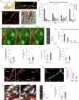
Ogino, Saito, Sawada et al
Elife (2025) 13 DOI: 10.7554/eLife.99502
AI Summary: OriGene’s rabbit anti-SLC16A1 antibody (TA321556) was used in this study to detect SLC16A1 protein expression, contributing to the analysis of molecular mechanisms underlying neuronal migration in the adult mammalian brain.
Snippet: (1:100, Dako);rat anti-endomucin (1:500, sc-65495, Santa Cruz Biotechnology);rat anti-BrdU (1:100, ab6326, Abcam);rabbit anti-NeuN (1:1000, ab177487, abcam);rabbit anti-SLC16A1 (1:500, TA321556, Origene);rat anti-Ki67 (1:500, #14-5698-82, eBioscience);and rabbit anti-cleaved caspase-3 (1:200, #9661, Cell Signaling Technology). Nuclei were stained with Hoechst (1:5000, H1399, Thermo Fisher S
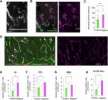
Neuronal MCT2 promotes angiogenesis via lactate in the developing mouse neocortex
Lee, Wu, Yao et al
Cell Death Differ (2025)
Lee, Wu, Yao et al
Cell Death Differ (2025)
Cited by 9
AI Summary: OriGene's rabbit polyclonal anti-SLC16A1/MCT1 antibody (TA321556) was used in this study to detect MCT1 expression in endothelial cells, helping to elucidate the molecular mechanisms by which neuronal MCT2 promotes angiogenesis in the developing mouse neocortex.
Snippet: The following primary antibodies were used: rat monoclonal anti-CD31/PECAM (BD Biosciences, 553369);rabbit polyclonal anti-SLC16A1/MCT1 (Origene, TA321556);rabbit polyclonal anti- SLC16A7/MCT2 (Millipore Sigma, AB3542);rabbit polyclonal anti-SLC16A8/MCT3 (Novus Biologicals, NBP1-59885);mouse monoclonal anti-SMA-647 (Santa Cruz Biotechnology, sc-32251)
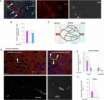
Single-cell atlas of endothelial and mural cells across primary and metastatic brain tumors
Bejarano, Lourenco, Kauzlaric et al
Immunity (2025) 58 (4), 1015-1032.e6 DOI: 10.1016/j.immuni.2025.02.022
Bejarano, Lourenco, Kauzlaric et al
Immunity (2025) 58 (4), 1015-1032.e6 DOI: 10.1016/j.immuni.2025.02.022
Cited by 41
AI Summary: In this study, OriGene's anti-human SLC16A1 (rabbit polyclonal, Cat# TA321556) antibody was used for immunofluorescence to help characterize vascular cell subtypes in brain tumors.
Snippet: IF: anti-human ESM-1 (mouse monoclonal MEP08) Biothelis Cat# LIA-0901S;RRID: NA IF: anti-human SLC16A1 (rabbit polyclonal) OriGene Cat# TA321556;RRID: NA IF: AF647 anti-rabbit IgG (donkey polyclonal) Invitrogen Cat#A-31573;RRID:AB_2536183
Astrocytes modulate brain phosphate homeostasis via polarized distribution of phosphate uptake transporter PiT2 and exporter XPR1
Cheng, Zhao, Chen et al
Neuron (2024)
Cheng, Zhao, Chen et al
Neuron (2024)
Cited by 21
AI Summary: OriGene’s ORF plasmids for human MYORG, PiT2, and XPR1 were used as templates to generate tagged constructs for functional studies of phosphate transporter localization and activity in astrocytes.
Snippet: structs in the backbone of pCMV6 of HA-tagged human MYORG, V5 tagged human PiT2 or XPR1 were cloned from their respective ORF plasmids (Origene). For MYORG, the HA tag (YPYDVPDYA) was inserted directly after its C-terminal. For PiT2, the V5 tag (GKPIPNPLLGLDST) was inserted after G289 in the intracellular loop domain For XPR1, the V5 tag was inserted after G224 that is between its SPX domain and T...
11β hydroxysteroid dehydrogenase type 1 transgenic mesenchymal stem cells attenuate inflammation in models of sepsis
Mahida, Yuan, Kolluri et al
Front Bioeng Biotechnol (2024) 12, 1422761 DOI: 10.3389/fbioe.2024.1422761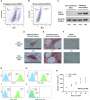
Mahida, Yuan, Kolluri et al
Front Bioeng Biotechnol (2024) 12, 1422761 DOI: 10.3389/fbioe.2024.1422761
AI Summary: OriGene’s human HSD-1 cDNA (amino acids 1–293) was used to generate transgenic mesenchymal stem cells overexpressing HSD-1, enabling the study of their enhanced anti-inflammatory effects in sepsis models.
Snippet: Fluorescent Protein from pENTR1A) (Loebinger et al., 2009). This modified lentiviral plasmid was used as the backbone for the incorporation of human HSD-1 DNA. Human HSD-1 cDNA (amino acids 1–293, Origene) was amplified and restriction sites for MluI and BstB1 were introduced using polymerase chain reaction (PCR). Forward amplification primer sequence (Invitrogen) was CGTACGCGTGCCAC
Neuronal migration depends on blood flow in the adult brain
Ogino, Saito, Sawada et al
bioRxiv (2024)
Ogino, Saito, Sawada et al
bioRxiv (2024)
Cited by 1
Snippet: mouse anti-human CD31 (1:100, Dako);rat anti-endomucin 15 (1:500, sc-65495, Santa Cruz Biotechnology);rat anti-BrdU (1:100, ab6326, Abcam);rabbit anti16 NeuN (1:1000, ab177487, abcam);and rabbit anti-SLC16A1 (1:500, TA321556, Origene). 17 Nuclei were stained with Hoechst (1:5000, H1399, Thermo Fisher Scientific)
Showing 1-6 of 13 papers.
Powered by BizGenius
*Delivery time may vary from web posted schedule. Occasional delays may occur due to unforeseen
complexities in the preparation of your product. International customers may expect an additional 1-2 weeks
in shipping.
Related Products
- Price:
- Actual Price:
Welcome to OriGene AI!
I'm your AI-powered guide to everything OriGene.
Ask me anything:
- Product specs
- Ordering help
- Technical questions
- How to find exactly what your experiment needs
Prefer a live agent? Connect with us by clicking the green chat icon, as seen in the image below or email our team at custsupport@origene.com.
