
TDH1 Rabbit Polyclonal Antibody

Specifications
| Product Data | |
| Application | ELISA, ID, IF, IP, R, WB |
|---|---|
| Recommended Dilution | This product is intended for use in precipitating and non-precipitating antibody-binding assays (such as e.g., ELISA and Western blotting and Immunofluorescence or Histochemical techniques), to prepare an insoluble immuno-affinity adsorbent, for labelling with a marker of the customer’s own choice. Working dilutions in non-precipitating antibody-binding techniques: 1/1,000-1/10,000. |
| Reactivity | Bakers Yeast |
| Antibody Host | Rabbit |
| Isotype | IgG |
| Clonality | Polyclonal |
| Immunogen | Glyceraldehyde-3-Phosphate Dehydrogenase isolated and purified from Baker's Yeast. Freund’s complete adjuvant is used in the first step of the immunization procedure. |
| Specificity | The antibody recognizes GAPDH from Baker's Yeast. The reagents were evaluated for potency, purity and specificity using most or all of the following techniques: Immunoelectrophoresis, Cross-Immunoelectrophoresis, single Radial Immunodiffusion (Ouchterlony), block titration, ELISA, Immunoblotting and Enzyme Inhibition. Cross-reactivities against enzymes of other sources may occur but have not been determined. |
| Buffer | PBS, pH 7.2 without preservatives and foreign proteins State: Azide Free State: Lyophilized purified Hyperimmune IgG fraction |
| Reconstitution Method | Restore by adding 1.0 ml of sterile distilled water |
| Concentration | lot specific |
| Purification | Ammonium Sulphate Precipitation and Ion Exchange Chromatography |
| Conjugation | Unconjugated |
| Storage | Store lyophilized at 2-8°C for 6 months or at -20°C long term. After reconstitution store the antibody undiluted at 2-8°C for one month or (in aliquots) at -20°C long term. Avoid repeated freezing and thawing. |
| Stability | Shelf life: one year from despatch. |
| Shipping | Ambient |
| Database Link | |
| Background | Glyceraldehyde 3 phosphate dehydrogenase (GAPDH) is well known as one of the key enzymes involved in glycolysis. Besides its functioning as a glycolytic enzyme in cytoplasm, recent evidence suggest that mammalian GAPDH is also involved in a great number of intracellular proceses such as membrane fusion, microtubule bundling, phosphotransferase activity, nuclear RNA export, DNA replication, and DNA repair. During the last decade a lot of findings appeared concerning the role of GAPDH in different pathologies including prostate cancer progression, programmed neuronal cell death, age-related neuronal diseases, such as Alzheimer's and Huntington's disease. GAPDH is constitutively expressed in almost all tissues at high levels, therefore becoming the marker of choice when a loading control in Western blotting is required. Some physiological factors, such as hypoxia and diabetes, increase GAPDH expression in certain cell types. |
| Synonyms | GAPD, CDABP0047 |
| Reference Data | |
Reviews


Documents
| Product Manuals |
| FAQs |
| SDS |
Citations
The essential co-chaperone Sgt1 regulates client dwell time in the Hsp90 chaperone cycle
Engler, Delhommel, Dodt et al
Mol Cell (2026) 86 (1), 166-179.e6 DOI: 10.1016/j.molcel.2025.12.002
Engler, Delhommel, Dodt et al
Mol Cell (2026) 86 (1), 166-179.e6 DOI: 10.1016/j.molcel.2025.12.002
Cited by 2
AI Summary: OriGene’s Anti-GAPDH antibody (Cat#: AP21309AF-N) was used in this study as a control to assess protein loading in immunoblot experiments investigating the role of Sgt1 in the Hsp90 chaperone cycle.
Snippet: Anti-GR Sigma-Aldrich Cat#: SAB4501309;RRID: AB_10744954 Anti-GAPDH Origene Cat#: AP21309AF-N;RRID:AB_10758142 Anti-SGT1 Pineda Research, Berlin N/A
Disruption of origin chromatin structure by helicase activation in the absence of DNA replication
Hoffman, MacAlpine, MacAlpine
Genes Dev (2021) 35 (19-20), 1339-1355 DOI: 10.1101/gad.348517.121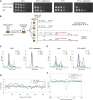
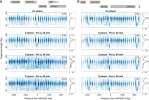
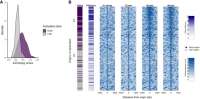
Hoffman, MacAlpine, MacAlpine
Genes Dev (2021) 35 (19-20), 1339-1355 DOI: 10.1101/gad.348517.121
Cited by 4
AI Summary: In this study, OriGene’s CDC17-Myc (cat# YC300108) and POL1-Myc (cat# YC300105) yeast tagged ORF clones were used to generate conditional mutants for investigating how helicase activation affects origin chromatin structure in the absence of DNA replication.
The Heat Shock Response in Yeast Maintains Protein Homeostasis by Chaperoning and Replenishing Proteins
Mühlhofer, Berchtold, Stratil et al
Cell Rep (2019) 29 (13), 4593-4607.e8 DOI: 10.1016/j.celrep.2019.11.109
Mühlhofer, Berchtold, Stratil et al
Cell Rep (2019) 29 (13), 4593-4607.e8 DOI: 10.1016/j.celrep.2019.11.109
Cited by 140
AI Summary: OriGene's Rabbit polyclonal anti-GAPDH antibody (Cat# AP21309AF-N) was used in this study to detect GAPDH protein levels, contributing to the analysis of protein homeostasis during the yeast heat shock response.
Snippet: Rabbit polyclonal anti-GAPDH antibody OriGene Cat# AP21309AF-N;RRID:AB_10758142 Anti-rabbit-IgG Sigma-Aldrich Cat# A0545;RRID: AB_257896 Anti-mouse-IgG Sigma-Aldrich Cat# A4789;RRID: AB_258201
High-throughput screening system for inhibitors of human Heat Shock Factor 2
Smith, Bhattacharya, Williams et al
Cell Stress Chaperones (2015) 20 (5), 833-41 DOI: 10.1007/s12192-015-0605-0
Smith, Bhattacharya, Williams et al
Cell Stress Chaperones (2015) 20 (5), 833-41 DOI: 10.1007/s12192-015-0605-0
Cited by 3
AI Summary: In this study, OriGene’s human HSF2 cDNA clone was used to generate the humanized yeast strain expressing hHSF2, enabling the development of the high-throughput screening system for HSF2 inhibitors.
Showing 1-4 of 4 papers.
Powered by BizGenius
*Delivery time may vary from web posted schedule. Occasional delays may occur due to unforeseen
complexities in the preparation of your product. International customers may expect an additional 1-2 weeks
in shipping.
Related Products
- Price:
- Actual Price:
Welcome to OriGene AI!
I'm your AI-powered guide to everything OriGene.
Ask me anything:
- Product specs
- Ordering help
- Technical questions
- How to find exactly what your experiment needs
Prefer a live agent? Connect with us by clicking the green chat icon, as seen in the image below or email our team at custsupport@origene.com.
