
pRFP-CB-shLenti shRNA Vector
SKU
TR30032
HuSH shRNA RFP Lenti Cloning Vector with blasticidin resistance (pRFP-CB-shLenti Vector), 5 ug

$880.00
In Stock*
Specifications
| Product Data | |
| Control Type | Negative |
|---|---|
| Fluorescent Label | RFP |
| Mammalian Cell Selection | Blasticidin |
| Viral Packaging | Lentiviral |
| Features |
|
| Download Vector Sequence | |
| Components | 1 vial of 5 ug lyophilized pRFP-CB-shLenti shRNA cloning vector |
| Quality Control | This vector was sequence verified and functionally validated. |
| Storage | Store the vector DNA at -20°C. |
| Stability | Vector DNA is stable for at least one year from date of receipt when stored at -20°C. |
| Shipping | Blue Ice |
Reviews


Documents
| Product Manuals |
| FAQs |
| SDS |
Resources
Citations
A Cdh3-β-catenin-laminin signaling axis in a subset of breast tumor leader cells control leader cell polarization and directional collective migration
Hwang, Mathur, Cao et al
Dev Cell (2023) 58 (1), 34-50.e9 DOI: 10.1016/j.devcel.2022.12.005
Hwang, Mathur, Cao et al
Dev Cell (2023) 58 (1), 34-50.e9 DOI: 10.1016/j.devcel.2022.12.005
Cited by 32
AI Summary: OriGene's human (TR30023) and mouse (TL500332) Cdh3 shRNA lentiviral particles were used to deplete Cdh3 expression, enabling the study of its role in leader cell polarization and collective migration in breast tumor models.
Snippet: uid flow groups. shRNA lentiviral depletion of gene expression For each gene targeted (mouse and human), we synthesized 5 different shRNA lentivirus particles – both human and mouse specific Cdh3 (Origene, TR30023 (human), TL500332 (mouse)) and Laminin α3 (Sigma-Aldrich), as well as corresponding scramble (shSCR) controls. shRNA sequences used are listed in key resources table and Table S2. Ea
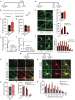
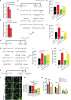
Molecular motor protein KIF5C mediates structural plasticity and long-term memory by constraining local translation
Swarnkar, Avchalumov, Espadas et al
Cell Rep (2021) 36 (2), 109369 DOI: 10.1016/j.celrep.2021.109369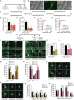
Swarnkar, Avchalumov, Espadas et al
Cell Rep (2021) 36 (2), 109369 DOI: 10.1016/j.celrep.2021.109369
Cited by 36
AI Summary: OriGene products, including pEGFP-C-shLenti against KIF5C (catalog# TL511686), pEGFP-C-shLenti against KIF3A (catalog# TL516184), and a scrambled shRNA control (catalog# TR30013), were used for gene knockdown experiments to investigate the roles of KIF5C and KIF3A in neuronal structural plasticity and memory.
Snippet: Constructs and transfection pEGFP-C-shLenti against KIF5C (catalog# TL511686), pEGFP-C-shLenti against KIF3A (catalog# TL516184) and a scrambled shRNA control (catalog# TR30013) were obtained from ORIGENE. pEGFP-KIF5C-N1 was prepared at Puthanveettil Lab and pGL-FLKIF3A was a gift from Linda Wordeman (Addgene plasmid # 13742). DNA constructs for transfection were purified using an Endo-Free Pla
Synaptogyrin-3 Mediates Presynaptic Dysfunction Induced by Tau
McInnes, Wierda, Snellinx et al
Neuron (2018) 97 (4), 823-835.e8 DOI: 10.1016/j.neuron.2018.01.022
McInnes, Wierda, Snellinx et al
Neuron (2018) 97 (4), 823-835.e8 DOI: 10.1016/j.neuron.2018.01.022
AI Summary: OriGene’s pRFP-CB-shLenti plasmids encoding scramble and anti-syngr3 shRNAs were used to generate knockdown vectors, enabling the study to investigate the role of Synaptogyrin-3 in Tau-induced presynaptic dysfunction.
Snippet: Viruses and transduction of primary neurons Scramble and syngr3 knockdown vectors: Transfer plasmids encoding RFP (CMV promoter) and scramble or anti-mouse/rat syngr3 shRNAs (U6 promoter) were produced in the pRFP-CB-shLenti plasmid by Origene. The shSyngr3 A targeting sequence is 50 -GTTCGTAGGCTTCTGTTTCCTCACCAATC-30 and the shSyngr3 B targeting sequence is 50 -GAGCCTGCCGCTTCGGCGTC GTACTAGGT-30 . …
The ubiquitin-proteasome system functionally links neuronal Tomosyn-1 to dendritic morphology
Saldate, Shiau, Cazares et al
J. Biol. Chem. (2017)
Saldate, Shiau, Cazares et al
J. Biol. Chem. (2017)
AI Summary: OriGene’s pGFP-C-shLenti and pRFPCB-shLenti lentiviral vectors (catalog nos. TL704173 and TR30032) were used to deliver shRNA for targeted knockdown of rat HRD1, enabling the study of HRD1’s role in regulating Tomosyn-1 expression and dendritic spine density.
Snippet: Lentiviral vectors encoding a short hairpin RNAi (shRNA) for targeted knockdown of rat HRD1 were created in the pGFP-C-shLenti and pRFPCB-shLenti expression vectors (Origene, Rockville, MD, catalog nos. TL704173 and TR30032) which independently encode (via U6 promoter) the following shRNA sequences
Chronic Cigarette Smoke-Induced Epigenomic Changes Precede Sensitization of Bronchial Epithelial Cells to Single-Step Transformation by KRAS Mutations
Vaz, Hwang, Kagiampakis et al
Cancer Cell (2017) 32 (3), 360-376.e6 DOI: 10.1016/j.ccell.2017.08.006
Vaz, Hwang, Kagiampakis et al
Cancer Cell (2017) 32 (3), 360-376.e6 DOI: 10.1016/j.ccell.2017.08.006
AI Summary: In this study, the OriGene pRFP-CB-shLenti Lentiviral vector (Cat#TR30032) was used to facilitate gene silencing experiments, contributing to the investigation of how chronic cigarette smoke exposure leads to epigenetic changes that sensitize bronchial epithelial cells to transformation by KRAS mutations.
Snippet: pLenti PGK Hygro DEST (w530-1) Campeau et al., 2009 Addgene Plasmid #19066 pRFP-CB-shLenti Lentiviral vector OriGene Cat#TR30032
Dendrosomatic Sonic Hedgehog Signaling in Hippocampal Neurons Regulates Axon Elongation
Yao, Petralia, Ott et al
J. Neurosci. (2015) 35 (49), 16126-41 DOI: 10.1523/JNEUROSCI.1360-15.2015
Yao, Petralia, Ott et al
J. Neurosci. (2015) 35 (49), 16126-41 DOI: 10.1523/JNEUROSCI.1360-15.2015
AI Summary: OriGene contributed to this study by providing the pRFP-CB-shLenti-Smo-shRNA construct (clone HT 138738A), which was used to specifically knock down Smoothened (Smo) expression and investigate its role in Sonic Hedgehog signaling and axon elongation in hippocampal neurons.
Snippet: The Smo shRNA was designed exactly as described by Parra and Zou (2010) and the construct pRFP-CB-shLenti-Smo-shRNA was produced by OriGene (clone HT 138738A;the identical clone used by Parra and Zou, 2010). ... Cite SaveSaving
Showing 1-6 of 7 papers.
Powered by BizGenius
*Delivery time may vary from web posted schedule. Occasional delays may occur due to unforeseen
complexities in the preparation of your product. International customers may expect an additional 1-2 weeks
in shipping.
Related Products
- Price:
- Actual Price:
Welcome to OriGene AI!
I'm your AI-powered guide to everything OriGene.
Ask me anything:
- Product specs
- Ordering help
- Technical questions
- How to find exactly what your experiment needs
Prefer a live agent? Connect with us by clicking the green chat icon, as seen in the image below or email our team at custsupport@origene.com.
