
pCMV6-AN-GFP Mammalian Expression Vector

$670.00
In Stock*
Specifications
| Product Data | |
| N-Tag | TurboGFP |
|---|---|
| E. coli Selection | Ampicillin (100 ug/mL) |
| Mammalian Cell Selection | Neomycin |
| Expression Promoter | CMV |
| Features |
|
| Download Vector Sequence | |
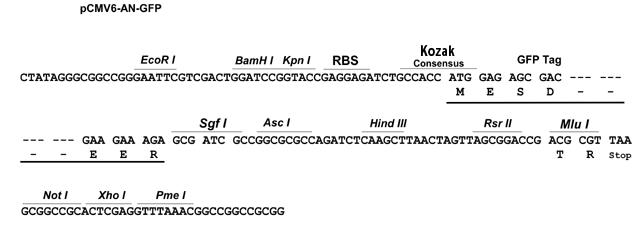
| Schematic of the multiple cloning sites |
|
| Shipping | Ambient |
Reviews


Documents
Resources
Citations
Reversible Charge-Mediated Capture and Release of Extracellular Vesicles Using Giant Unilamellar Vesicles
Pinelli, Schiavi, Tarantino et al
ACS Omega (2026) 11 (33), 49033-49044 DOI: 10.1021/acsomega.6c00387
Pinelli, Schiavi, Tarantino et al
ACS Omega (2026) 11 (33), 49033-49044 DOI: 10.1021/acsomega.6c00387
AI Summary: OriGene’s pCMV6-AN-GFP shRNA lentiviral vector (PS100019) was used to transduce U87-MG cells for stable TurboGFP expression, enabling fluorescent tracking of cells and extracellular vesicles in the study.
Snippet: idified atmosphere (∼95%). To stably express TurboGFP (excitation/emission max = 482/502 nm), U87-MG cells were transduced with pCMV6-AN-GFPa shRNA lentiviral vector with an N-terminal tGFP tag (Origene, PS100019), at a concentration of 1 mg/mL in TE buffer, pH 8.0. …
Midkine Promotes Tumor Growth and Attenuates the Effect of Cisplatin in Small Cell Lung Cancer
Ito, Sakakibara-Konishi, Sato et al
Cancer Med (2025) 14 (13), e71034 DOI: 10.1002/cam4.71034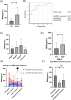
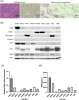
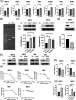
Ito, Sakakibara-Konishi, Sato et al
Cancer Med (2025) 14 (13), e71034 DOI: 10.1002/cam4.71034
Cited by 2
AI Summary: OriGene products, including the human MDK cDNA-ORF clone (RG221818), the blank vector (PS100019), and TurboFectin 8.0 transfection reagent, were used to manipulate MDK expression in cell lines to study its role in small cell lung cancer growth and chemoresistance.
Snippet: The human complementary DNA (cDNA)‐open reading frame (ORF) clone of MDK (RG221818, ORIGENE), the blank vector (PS100019, ORIGENE), and TurboFectin 8.0 (transfection reagent) were purchased from OriGene Technologies (Rockville, MD, USA)
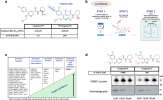
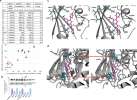
Compounds targeting OSBPL7 increase ABCA1-dependent cholesterol efflux preserving kidney function in two models of kidney disease
Wright, Varona Santos, Kemmer et al
Nat Commun (2021) 12 (1), 4662 DOI: 10.1038/s41467-021-24890-3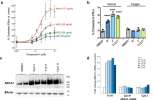
Wright, Varona Santos, Kemmer et al
Nat Commun (2021) 12 (1), 4662 DOI: 10.1038/s41467-021-24890-3
Cited by 62
AI Summary: OriGene products, specifically the OSBPL7 Myc-DDK-tagged expression plasmid and the anti-DDK (FLAG) antibody, were used in this study to overexpress and detect OSBPL7 protein, enabling the identification of OSBPL7 as the molecular target of novel compounds that enhance cholesterol efflux and protect kidney function.
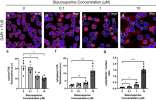
Rapid in vitro quantification of TDP-43 and FUS mislocalisation for screening of gene variants implicated in frontotemporal dementia and amyotrophic lateral sclerosis
Oyston, Ubiparipovic, Fitzpatrick et al
Sci Rep (2021) 11 (1), 14881 DOI: 10.1038/s41598-021-94225-1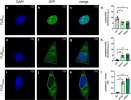
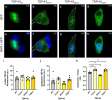
Oyston, Ubiparipovic, Fitzpatrick et al
Sci Rep (2021) 11 (1), 14881 DOI: 10.1038/s41598-021-94225-1
Cited by 6
AI Summary: OriGene’s pCMV6-CYLD, pCMV6-TARDBP, and pCMV6-FUS DNA constructs were used as templates for introducing gene mutations, enabling the study of TDP-43 and FUS mislocalisation in cellular models of frontotemporal dementia and amyotrophic lateral sclerosis.
Snippet: Methods. DNA constructs. CYLD, TARDBP and FUS mutations were introduced into the pCMV6-CYLD, pCMV6-TARDBP and pCMV6-FUS constructs (Origene) by site-directed mutagenesis using the QuikChange Lightning Site-Directed Mutagenesis Kit (Agilent)
Genome-wide dissection reveals diverse pathogenic roles of bacterial Tc toxins
Song, Chen, Zhou et al
PLoS Pathog (2021) 17 (2), e1009102 DOI: 10.1371/journal.ppat.1009102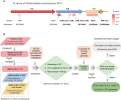
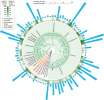
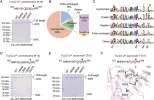
Song, Chen, Zhou et al
PLoS Pathog (2021) 17 (2), e1009102 DOI: 10.1371/journal.ppat.1009102
Cited by 34
AI Summary: In this study, OriGene’s pCMV6 vectors (PS100019 for GFP and PS100033 for RFP) were used as sources for cloning the GFP and RFP coding sequences, enabling fluorescent tagging in the analysis of bacterial Tc toxins.
Snippet: entomophaga and PTP-HVR of TccC1 (AKB86704.1) of Yersinia pestis KIM10+ were synthesized by Ruibio BioTech. The coding sequences of GFP and RFP were cloned from pCMV6 vectors (PS100019 and PS100033, Origene). TcdA1 of Photorhabdus luminescens W14 was cloned into RSFDuet-1 (Novagen). All TcB-TcC fusion proteins were constructed incorporating a 5-aa linker region encoding Arg-Gly-Ser-Arg-Pro, and c
Iroquois Homeobox 1 Acts as a True Tumor Suppressor in Multiple Organs by Regulating Cell Cycle Progression
Jung, Jung, Chung et al
Neoplasia (2019) 21 (10), 1003-1014 DOI: 10.1016/j.neo.2019.08.001
Jung, Jung, Chung et al
Neoplasia (2019) 21 (10), 1003-1014 DOI: 10.1016/j.neo.2019.08.001
AI Summary: In this study, the OriGene mouse anti-turboGFP antibody (TA150041) was used to detect turboGFP-tagged proteins in human tumor cell lines, aiding in the analysis of IRX1 gene overexpression and its tumor suppressor function.
Snippet: Iroquois homeobox 1 (IRX1) belongs to the Iroquois homeobox family known to play an important role during embryonic development. Interestingly, however, recent studies have suggested that IRX1 also acts as a tumor suppressor. Here, we use homozygous knockout mutants of zebrafish to demonstrate that the IRX1 gene is a true tumor suppressor gene and mechanism of the tumor suppression is mediated by repressing cell cycle progression. In this study, we found that knockout of zebrafish Irx1 gene induced hyperplasia and tumorigenesis in the multiple organs where the gene was expressed. On the other hands, overexpression of the IRX1 gene in human tumor cell lines showed delayed cell proliferation of the tumor cells. These results suggest that the IRX1 gene is truly involved in tumor suppression. In an attempt to identify the genes regulated by the transcription factor IRX1, we performed microarray assay using the cRNA obtained from the knockout mutants. Our result indicated that the highest fold change of the differential genes fell into the gene category of cell cycle regulation, suggesting that the significant canonical pathway of IRX1 in antitumorigenesis is done by regulating cell cycle. Experiment with cell cycle blockers treated to IRX1 overexpressing tumor cells showed that the IRX1 overexpression actually delayed the cell cycle. Furthermore, Western blot analysis with cyclin antibodies showed that IRX1 overexpression induced decrease of cyclin production in the cancer cells. In conclusion, our in vivo and in vitro studies revealed that IRX1 gene functionally acts as a true tumor suppressor, inhibiting tumor cell growth by regulating cell cycle. …All rights reserved.;;1:1000, Abcam, EPR2241), rabbit anti-cyclin E1 (1:1000, Abcam, EP435E), mouse anti-cyclin B1 (1:1000, Santacruz, GNS1), mouse anti-cyclin A (1:1000, Santacruz, B-8), anti-human IRX1 (1:500, Abcam, ab66310), mouse anti-turboGFP (1:1000, Origene, TA150041
Showing 1-6 of 25 papers.
Powered by BizGenius
*Delivery time may vary from web posted schedule. Occasional delays may occur due to unforeseen
complexities in the preparation of your product. International customers may expect an additional 1-2 weeks
in shipping.
Related Products
- Price:
- Actual Price:
Welcome to OriGene AI!
I'm your AI-powered guide to everything OriGene.
Ask me anything:
- Product specs
- Ordering help
- Technical questions
- How to find exactly what your experiment needs
Prefer a live agent? Connect with us by clicking the green chat icon, as seen in the image below or email our team at custsupport@origene.com.
