
pEX-N-His-GST Bacterial Expression Vector

$670.00
In Stock*
Specifications
| Product Data | |
| N-Tag | His-GST |
|---|---|
| E. coli Selection | Ampicillin (100 ug/mL) |
| Features |
|
| Download Vector Sequence | |
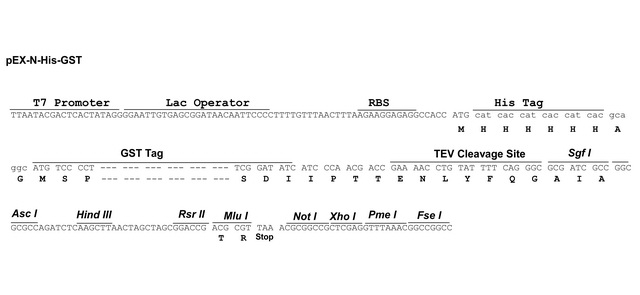
| Schematic of the multiple cloning sites |
|
| Shipping | Blue Ice |
Reviews


Documents
Resources
Citations
Effect of Calcium and Cholesterol on Membrane Binding and Localization of the S100A16 Protein
Noël, Vetter, Boisselier
Arch Biochem Biophys (2026) 782, 110871 DOI: 10.1016/j.abb.2026.110871
Noël, Vetter, Boisselier
Arch Biochem Biophys (2026) 782, 110871 DOI: 10.1016/j.abb.2026.110871
AI Summary: OriGene’s human S100A16 cDNA clone (OriGene #PS100028) was used as the template to amplify the S100A16 coding sequence for constructing the expression plasmid essential to study S100A16’s membrane interactions in this paper.
Snippet: The expression plasmid pEX_6His-GST-TEV-S100A16 was constructed by PCR amplification of the human S100A16 coding sequence (NM_080388) from a commercial human S100A16 cDNA clone, followed by cloning of the amplicon into the AsiSI and MluI restriction sites of the pEX-NHisGST vector (Origene #PS100028)
α-Mangostin Promotes In Vitro and In Vivo Degradation of Androgen Receptor and AR-V7 Splice Variant in Prostate Cancer Cells
Nauman, Won, Petiwala et al
Cancers (Basel) (2023) 15 (7) DOI: 10.3390/cancers15072118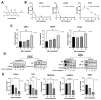
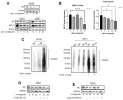
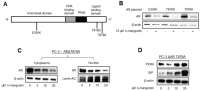
Nauman, Won, Petiwala et al
Cancers (Basel) (2023) 15 (7) DOI: 10.3390/cancers15072118
Cited by 13
AI Summary: OriGene products contributed to this study by providing the AR (androgen receptor) and AR-V7 expression plasmids (Cat# RC220845 and Cat# RC211706), which were used in transfection experiments to assess the effects of α-mangostin on androgen receptor degradation in prostate cancer cells.
Snippet: 20,21]. Our group has been studying xanthones for their in vitro and in vivo anticancer activity, and our data suggests that xanthones promote apoptosis in PCa cells, degrade AR, and slow prostate tumorigenesis in mice [22,23,24,25,26,27,28,29]. This study was undertaken to test our hypothesis that α-mangostin, the most abundant mangosteen xanthone, promotes the ubiquitination and degradation of
Novel tau fragments in cerebrospinal fluid: relation to tangle pathology and cognitive decline in Alzheimer's disease
Cicognola, Brinkmalm, Wahlgren et al
Acta Neuropathol. (2018) 137 (2), 279-296 DOI: 10.1007/s00401-018-1948-2
Cicognola, Brinkmalm, Wahlgren et al
Acta Neuropathol. (2018) 137 (2), 279-296 DOI: 10.1007/s00401-018-1948-2
A Mutation in NPAS3 That Segregates with Schizophrenia in a Small Family Leads to Protein Aggregation
Nucifora, Wu, Lee et al
Mol Neuropsychiatry (2016) 2 (3), 133-144 DOI: 10.1159/000447358
Nucifora, Wu, Lee et al
Mol Neuropsychiatry (2016) 2 (3), 133-144 DOI: 10.1159/000447358
Cited by 28
AI Summary: OriGene products, specifically the NPAS3 cDNA clone (OriGene, SC119515) and anti-NPAS3 antibody (OriGene, TA324113), were used in this study to express and detect NPAS3 protein variants, enabling the investigation of how the V304I mutation promotes protein aggregation associated with schizophrenia.
Single particle fluorescence burst analysis of epsin induced membrane fission
Brooks, Shoup, Kustigian et al
PLoS ONE (2015) 10 (3), e0119563 DOI: 10.1371/journal.pone.0119563
Brooks, Shoup, Kustigian et al
PLoS ONE (2015) 10 (3), e0119563 DOI: 10.1371/journal.pone.0119563
Cited by 8
AI Summary: OriGene’s pEX-N-His6-GST vector was used to sub-clone and express full-length rat epsin in E. coli, enabling the study of epsin-induced membrane fission in this paper.
Snippet: DTT. The coding sequence of full-length rat epsin was obtained from Addgene (pCDNA3.1-Epsin1;plasmid 22225) and was sub-cloned into the pEX-N-His 6 -GST vector (Origene) for expression in E. coli BL21[DE3]. Purification ... Cite SaveSaving
Anthrax lethal factor cleavage of Nlrp1 is required for activation of the inflammasome
Levinsohn, Newman, Hellmich et al
PLoS Pathog. (2012) 8 (3), e1002638 DOI: 10.1371/journal.ppat.1002638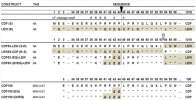
Levinsohn, Newman, Hellmich et al
PLoS Pathog. (2012) 8 (3), e1002638 DOI: 10.1371/journal.ppat.1002638
Cited by 324
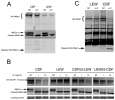
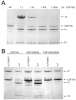
AI Summary: OriGene’s pEX-N-His-GST plasmid (cat# PS100028) was used to express and purify 6His-GST-fused rNlrp1 proteins, enabling the study of anthrax lethal factor-mediated cleavage and activation of the Nlrp1 inflammasome in this research.
Snippet: and 1 µg/ml LF). 6His-GST-fused rNlrp1 proteins were expressed in plasmid pEX-N-His-GST (cat# PS100028, Origene, Rockville, MD) and purified on glutathione-Sepharose columns by standard methods. High affinity anti-HA
Showing 1-6 of 7 papers.
Powered by BizGenius
*Delivery time may vary from web posted schedule. Occasional delays may occur due to unforeseen
complexities in the preparation of your product. International customers may expect an additional 1-2 weeks
in shipping.
Related Products
- Price:
- Actual Price:
Welcome to OriGene AI!
I'm your AI-powered guide to everything OriGene.
Ask me anything:
- Product specs
- Ordering help
- Technical questions
- How to find exactly what your experiment needs
Prefer a live agent? Connect with us by clicking the green chat icon, as seen in the image below or email our team at custsupport@origene.com.
