
PTEN Human shRNA Plasmid Kit (Locus ID 5728)
SKU
TR320498
PTEN - Human, 4 unique 29mer shRNA constructs in retroviral untagged vector, 5µg of each construct provided

$883.00
In Stock*
Specifications
| Product Data | |
| Locus ID | 5728 |
|---|---|
| Synonyms | 10q23del; BZS; CWS1; DEC; GLM2; MHAM; MMAC1; PTEN1; PTENbeta; TEP1 |
| Vector | pRS |
| E. coli Selection | Ampicillin |
| Mammalian Cell Selection | Puromycin |
| Format | Retroviral plasmids |
| Components | PTEN - Human, 4 unique 29mer shRNA constructs in retroviral untagged vector(Gene ID = 5728). 5µg purified plasmid DNA per construct29-mer scrambled shRNA cassette in pRS Vector, TR30012, included for free. |
| RefSeq | NM_000314, NM_001304717, NM_001304718, NM_000314.1, NM_000314.2, NM_000314.3, NM_000314.4, NM_000314.5, NM_000314.6, BC005821, NM_000314.7 |
| UniProt ID | P60484 |
| Summary | This gene was identified as a tumor suppressor that is mutated in a large number of cancers at high frequency. The protein encoded by this gene is a phosphatidylinositol-3,4,5-trisphosphate 3-phosphatase. It contains a tensin like domain as well as a catalytic domain similar to that of the dual specificity protein tyrosine phosphatases. Unlike most of the protein tyrosine phosphatases, this protein preferentially dephosphorylates phosphoinositide substrates. It negatively regulates intracellular levels of phosphatidylinositol-3,4,5-trisphosphate in cells and functions as a tumor suppressor by negatively regulating AKT/PKB signaling pathway. The use of a non-canonical (CUG) upstream initiation site produces a longer isoform that initiates translation with a leucine, and is thought to be preferentially associated with the mitochondrial inner membrane. This longer isoform may help regulate energy metabolism in the mitochondria. A pseudogene of this gene is found on chromosome 9. Alternative splicing and the use of multiple translation start codons results in multiple transcript variants encoding different isoforms. provided by RefSeq, Feb 2015 |
| shRNA Design | These shRNA constructs were designed against multiple splice variants at this gene locus. To be certain that your variant of interest is targeted, please contact techsupport@origene.com. If you need a special design or shRNA sequence, please utilize our custom shRNA service. |
| Storage | Store at -20°C |
| Shipping | Ambient |
Reviews


Documents
Resources
Citations
Signaling mechanisms coupled to CXCL12/CXCR4-mediated cellular proliferation are PTEN-dependent
Begley, Kasina, Shah et al
Am J Clin Exp Urol (2015) 3 (2), 91-9
Begley, Kasina, Shah et al
Am J Clin Exp Urol (2015) 3 (2), 91-9
Atorvastatin overcomes gefitinib resistance in KRAS mutant human non-small cell lung carcinoma cells
Chen, Bi, Hou et al
Cell Death Dis (2013) 4, e814 DOI: 10.1038/cddis.2013.312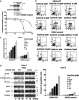
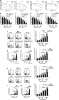
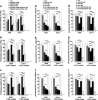
Chen, Bi, Hou et al
Cell Death Dis (2013) 4, e814 DOI: 10.1038/cddis.2013.312
Cited by 66
AI Summary: OriGene's Human TrueORF PIK3CA E545K plasmid (Cat. no. RC400348) was used in this study to generate NSCLC cell models with PIK3CA mutations, enabling the investigation of atorvastatin’s effects on overcoming gefitinib resistance in KRAS mutant cells.
Snippet: 30 Human TrueORF PIK3CA E545K plasmid was purchased from OriGene Technologies (Rockville, MD, USA;Cat. no. RC400348). TrueORFs have a C-terminal fusion of MYC/DDK tag. The cloning expression vector is pCMV6-Entry.
Short hairpin RNA against PTEN enhances regenerative growth of corticospinal tract axons after spinal cord injury
Zukor, Belin, Wang et al
J. Neurosci. (2013) 33 (39), 15350-61 DOI: 10.1523/JNEUROSCI.2510-13.2013
Zukor, Belin, Wang et al
J. Neurosci. (2013) 33 (39), 15350-61 DOI: 10.1523/JNEUROSCI.2510-13.2013
AI Summary: OriGene's pRS vector was used as the source of the U6 shRNA expression cassette, which enabled the construction of shRNA-expressing plasmids for PTEN suppression in this study.
Snippet: To accommodate shRNA expression, the U6 shRNA expression section from pRS (Origene) was cloned between the ITR and CMV promoter of pAAV-MCS, and the shPTEN construct was inserted between HindIII and BamHI sites downstream of the U6 promoter.
MicroRNA-21 is a downstream effector of AKT that mediates its antiapoptotic effects via suppression of Fas ligand
Sayed, He, Hong et al
J Biol Chem (2010) 285 (26), 20281-90 DOI: 10.1074/jbc.M110.109207
Sayed, He, Hong et al
J Biol Chem (2010) 285 (26), 20281-90 DOI: 10.1074/jbc.M110.109207
AI Summary: In this paper, OriGene products—specifically the AKT (RC200970), PTEN (SC119378), and FasL (SC119378) expression plasmids—were used to manipulate gene expression in order to elucidate the roles of these proteins and their regulation by miR-21 in the context of hypoxia-induced apoptosis in cardiac myocytes.
Immunosuppressive cyclosporin A activates AKT in keratinocytes through PTEN suppression: implications in skin carcinogenesis
Han, Ming, He et al
J Biol Chem (2010) 285 (15), 11369-77 DOI: 10.1074/jbc.M109.028142
Han, Ming, He et al
J Biol Chem (2010) 285 (15), 11369-77 DOI: 10.1074/jbc.M109.028142
Showing 1-5 of 5 papers.
Powered by BizGenius
*Delivery time may vary from web posted schedule. Occasional delays may occur due to unforeseen
complexities in the preparation of your product. International customers may expect an additional 1-2 weeks
in shipping.
Related Products
- Price:
- Actual Price:
Welcome to OriGene AI!
I'm your AI-powered guide to everything OriGene.
Ask me anything:
- Product specs
- Ordering help
- Technical questions
- How to find exactly what your experiment needs
Prefer a live agent? Connect with us by clicking the green chat icon, as seen in the image below or email our team at custsupport@origene.com.
