
FGFR4 Human shRNA Plasmid Kit (Locus ID 2264)
SKU
TR320356
FGFR4 - Human, 4 unique 29mer shRNA constructs in retroviral untagged vector, 5µg of each construct provided

$883.00
In Stock*
Specifications
| Product Data | |
| Locus ID | 2264 |
|---|---|
| Synonyms | CD334; JTK2; TKF |
| Vector | pRS |
| E. coli Selection | Ampicillin |
| Mammalian Cell Selection | Puromycin |
| Format | Retroviral plasmids |
| Components | FGFR4 - Human, 4 unique 29mer shRNA constructs in retroviral untagged vector(Gene ID = 2264). 5µg purified plasmid DNA per construct29-mer scrambled shRNA cassette in pRS Vector, TR30012, included for free. |
| RefSeq | NM_001291980, NM_002011, NM_022963, NM_213647, NM_001354984, NM_002011.1, NM_002011.3, NM_002011.4, NM_022963.1, NM_022963.2, NM_022963.3, NM_213647.2, NM_001291980.1, BC011847, BC011847.2, BM453707, NM_002011.5, NM_001291980.2, NM_213647.3 |
| UniProt ID | P22455 |
| Summary | The protein encoded by this gene is a tyrosine kinase and cell surface receptor for fibroblast growth factors. The encoded protein is involved in the regulation of several pathways, including cell proliferation, cell differentiation, cell migration, lipid metabolism, bile acid biosynthesis, vitamin D metabolism, glucose uptake, and phosphate homeostasis. This protein consists of an extracellular region, composed of three immunoglobulin-like domains, a single hydrophobic membrane-spanning segment, and a cytoplasmic tyrosine kinase domain. The extracellular portion interacts with fibroblast growth factors, setting in motion a cascade of downstream signals, ultimately influencing mitogenesis and differentiation. provided by RefSeq, Aug 2017 |
| shRNA Design | These shRNA constructs were designed against multiple splice variants at this gene locus. To be certain that your variant of interest is targeted, please contact techsupport@origene.com. If you need a special design or shRNA sequence, please utilize our custom shRNA service. |
| Storage | Store at -20°C |
| Shipping | Ambient |
Reviews


Documents
Resources
Citations
FGFR1 and FGFR4 oncogenicity depends on n-cadherin and their co-expression may predict FGFR-targeted therapy efficacy
Quintanal-Villalonga, Ferrer, Guruceaga et al
EBioMedicine (2020) 53, 102683 DOI: 10.1016/j.ebiom.2020.102683
Quintanal-Villalonga, Ferrer, Guruceaga et al
EBioMedicine (2020) 53, 102683 DOI: 10.1016/j.ebiom.2020.102683
Cited by 27
AI Summary: OriGene products, specifically FGFR1 (RC202080) and FGFR4 (RG204230) cDNA clones in the pCMV6 plasmid (PS100001) and shRNAs for FGFR1 (TF320354) and FGFR4 (TR320356) in the p-RS plasmid, were used to modulate gene expression in cell lines, enabling the study to demonstrate the role of N-cadherin in FGFR1/4-driven oncogenicity and therapy response in lung cancer.
Snippet: Fibroblast growth factor receptor (FGFR)1 and FGFR4 have been associated with tumorigenesis in a variety of tumour types. As a therapeutic approach, their inhibition has been attempted in different types of malignancies, including lung cancer, and was initially focused on FGFR1-amplified tumours, though with limited success. …We provide in vitro and in vivo evidence showing that expression of the adhesion molecule N-cadherin is key for the oncogenic role of FGFR1/4 in non-small cell lung cancer. According to this, assessment of the expression of genes in different lung cancer patient cohorts showed that FGFR1 or FGFR4 expression alone showed no prognostic potential, and that only co-expression of FGFR1 and/or FGFR4 with N-cadherin inferred a poorer outcome. Treatment of high-FGFR1 and/or FGFR4-expressing lung cancer cell lines and patient-derived xenografts with selective FGFR inhibitors showed high efficacy, but only in models with high FGFR1/4 and N-cadherin expression. Our data show that the determination of the expression of FGFR1 or FGFR4 alone is not sufficient to predict anti-FGFR therapy efficacy;complementary determination of N-cadherin expression may further optimise patient selection for this therapeutic strategy. …All rights reserved.;- FGFR1 (RC202080) and FGFR4 (RG204230) cDNA clones were obtained from Origene in the pCMV6 plasmid (PS100001) For FGFR1 and FGFR4 silencing, shRNAs in the p-RS plasmid were purchased from Origene (TF320354 and TR320356, respectively);complementary determination of N-cadherin expression may further optimise patient selection for this therapeutic strategy. …
FGFR4 increases EGFR oncogenic signaling in lung adenocarcinoma, and their combined inhibition is highly effective
Quintanal-Villalonga, Molina-Pinelo, Yagüe et al
Lung Cancer (2019) 131, 112-121 DOI: 10.1016/j.lungcan.2019.02.007
Quintanal-Villalonga, Molina-Pinelo, Yagüe et al
Lung Cancer (2019) 131, 112-121 DOI: 10.1016/j.lungcan.2019.02.007
Cited by 25
AI Summary: OriGene products contributed to this study by providing the FGFR4 expression plasmid (Cat# RC209125) and FGFR4 shRNA plasmids (Cat# TG313865, TG313866), which were used for gene overexpression and silencing experiments to investigate the interaction between FGFR4 and EGFR in lung adenocarcinoma.
FGFR4 increases EGFR oncogenic signaling in lung adenocarcinoma, and their combined inhibition is highly effective
Quintanal-Villalonga, Molina-Pinelo, Yagüe et al
Lung Cancer (2019) 131, 112-121 DOI: 10.1016/j.lungcan.2019.02.007
Quintanal-Villalonga, Molina-Pinelo, Yagüe et al
Lung Cancer (2019) 131, 112-121 DOI: 10.1016/j.lungcan.2019.02.007
Klotho-beta overexpression as a novel target for suppressing proliferation and fibroblast growth factor receptor-4 signaling in hepatocellular carcinoma
Poh, Wong, Ong et al
Mol. Cancer (2012) 11, 14 DOI: 10.1186/1476-4598-11-14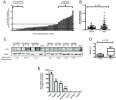
Poh, Wong, Ong et al
Mol. Cancer (2012) 11, 14 DOI: 10.1186/1476-4598-11-14
Cited by 75
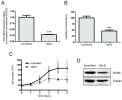
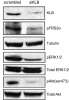
AI Summary: OriGene products, specifically the pRS vector control (TR20003) and FGFR4-specific HuSH 29mer shRNA constructs (TR320356), were used to manipulate FGFR4 expression in Huh7 cells, enabling the study of KLB-FGFR4 signaling in hepatocellular carcinoma progression.
Snippet: with pRS vector control (TR20003, Ori- gene Technologies, Rockville, MD) and FGFR4-specific HuSH 29mer shRNA constructs (TR320356, Origene) and selected ... Hence Huh7 pro- vides a good culture model to study the effects of KLB perturbation in a more aggressive setting.
Showing 1-4 of 4 papers.
Powered by BizGenius
*Delivery time may vary from web posted schedule. Occasional delays may occur due to unforeseen
complexities in the preparation of your product. International customers may expect an additional 1-2 weeks
in shipping.
Related Products
- Price:
- Actual Price:
Welcome to OriGene AI!
I'm your AI-powered guide to everything OriGene.
Ask me anything:
- Product specs
- Ordering help
- Technical questions
- How to find exactly what your experiment needs
Prefer a live agent? Connect with us by clicking the green chat icon, as seen in the image below or email our team at custsupport@origene.com.
