
Positive shRNA control against eGFP (pRS Vector)

Specifications
| Product Data | |
| shRNA Design | These shRNA constructs were designed against multiple splice variants at this gene locus. To be certain that your variant of interest is targeted, please contact techsupport@origene.com. If you need a special design or shRNA sequence, please utilize our custom shRNA service. |
|---|---|
| Storage | Store the vector DNA at -20°C. |
| Stability | Vector DNA is stable for at least one year from date of receipt when stored at -20°C. |
| Shipping | Blue Ice |
Reviews


Documents
Resources
Citations
Significance of cortactin as a prognostic factor in biliary cancer and its relevant signaling pathways as a therapeutic target
조연아
Thesis (2021)
조연아
Thesis (2021)
Snippet: Biliary tract carcinomas are rare, accounting for less than 1% of all cancers. However, their incidence has recently increased in Japan and industrialized countries, such as the USA. Particularly, in Korea, biliary tract carcinomas are common, ranking 9th in and . Its , Save;CTTN shRNA was used for lentiviral transduction (ORIGENE TR30001, 5′- CACAAGCTGGAGTACAACTACAACAGCCA-3′)
The prolyl isomerase FKBP25 regulates microtubule polymerization impacting cell cycle progression and genomic stability
Dilworth, Gudavicius, Xu et al
Nucleic Acids Res. (2018) 46 (5), 2459-2478 DOI: 10.1093/nar/gky008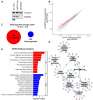
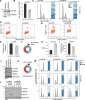
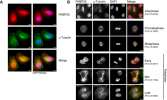
Dilworth, Gudavicius, Xu et al
Nucleic Acids Res. (2018) 46 (5), 2459-2478 DOI: 10.1093/nar/gky008
AI Summary: OriGene’s HuSH 29-mer shRNA expression vectors were used to generate FKBP25 knockdown U2OS cell lines, enabling the study of FKBP25’s role in microtubule polymerization and cell cycle regulation.
Snippet: table U2OS shRNA knockdown cells were generated by transfection with HuSH 29-mer shRNA expression vectors (Origene, Rockville, MD, USA) using GenJet U2OS Transfection Reagent (SignaGen, Rockville, MD, USA) followed by selection with puromycin (InvivoGen, San Diego, CA, USA) 48 h post-transfection until colonies formed
Brain insulin resistance impairs hippocampal synaptic plasticity and memory by increasing GluA1 palmitoylation through FoxO3a
Spinelli, Fusco, Mainardi et al
Nat Commun (2017) 8 (1), 2009 DOI: 10.1038/s41467-017-02221-9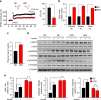
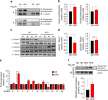
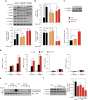
Spinelli, Fusco, Mainardi et al
Nat Commun (2017) 8 (1), 2009 DOI: 10.1038/s41467-017-02221-9
AI Summary: OriGene products contributed to this study by providing plasmids encoding control shRNA, zDHHC3 shRNA, and EGFP, which were used to manipulate gene expression and investigate the molecular mechanisms underlying hippocampal synaptic plasticity and memory impairment.
Snippet: Plasmid-encoding for control shRNA, zDHHC3 shRNA, and EGFP were from Origene. Plasmid-encoding for GluA1 WT and GluA1 C585S/C811S were a gift from Prof. Richard L. Huganir (The Johns Hopkins University, Baltimore, MD)
Autoantibody responses to nodal and paranodal antigens in chronic inflammatory neuropathies
Mathey, Garg, Park et al
J Neuroimmunol (2017) 309, 41-46 DOI: 10.1016/j.jneuroim.2017.05.002
Mathey, Garg, Park et al
J Neuroimmunol (2017) 309, 41-46 DOI: 10.1016/j.jneuroim.2017.05.002
Cited by 56
AI Summary: OriGene products, specifically human neurofascin 155, contactin-1, and neurofascin 186 proteins, were used as antigens in ELISA assays to detect autoantibodies in patient sera, facilitating the identification of specific immune responses in chronic inflammatory neuropathies.
The insulin-like growth factor I receptor regulates glucose transport by astrocytes
Hernandez-Garzón, Fernandez, Perez-Alvarez et al
Glia (2016)
Hernandez-Garzón, Fernandez, Perez-Alvarez et al
Glia (2016)
Cited by 73
AI Summary: OriGene products, specifically HuSH-29 shRNAs targeting Glut-1, IGF-IR, IR, scramble sequence, and EGFP, were used to selectively knock down these genes and investigate their roles in astrocytic glucose transport in this study.
Snippet: shRNAs against Glut-1, IGF-IR, IR, scramble sequence and EGFP were from Origene (HuSH-29, Origene, USA): shRNA against GIPC was constructed as described in www.addgene.org/tools/protocols/plko/using the primers: 5 ... Cite SaveSaving
The milk protein α-casein functions as a tumor suppressor via activation of STAT1 signaling, effectively preventing breast cancer tumor growth and metastasis
Bonuccelli, Castello-Cros, Capozza et al
Cell Cycle (2012) 11 (21), 3972-82 DOI: 10.4161/cc.22227
Bonuccelli, Castello-Cros, Capozza et al
Cell Cycle (2012) 11 (21), 3972-82 DOI: 10.4161/cc.22227
Cited by 42
Showing 1-6 of 8 papers.
Powered by BizGenius
*Delivery time may vary from web posted schedule. Occasional delays may occur due to unforeseen
complexities in the preparation of your product. International customers may expect an additional 1-2 weeks
in shipping.
Related Products
- Price:
- Actual Price:
Welcome to OriGene AI!
I'm your AI-powered guide to everything OriGene.
Ask me anything:
- Product specs
- Ordering help
- Technical questions
- How to find exactly what your experiment needs
Prefer a live agent? Connect with us by clicking the green chat icon, as seen in the image below or email our team at custsupport@origene.com.
