
Wilms Tumor Protein (WT1) (NM_024424) Human Recombinant Protein
SKU
TP760644
Purified recombinant protein of Human Wilms tumor 1 (WT1), transcript variant B, full length, with N-terminal HIS tag, expressed in E.Coli, 50ug

$270.00
In Stock*
Specifications
| Product Data | |
| Species | Human |
|---|---|
| Expression Host | E. coli |
| Expression cDNA Clone or AA Sequence | |
| Tag | N-His |
| Predicted MW | 55.8 kDa |
| Concentration | >0.05 µg/µL as determined by microplate BCA method |
| Purity | > 80% as determined by SDS-PAGE and Coomassie blue staining |
| Buffer | 25 mM Tris-HCl, pH 8.0, 150 mM NaCl, 1% sarkosyl, 10% glycerol |
| Note | For testing in cell culture applications, please filter before use. Note that you may experience some loss of protein during the filtration process. |
| Storage | Store at -80°C. |
| Stability | Stable for 12 months from the date of receipt of the product under proper storage and handling conditions. Avoid repeated freeze-thaw cycles. |
| Shipping | Dry Ice |
| Reference Data | |
| RefSeq | NP_077742 |
| Locus ID | 7490 |
| UniProt ID | P19544 |
| Cytogenetics | 11p13 |
| RefSeq Size | 3020 |
| RefSeq ORF | 1542 |
| Synonyms | AWT1; GUD; NPHS4; WAGR; WIT-2; WT33 |
| Summary | This gene encodes a transcription factor that contains four zinc-finger motifs at the C-terminus and a proline/glutamine-rich DNA-binding domain at the N-terminus. It has an essential role in the normal development of the urogenital system, and it is mutated in a small subset of patients with Wilms tumor. This gene exhibits complex tissue-specific and polymorphic imprinting pattern, with biallelic, and monoallelic expression from the maternal and paternal alleles in different tissues. Multiple transcript variants have been described. In several variants, there is evidence for the use of a non-AUG (CUG) translation initiation codon upstream of, and in-frame with the first AUG. Authors of PMID:7926762 also provide evidence that WT1 mRNA undergoes RNA editing in human and rat, and that this process is tissue-restricted and developmentally regulated. provided by RefSeq, Mar 2015 |
| Protein Categories | Cancer: Bladder, Cancer: Sarcoma, Growth Factors, Intracellular Proteins, Transciption Factors |
| Protein Families | Druggable Genome, Transcription Factors |
Reviews


Documents
| FAQs |
| SDS |
Resources
| Recombinant Protein Resources |
Other "Wilms Tumor Protein" proteins (8)
| SKU | Description | Size | Price | |
|---|---|---|---|---|
| LC411289 | Lyophilized WT1 HEK293T cell transient overexpression lysate (as WB positive control) | 20 ug |
$206.00
|
|
| LC424762 | Lyophilized WT1 HEK293T cell transient overexpression lysate (as WB positive control) | 20 ug |
$206.00
|
|
| LC434129 | Lyophilized WT1 HEK293T cell transient overexpression lysate (as WB positive control) | 20 ug |
$206.00
|
|
| LY411289 | Transient overexpression lysate of Wilms tumor 1 (WT1), transcript variant C (as WB positive control) | 100 ug |
$665.00
|
|
| LY424762 | Transient overexpression lysate of Wilms tumor 1 (WT1), transcript variant A (as WB positive control) | 100 ug |
$665.00
|
|
| LY434129 | Transient overexpression lysate of Wilms tumor 1 (WT1), transcript variant F (as WB positive control) | 100 ug |
$436.00
|
|
| TP760989 | Purified recombinant protein of Human Wilms tumor 1 (WT1), transcript variant A, full length, with N-terminal HIS tag, expressed in E. coli, 50ug | 50 ug |
$270.00
|
|
| TP762366 | Purified recombinant protein of Human Wilms tumor 1 (WT1), transcript variant B, Met1-Ala78-GGGGS-Lys141-Gly229, with N-terminal His tag, expressed in E.coli, 50ug | 50 ug |
$260.00
|
|
Citations
The serine protease prostasin (PRSS8) is a potential biomarker for early detection of ovarian cancer
Tamir, Gangadharan, Balwani et al
J Ovarian Res (2016) 9, 20 DOI: 10.1186/s13048-016-0228-9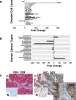
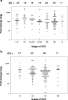
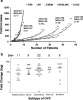
Tamir, Gangadharan, Balwani et al
J Ovarian Res (2016) 9, 20 DOI: 10.1186/s13048-016-0228-9
Cited by 42
AI Summary: OriGene products, including the PRSS8 cDNA clone and PRSS8-specific qRT-PCR primers, were used in this study to analyze and confirm PRSS8 (prostasin) gene expression levels in ovarian cancer cell lines and tissue samples.
Neural precursor cells induce cell death of high-grade astrocytomas through stimulation of TRPV1
Stock, Kumar, Synowitz et al
Nat. Med. (2012) 18 (8), 1232-8 DOI: 10.1038/nm.2827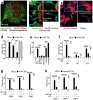
Stock, Kumar, Synowitz et al
Nat. Med. (2012) 18 (8), 1232-8 DOI: 10.1038/nm.2827
Cited by 215
AI Summary: In this study, OriGene’s TRPV1 cDNA (catalog # SC118827) and TRPV1 shRNA (catalog # TG311689) were used to manipulate TRPV1 expression in astrocytoma cells, enabling the authors to demonstrate that neural precursor cells induce tumor cell death through TRPV1 activation.
Snippet: The authors uncover a mechanism for the known antitumor effect exerted by neural precursor cells (NPCs). NPCs migrate into tumors in vivo and secrete endovanilloids, which act as agonists for TRPV1, their receptor expressed by glioma cells. TRPV1 activation causes ER stress
Showing 1-2 of 2 papers.
Powered by BizGenius
*Delivery time may vary from web posted schedule. Occasional delays may occur due to unforeseen
complexities in the preparation of your product. International customers may expect an additional 1-2 weeks
in shipping.
Related Products
- Price:
- Actual Price:
Welcome to OriGene AI!
I'm your AI-powered guide to everything OriGene.
Ask me anything:
- Product specs
- Ordering help
- Technical questions
- How to find exactly what your experiment needs
Prefer a live agent? Connect with us by clicking the green chat icon, as seen in the image below or email our team at custsupport@origene.com.
