
RXR-alpha / RXRA (111-228) Human Protein

Specifications
| Product Data | |
| Species | Human |
|---|---|
| Expression Host | E. coli |
| Expression cDNA Clone or AA Sequence | |
| Predicted MW | 13.5 kDa (119aa) confirmed by MALDI-TOF |
| Concentration | 1mg/ml (determined by Bradford assay) |
| Purity | > 95% by SDS-PAGE |
| Presentation State | Purified |
| Buffer | Liquid in. 20mM Tris-HCl buffer (pH 7.5) containing 0.1M NaCl, 5mM beta-Mercaptoethanol |
| Preparation | Liquid protein |
| Recommended Dilution | SDS-PAGE |
| Protein Description | The DNA binding domain of RXR (111-228 aa) was over expressed in E. coli and purified by using conventional column chromatography techniques. |
| Storage | Can be stored at +2°C to +8°C for 1 week. For long term storage, aliquot and store at -20°C to -80C. Avoid repeated freezing and thawing cycles. |
| Stability | Shelf life: one year from despatch. |
| Shipping | Blue Ice |
| Reference Data | |
| RefSeq | NP_002948.1 |
| Locus ID | 6256 |
| UniProt ID | P19793 |
| Cytogenetics | 9q34.2 |
| Synonyms | RXRA, NR2B1, RXR-alpha, Retinoid X receptor, Retinoid X receptor alpha, Nuclear receptor subfamily 2 group B member 1, Retinoic acid receptor RXR-alpha, FLJ16020, FLJ16733, MGC102720, Retinoic acid receptor RXR alpha, RXR alpha1, RXRA1 |
| Summary | Retinoid X receptors (RXRs) and retinoic acid receptors (RARs) are nuclear receptors that mediate the biological effects of retinoids by their involvement in retinoic acid-mediated gene activation. These receptors function as transcription factors by binding as homodimers or heterodimers to specific sequences in the promoters of target genes. The protein encoded by this gene is a member of the steroid and thyroid hormone receptor superfamily of transcriptional regulators. Alternative splicing of this gene results in multiple transcript variants. provided by RefSeq, May 2014 |
| Protein Categories | Intracellular Proteins, Transciption Factors |
| Protein Families | Druggable Genome, Nuclear Hormone Receptor, Transcription Factors |
| Protein Pathways | Adipocytokine signaling pathway, Non-small cell lung cancer, Pathways in cancer, PPAR signaling pathway, Small cell lung cancer, Thyroid cancer |
Reviews


Documents
| FAQs |
| SDS |
Resources
| Recombinant Protein Resources |
Citations
Modulation effects of black-vinegar based supplement against a high-fat dietary habit: antiobesity/hypolipidemic, antioxidative, and energy-metabolism effects
Liu, Chou, Li et al
J. Sci. Food Agric. (2020)
Liu, Chou, Li et al
J. Sci. Food Agric. (2020)
Cited by 10
AI Summary: In this study, OriGene’s RXRα antibody was used to assess protein expression changes in liver tissues, helping to elucidate the molecular mechanisms by which black-vinegar based supplements exert antiobesity and lipid-lowering effects in rats fed a high-fat diet.
Snippet: (1:3000 dilution, Santa Cruz Biotechnology Inc., Dallas, Texas, USA), PPARα (1:3000 dilution, Abcam PLC., Cambridge, UL), RXRα (1:3000 dilution, OriGene Technologies, Inc., Rockville, Maryland, USA), CPT1 (1:4000 dilution, Merck Millipore Co.), and UCP2
Curcumin inhibits the TGF-β1-dependent differentiation of lung fibroblasts via PPARγ-driven upregulation of cathepsins B and L
Saidi, Kasabova, Vanderlynden et al
Sci Rep (2019) 9 (1), 491 DOI: 10.1038/s41598-018-36858-3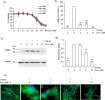
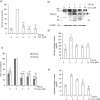
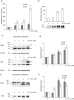
Saidi, Kasabova, Vanderlynden et al
Sci Rep (2019) 9 (1), 491 DOI: 10.1038/s41598-018-36858-3
Cited by 53
AI Summary: In this study, OriGene’s PPARγ siRNA (SR304257) was used to silence PPARγ expression, enabling the authors to demonstrate that curcumin’s inhibition of TGF-β1-dependent lung fibroblast differentiation is mediated through PPARγ-driven upregulation of cathepsins B and L.
A PPARγ-dependent miR-424/503-CD40 axis regulates inflammation mediated angiogenesis
Lee, Papangeli, Park et al
Sci Rep (2017) 7 (1), 2528 DOI: 10.1038/s41598-017-02852-4
Lee, Papangeli, Park et al
Sci Rep (2017) 7 (1), 2528 DOI: 10.1038/s41598-017-02852-4
AI Summary: OriGene products, specifically the PPARγ and RXRα constructs, were used to transfect HUVECs in order to investigate the regulation of miR-424/503 promoter activity in the study.
Snippet: HUVECs were transfected with miR-424/503 promoter-luciferase, renilla-luciferase, PPARγ and RXRα constructs (Origene)
Transient Maternal Hypothyroxinemia Potentiates the Transcriptional Response to Exogenous Thyroid Hormone in the Fetal Cerebral Cortex Before the Onset of Fetal Thyroid Function: A Messenger and MicroRNA Profiling Study
Dong, You, Williams et al
Cereb. Cortex (2014)
Dong, You, Williams et al
Cereb. Cortex (2014)
Cited by 31
AI Summary: OriGene products contributed to this study by providing the TRβ and RXRα expression plasmids, which were used to produce recombinant proteins for EMSA experiments investigating thyroid hormone receptor binding in the fetal cerebral cortex.
Snippet: EMSA was conducted using recombinant TRβ and RXRα produced in vitro by incubating the expression plasmids, TRβ and RXRα (OriGene Technologies, Rockville, MD, USA) with the TnT Quick Coupled Transcription/translation System (Promega, Madison, WI, USA ... Cite SaveSaving
A novel SNP in a vitamin D response element of the CYP24A1 promoter reduces protein binding, transactivation, and gene expression
Roff, Wilson
J Steroid Biochem Mol Biol (2008) 112 (1-3), 47-54 DOI: 10.1016/j.jsbmb.2008.08.009

Roff, Wilson
J Steroid Biochem Mol Biol (2008) 112 (1-3), 47-54 DOI: 10.1016/j.jsbmb.2008.08.009
Cited by 48
AI Summary: OriGene products, specifically the CYP24A1 cDNA clone (OriGene, SC119259) and CYP24A1 shRNA (OriGene, TL312259), were used in this study to analyze CYP24A1 gene function and expression, enabling the authors to assess the impact of the novel promoter SNP on protein binding, transactivation, and gene expression.
Showing 1-5 of 5 papers.
Powered by BizGenius
*Delivery time may vary from web posted schedule. Occasional delays may occur due to unforeseen
complexities in the preparation of your product. International customers may expect an additional 1-2 weeks
in shipping.
Related Products
- Price:
- Actual Price:
Welcome to OriGene AI!
I'm your AI-powered guide to everything OriGene.
Ask me anything:
- Product specs
- Ordering help
- Technical questions
- How to find exactly what your experiment needs
Prefer a live agent? Connect with us by clicking the green chat icon, as seen in the image below or email our team at custsupport@origene.com.
