
HSPB1 / HSP27 (1-205) Human Protein

Specifications
| Product Data | |
| Species | Human |
|---|---|
| Expression Host | E. coli |
| Expression cDNA Clone or AA Sequence | |
| Predicted MW | 22.7 kDa (205aa) confirmed by MALDI-TOF |
| Concentration | 1mg/ml (determined by Bradford assay) |
| Purity | > 95% by SDS-PAGE |
| Presentation State | Purified |
| Buffer | Liquid in. 20mM HEPES buffer (pH 7.4) containing 100mM KCl, 1mM DTT |
| Endotoxin | < 1 EU per 1ug of protein (determined by LAL method) |
| Preparation | Liquid purified protein |
| Recommended Dilution | SDS-PAGE |
| Protein Description | Recombinant Human Hsp27 was overexpressed in E. coli and purified by conventional chromatography. |
| Storage | Can be stored at +2°C to +8°C for 1 week. For long term storage, aliquot and store at -20°C to -80C. Avoid repeated freezing and thawing cycles. |
| Stability | Shelf life: one year from despatch. |
| Shipping | Blue Ice |
| Reference Data | |
| RefSeq | NP_001531 |
| Locus ID | 3315 |
| UniProt ID | P04792 |
| Cytogenetics | 7q11.23 |
| Synonyms | Heat shock 27 kDa protein, Hspb1, Hsp25, Hsp27, Hsp27, HspB1, Heat shock 27 kDa protein, HSP 27, Growth-related 25 kDa protein, P25, HSP25, Heat shock protein beta-1, Heat shock 27 kDa protein 28 kDa heat shock protein, CMT2F, DKFZp586P1322, Estrogen regulated 24 kDa protein, at shock 25kDa protein 1, Heat shock 27kDa protein 1, Heat shock 28kDa protein 1, Heat Shock Protein 27, Heat shock protein beta 1, Heat Shock Protein27, HS.76067, Hsp 28, Hsp B1, Hsp28, HspB1, SRP27, Stress responsive protein 27. |
| Summary | This gene encodes a member of the small heat shock protein (HSP20) family of proteins. In response to environmental stress, the encoded protein translocates from the cytoplasm to the nucleus and functions as a molecular chaperone that promotes the correct folding of other proteins. This protein plays an important role in the differentiation of a wide variety of cell types. Expression of this gene is correlated with poor clinical outcome in multiple human cancers, and the encoded protein may promote cancer cell proliferation and metastasis, while protecting cancer cells from apoptosis. Mutations in this gene have been identified in human patients with Charcot-Marie-Tooth disease and distal hereditary motor neuropathy. provided by RefSeq, Aug 2017 |
| Protein Categories | Growth Factors, Intracellular Proteins, Nervous system: Neurodegenerative diseases |
| Protein Pathways | MAPK signaling pathway, VEGF signaling pathway |
Reviews


Documents
| FAQs |
| SDS |
Resources
| Recombinant Protein Resources |
Citations
MiR-363-5p modulates regulatory T cells through STAT4-HSPB1-Notch1 axis and is associated with the immunological abnormality in Graves' disease
Yin, Ge, Ge et al
J Cell Mol Med (2021)
Yin, Ge, Ge et al
J Cell Mol Med (2021)
Cited by 7
AI Summary: OriGene’s pCMV6-HSPB1 expression vector was used in this study to investigate how overexpression of HSPB1 affects Treg cell function and the STAT4-HSPB1-Notch1 signaling axis in the context of Graves' disease.
Snippet: The miR- 363- 5p agomir, antagomir (defined as miR- 363 and anti- miR- 363 in the Figures) and negative control sequences (Ribobio) as well as pCMV6- HSPB1 (Origene) and pCMV3- STAT4 expression vectors (Sino Biological), respectively, were transfected into
Chemotherapy Sensitizes Therapy-Resistant Cells to Mild Hyperthermia by Suppressing Heat Shock Protein 27 Expression in Triple-Negative Breast Cancer
Mu, Wu, Zhou et al
Clin Cancer Res (2018) 24 (19), 4900-4912 DOI: 10.1158/1078-0432.CCR-17-3872

Mu, Wu, Zhou et al
Clin Cancer Res (2018) 24 (19), 4900-4912 DOI: 10.1158/1078-0432.CCR-17-3872
AI Summary: In this study, OriGene’s HSP27 (heat shock protein 27) shRNA lentiviral particles were used to knock down HSP27 expression, helping to demonstrate that suppression of HSP27 sensitizes triple-negative breast cancer cells to mild hyperthermia following chemotherapy.
Detection of salivary heat shock protein 27 by enzyme-linked immunosorbent assay and its correlation with histopathology of oral leukoplakia
Bhavana, Madhura, Kumar et al
J Oral Maxillofac Pathol (2018) 22 (3), 307-313 DOI: 10.4103/jomfp.JOMFP_86_18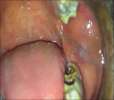
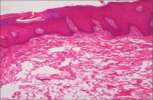
Bhavana, Madhura, Kumar et al
J Oral Maxillofac Pathol (2018) 22 (3), 307-313 DOI: 10.4103/jomfp.JOMFP_86_18
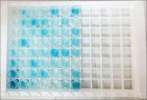
Snippet: ORIGENE Hsp27 ELISA kit (Sentier Laboratories Private Limited, Bengaluru) was used for the present study. At the end of the procedure, the mean absorbance and Hsp27(pg/ml) values were calculated for both control and leukoplakic samples. A curve was plotted for both the groups and the correlation of mean absorbance and mean Hsp27 were calculated for both the groups
microRNA-577 suppresses tumor growth and enhances chemosensitivity in colorectal cancer
Jiang, Ju, Zhang et al
J. Biochem. Mol. Toxicol. (2017)
Jiang, Ju, Zhang et al
J. Biochem. Mol. Toxicol. (2017)
Phosphorylation enhances recombinant HSP27 neuroprotection against focal cerebral ischemia in mice
Shimada, Tanaka, Shimura et al
Neuroscience (2014) 278, 113-21 DOI: 10.1016/j.neuroscience.2014.07.073
Shimada, Tanaka, Shimura et al
Neuroscience (2014) 278, 113-21 DOI: 10.1016/j.neuroscience.2014.07.073
Cited by 26
AI Summary: OriGene products contributed to this study by providing the recombinant HSP27 (rHSP27) protein, which was used to assess and compare the neuroprotective effects of phosphorylated and non-phosphorylated forms of HSP27 in a mouse model of cerebral ischemia.
Mutants of human αB-crystallin cause enhanced protein aggregation and apoptosis in mammalian cells: influence of co-expression of HspB1
Raju, Abraham
Biochem. Biophys. Res. Commun. (2013) 430 (1), 107-12 DOI: 10.1016/j.bbrc.2012.11.051
Raju, Abraham
Biochem. Biophys. Res. Commun. (2013) 430 (1), 107-12 DOI: 10.1016/j.bbrc.2012.11.051
Cited by 31
Showing 1-6 of 7 papers.
Powered by BizGenius
*Delivery time may vary from web posted schedule. Occasional delays may occur due to unforeseen
complexities in the preparation of your product. International customers may expect an additional 1-2 weeks
in shipping.
Related Products
- Price:
- Actual Price:
Welcome to OriGene AI!
I'm your AI-powered guide to everything OriGene.
Ask me anything:
- Product specs
- Ordering help
- Technical questions
- How to find exactly what your experiment needs
Prefer a live agent? Connect with us by clicking the green chat icon, as seen in the image below or email our team at custsupport@origene.com.
