
HIV-1 (gp41) Protein

Specifications
| Product Data | |
| Expression Host | E. coli |
|---|---|
| Concentration | lot specific |
| Presentation State | Purified |
| Buffer | Presentation State: Purified State: Liquid purified fraction (~95% pure by SDS-PAGE). Buffer System: 10 mM Na2CO3, 10 mM EDTA, 14 mM beta-ME, 0.05% tween 20, containing no preservatives. |
| Preparation | Liquid purified fraction (~95% pure by SDS-PAGE). |
| Recommended Dilution | Suitable in ELISA. |
| Protein Description | Human Immunodeficiency Virus Type 1 (HIV-1) envelope antigen, gp41, recombinant. Envelope, gp41 with Beta-galactosidase (114 kDa) fusion partner. |
| Note | Caution: No test guarantees a product to be non-infectious. All materials should be handled as if potentially infectious. Generally accepted laboratory practices appropriate for infectious materials should be employed when handling this product. |
| Storage | Store the antigen at 2-8°C for one month or (in aliquots) at -20°C for longer. Avoid multiple freeze/thaw cycles. |
| Stability | Shelf life: six months from despatch. |
| Shipping | Blue Ice |
| Reference Data | |
| Synonyms | HIV1, HIV-I, Human immunodeficiency virus type 1 |
| Summary | HIV is a highly variable virus which mutates very readily. This means there are many different strains of HIV, even within the body of a single infected person. The strains of HIV1 can be classified into three groups : the "major" group M, the "outlier" group O and the "new" group N. These three groups may represent three separate introductions of simian immunodeficiency virus into humans. Group O appears to be restricted to West-Central Africa and group N, discovered in 1998 in Cameroon, is extremely rare. More than 90% of HIV1 infections belong to HIV1 group M. |
| Protein Families | Suitable in ELISA. |
Reviews


Documents
| FAQs |
| SDS |
Resources
| Recombinant Protein Resources |
Citations
Differential recognition of HIV-stimulated IL-1β and IL-18 secretion through NLR and NAIP signalling in monocyte-derived macrophages
Triantafilou, Ward, Czubala et al
PLoS Pathog (2021) 17 (4), e1009417 DOI: 10.1371/journal.ppat.1009417
Triantafilou, Ward, Czubala et al
PLoS Pathog (2021) 17 (4), e1009417 DOI: 10.1371/journal.ppat.1009417
Cited by 45
AI Summary: OriGene’s anti Myc-DDK tag antibody was used for immunoprecipitation experiments to detect tagged proteins, contributing to the analysis of protein interactions involved in HIV-stimulated inflammasome activation in macrophages.
Snippet: l, 0.1% NonidetP40, 1 mM MgCl2, 1mM CaCl2 and 2mM PMSF). Lysates were immunoprecipitated with anti gp41, or control mouse immunoglobulin G (IgG) (Invitrogen) or anti-Flag (anti Myc-DDK tag antibody) (Origene, USA) with Protein-A Sepharose (GE Healthcare, Milwaukee, WI, USA). Chemicals/antibodies/reagents All fine chemicals were obtained from Sigma-Aldrich. Anti-caspase 1 p20 rabbit polyclonal ant...
High mannose-specific lectin Msl mediates key interactions of the vaginal Lactobacillus plantarum isolate CMPG5300
Malik, Petrova, Imholz et al
Sci Rep (2016) 6, 37339 DOI: 10.1038/srep37339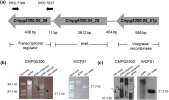
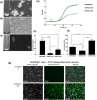
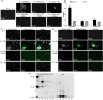
Malik, Petrova, Imholz et al
Sci Rep (2016) 6, 37339 DOI: 10.1038/srep37339
Cited by 39
AI Summary: OriGene products, specifically the pCR™-Blunt II-TOPO® vector (Cat# K2800-20) and anti-His antibody (Cat# TA150041), were used in this study for cloning the gene encoding the mannose-specific lectin (Msl) and for detecting the recombinant protein, respectively, thereby facilitating the functional characterization of Msl in Lactobacillus plantarum CMPG5300.
The griffithsin dimer is required for high-potency inhibition of HIV-1: evidence for manipulation of the structure of gp120 as part of the griffithsin dimer mechanism
Xue, Hoorelbeke, Kagiampakis et al
Antimicrob Agents Chemother (2013) 57 (8), 3976-89 DOI: 10.1128/AAC.00332-13
Xue, Hoorelbeke, Kagiampakis et al
Antimicrob Agents Chemother (2013) 57 (8), 3976-89 DOI: 10.1128/AAC.00332-13
AI Summary: In this study, OriGene products—including the HIV-1 gp120 expression plasmid (Cat# RC220446) and the anti-His tag antibody (Cat# TA150041)—were used to produce and detect gp120 protein, enabling the authors to assess how different forms of griffithsin interact with gp120 and inhibit HIV-1 infection.
The role of individual carbohydrate-binding sites in the function of the potent anti-HIV lectin griffithsin
Xue, Gao, Hoorelbeke et al
Mol Pharm (2012) 9 (9), 2613-25 DOI: 10.1021/mp300194b
Xue, Gao, Hoorelbeke et al
Mol Pharm (2012) 9 (9), 2613-25 DOI: 10.1021/mp300194b
Cited by 47
AI Summary: In this study, OriGene’s pET28a(+)-GRFT and pET28a(+)-D30A, D70A, D112A, and D30A/D70A/D112A GRFT plasmids were used to express wild-type and mutant griffithsin proteins, enabling the investigation of how individual carbohydrate-binding sites contribute to the lectin’s anti-HIV activity.
Actinohivin, a broadly neutralizing prokaryotic lectin, inhibits HIV-1 infection by specifically targeting high-mannose-type glycans on the gp120 envelope
Hoorelbeke, Huskens, Férir et al
Antimicrob Agents Chemother (2010) 54 (8), 3287-301 DOI: 10.1128/AAC.00254-10
Hoorelbeke, Huskens, Férir et al
Antimicrob Agents Chemother (2010) 54 (8), 3287-301 DOI: 10.1128/AAC.00254-10
AI Summary: OriGene’s HIV-1 gp120 (Cat# 40446-V08B) and HIV-1 gp41 (Cat# 40448-V08B) recombinant proteins were used as target antigens to assess the binding affinity and specificity of actinohivin in this study.
Pradimicin S, a highly soluble nonpeptidic small-size carbohydrate-binding antibiotic, is an anti-HIV drug lead for both microbicidal and systemic use
Balzarini, François, Van Laethem et al
Antimicrob Agents Chemother (2010) 54 (4), 1425-35 DOI: 10.1128/AAC.01347-09
Balzarini, François, Van Laethem et al
Antimicrob Agents Chemother (2010) 54 (4), 1425-35 DOI: 10.1128/AAC.01347-09
AI Summary: OriGene products contributed to this study by providing the human DC-SIGN cDNA (Cat# SC119378), which was used to generate DC-SIGN-expressing cells for experiments investigating PRM-S's inhibition of DC-SIGN-mediated HIV-1 and SIV capture and transmission.
Showing 1-6 of 6 papers.
Powered by BizGenius
*Delivery time may vary from web posted schedule. Occasional delays may occur due to unforeseen
complexities in the preparation of your product. International customers may expect an additional 1-2 weeks
in shipping.
Related Products
- Price:
- Actual Price:
Welcome to OriGene AI!
I'm your AI-powered guide to everything OriGene.
Ask me anything:
- Product specs
- Ordering help
- Technical questions
- How to find exactly what your experiment needs
Prefer a live agent? Connect with us by clicking the green chat icon, as seen in the image below or email our team at custsupport@origene.com.
