
CADM1 / SYNCAM (45-374, His-Tag) Human Protein

Specifications
| Product Data | |
| Species | Human |
|---|---|
| Expression Host | E. coli |
| Expression cDNA Clone or AA Sequence | |
| Tag | His-Tag |
| Predicted MW | 39.4 kDa (353aa) confirmed by MALDI-TOF |
| Concentration | 0.25mg/ml (determined by Bradford assay) |
| Purity | > 85% by SDS-PAGE |
| Presentation State | Purified |
| Buffer | Liquid in. Phosphate-Buffered Saline (pH 7.4) containing 10% glycerol, 1mM DTT |
| Preparation | Liquid purified protein |
| Recommended Dilution | SDS-PAGE |
| Protein Description | Recombinant human CADM1 protein, fused to His-tag at N-terminus, was expressed in E.coli and purified by using conventional chromatography techniques. |
| Storage | Can be stored at +2°C to +8°C for 1 week. For long term storage, aliquot and store at -20°C to -80C. Avoid repeated freezing and thawing cycles. |
| Stability | Shelf life: one year from despatch. |
| Shipping | Blue Ice |
| Reference Data | |
| RefSeq | NP_055148 |
| Locus ID | 23705 |
| UniProt ID | Q9BY67 |
| Cytogenetics | 11q23.3 |
| Synonyms | Cell adhesion molecule 1, Immunoglobulin superfamily member 4, IgSF4, Nectin-like protein 2, NECL-2, Spermatogenic immunoglobulin superfamily, SgIgSF, Synaptic cell adhesion molecule, SynCAM, Tumor suppressor in lung cancer 1, TSLC-1, ST17, BL2, IGSF4A, SYNCAM1, RA175 |
| Summary | Mediates homophilic cell-cell adhesion in a Ca(2+)-independent manner. Also mediates heterophilic cell-cell adhesion with CADM3 and NECTIN3 in a Ca(2+)-independent manner. Acts as a tumor suppressor in non-small-cell lung cancer (NSCLC) cells. Interaction with CRTAM promotes natural killer (NK) cell cytotoxicity and interferon-gamma (IFN-gamma) secretion by CD8+ cells in vitro as well as NK cell-mediated rejection of tumors expressing CADM3 in vivo. May contribute to the less invasive phenotypes of lepidic growth tumor cells. In mast cells, may mediate attachment to and promote communication with nerves. CADM1, together with MITF, is essential for development and survival of mast cells in vivo. Acts as a synaptic cell adhesion molecule and plays a role in the formation of dendritic spines and in synapse assembly (By similarity). May be involved in neuronal migration, axon growth, pathfinding, and fasciculation on the axons of differentiating neurons. May play diverse roles in the spermatogenesis including in the adhesion of spermatocytes and spermatids to Sertoli cells and for their normal differentiation into mature spermatozoa.UniProtKB/Swiss-Prot Function |
| Protein Categories | Cancer: Head and Neck, Cytokines, Intracellular Proteins, Membrane Proteins |
| Protein Families | Transmembrane |
| Protein Pathways | Cell adhesion molecules (CAMs) |
Reviews


Documents
| FAQs |
| SDS |
Resources
| Recombinant Protein Resources |
Citations
CADM1 is essential for KSHV-encoded vGPCR-and vFLIP-mediated chronic NF-κB activation
Hunte, Alonso, Thomas et al
PLoS Pathog. (2018) 14 (4), e1006968 DOI: 10.1371/journal.ppat.1006968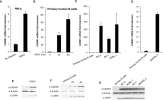
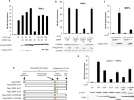
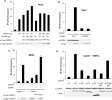
Hunte, Alonso, Thomas et al
PLoS Pathog. (2018) 14 (4), e1006968 DOI: 10.1371/journal.ppat.1006968
AI Summary: OriGene Technologies contributed packaging plasmids used for the delivery of CADM1-specific shRNA and control scrambled shRNA constructs to knock down CADM1 expression in HEK 293T cells in this study.
Snippet: A CADM1-specific shRNA construct was used to knockdown CADM1 expression as described previously [44]. Briefly, HEK 293-T-cells in 6-well culture plates were transfected with 1 μg of control scrambled shRNA or CADM1 shRNA with 2 μg of packaging plasmids (OriGene Technologies) containing a puromycin selection marker using FuGENE 6 (Roche)
Human T-Cell Leukemia Virus Type 1 (HTLV-1) Tax Requires CADM1/TSLC1 for Inactivation of the NF-κB Inhibitor A20 and Constitutive NF-κB Signaling
Pujari, Hunte, Thomas et al
PLoS Pathog. (2015) 11 (3), e1004721 DOI: 10.1371/journal.ppat.1004721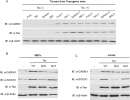
Pujari, Hunte, Thomas et al
PLoS Pathog. (2015) 11 (3), e1004721 DOI: 10.1371/journal.ppat.1004721
Cited by 56
AI Summary: OriGene Technologies' packaging plasmids were used to produce lentiviral particles for shRNA-mediated knockdown of CADM1, enabling the authors to investigate CADM1's role in HTLV-1 Tax-mediated NF-κB activation.
Snippet: Lentiviral particle production and targeT-cell infection To investigate the role of CADM1 in Tax-mediated NF-κB activation, a CADM1-specific shRNA construct was used to knockdown CADM1 expression. HEK 293-T-cells in 6-well culture plates were transfected with 1 μg of control scrambled shRNA or CADM1 shRNA with 2 μg of packaging plasmids (OriGene Technologies) containing puromycin selection marker using FuGENE 6 (Roche). …
Showing 1-2 of 2 papers.
Powered by BizGenius
*Delivery time may vary from web posted schedule. Occasional delays may occur due to unforeseen
complexities in the preparation of your product. International customers may expect an additional 1-2 weeks
in shipping.
Related Products
- Price:
- Actual Price:
Welcome to OriGene AI!
I'm your AI-powered guide to everything OriGene.
Ask me anything:
- Product specs
- Ordering help
- Technical questions
- How to find exactly what your experiment needs
Prefer a live agent? Connect with us by clicking the green chat icon, as seen in the image below or email our team at custsupport@origene.com.
