
EEF1A1 / LENG7 (1-462) Human Protein

Specifications
| Product Data | |
| Species | Human |
|---|---|
| Expression Host | E. coli |
| Expression cDNA Clone or AA Sequence | |
| Predicted MW | 50.1 kDa (462aa) |
| Concentration | 1mg/ml (determined by Bradford assay) |
| Purity | > 90% by SDS-PAGE |
| Presentation State | Purified |
| Buffer | Liquid in. 20mM Tris-HCl buffer (pH 8.0) containing 0.4M urea, 10% glycerol |
| Preparation | Liquid purified protein |
| Recommended Dilution | SDS-PAGE, Denatured |
| Protein Description | Recombinant human EEF1A1 protein is expressed in E.coli. |
| Storage | Can be stored at +2°C to +8°C for 1 week. For long term storage, aliquot and store at -20°C to -80C. Avoid repeated freezing and thawing cycles. |
| Stability | Shelf life: one year from despatch. |
| Shipping | Blue Ice |
| Reference Data | |
| RefSeq | NP_001393.1 |
| Locus ID | 1915 |
| UniProt ID | P68104 |
| Cytogenetics | 6q13 |
| Synonyms | Eukaryotic translation elongation factor 1 alpha 1, Leukocyte receptor cluster (LRC) member 7, Elongation factor 1-alpha 1, EF-1-alpha-1, Elongation factor Tu, EF-Tu, Eukaryotic elongation factor 1 A-1, eEF1A-1, EEF1A, EF1A, LENG7, EE1A1, EF1A1, EF1alpha1 |
| Summary | This gene encodes an isoform of the alpha subunit of the elongation factor-1 complex, which is responsible for the enzymatic delivery of aminoacyl tRNAs to the ribosome. This isoform (alpha 1) is expressed in brain, placenta, lung, liver, kidney, and pancreas, and the other isoform (alpha 2) is expressed in brain, heart and skeletal muscle. This isoform is identified as an autoantigen in 66% of patients with Felty syndrome. This gene has been found to have multiple copies on many chromosomes, some of which, if not all, represent different pseudogenes. provided by RefSeq, Jul 2008 |
| Protein Categories | Growth Factors, Intracellular Proteins |
| Protein Families | Druggable Genome |
Reviews


Documents
| FAQs |
| SDS |
Resources
| Recombinant Protein Resources |
Citations
Cytosolic PINK1 orchestrates protein translation during proteasomal stress by phosphorylating the translation elongation factor eEF1A1
Qin, Ye, Zheng et al
FEBS Lett (2020)
Qin, Ye, Zheng et al
FEBS Lett (2020)
Cited by 16
Combining laser capture microdissection and proteomics reveals an active translation machinery controlling invadosome formation
Ezzoukhry, Henriet, Cordelières et al
Nat Commun (2018) 9 (1), 2031 DOI: 10.1038/s41467-018-04461-9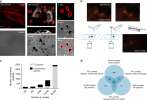
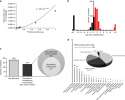
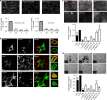
Ezzoukhry, Henriet, Cordelières et al
Nat Commun (2018) 9 (1), 2031 DOI: 10.1038/s41467-018-04461-9
AI Summary: OriGene products Caprin-myc, eIF3L-myc, HA-eEF1A1, and eEF2-GFP plasmids were used for transfection experiments to investigate the role of specific translational machinery components in invadosome formation.
Snippet: …Transfection Caprin-myc, eIF3L-myc, HA-eEF1A1, and eEF2-GFP were purchased form Origene. …Transfection Caprin-myc, eIF3L-myc, HA-eEF1A1, and eEF2-GFP were purchased form Origene. …
HIV-1 Uncoating and Reverse Transcription Require eEF1A Binding to Surface-Exposed Acidic Residues of the Reverse Transcriptase Thumb Domain
Rawle, Li, Swedberg et al
MBio (2018) 9 (2) DOI: 10.1128/mBio.00316-18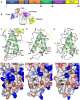
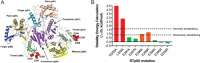
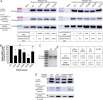
Rawle, Li, Swedberg et al
MBio (2018) 9 (2) DOI: 10.1128/mBio.00316-18
AI Summary: In this study, the OriGene recombinant eEF1A1 protein was used in binding assays to investigate its interaction with HIV-1 reverse transcriptase, helping to demonstrate the importance of specific RT thumb domain residues in viral uncoating and reverse transcription.
Snippet: …Purified recombinant eEF1A1 (OriGene) was biotinylated with EZ-Link-sulfo-NHS-biotin in accordance with the manufacturer’s instructions (Pierce Biotechnology, IL, USA) and immobilized on Octet Red system streptavidin-coated bio;... -0.5 Centrifugal Filter Unit with Ultracel-100 membrane (Amicon). …Purified recombinant eEF1A1 (OriGene) was biotinylated with EZ-Link-sulfo-NHS-biotin in accordance with the manufacturer’s instructions (Pierce Biotechnology, IL, USA) and immobilized on Octet Red system streptavidin-coated bio
Proteomic analyses of signalling complexes associated with receptor tyrosine kinase identify novel members of fibroblast growth factor receptor 3 interactome
Balek, Nemec, Konik et al
Cell. Signal. (2017)
Balek, Nemec, Konik et al
Cell. Signal. (2017)
Expanded Polyalanine Tracts Function as Nuclear Export Signals and Promote Protein Mislocalization via Eukaryotic Translation Elongation Factor 1 Alpha 1
Li, Ng, Koon et al
J. Biol. Chem. (2017)
Li, Ng, Koon et al
J. Biol. Chem. (2017)
ATXN2-AS, a gene antisense to ATXN2, is associated with spinocerebellar ataxia type 2 and amyotrophic lateral sclerosis
Li, Sun, Xia et al
Ann Neurol (2016) 80 (4), 600-15 DOI: 10.1002/ana.24761

Li, Sun, Xia et al
Ann Neurol (2016) 80 (4), 600-15 DOI: 10.1002/ana.24761
Cited by 72
AI Summary: In this paper, OriGene's pCMV6-XL5-ATXN2 and pCMV6-XL5-ATXN2-AS expression plasmids were used to study the effects of ATXN2 and its antisense transcript (ATXN2-AS) in cellular models, enabling the authors to investigate the pathogenic role of ATXN2-AS in spinocerebellar ataxia type 2 and amyotrophic lateral sclerosis.
Showing 1-6 of 11 papers.
Powered by BizGenius
*Delivery time may vary from web posted schedule. Occasional delays may occur due to unforeseen
complexities in the preparation of your product. International customers may expect an additional 1-2 weeks
in shipping.
Related Products
- Price:
- Actual Price:
Welcome to OriGene AI!
I'm your AI-powered guide to everything OriGene.
Ask me anything:
- Product specs
- Ordering help
- Technical questions
- How to find exactly what your experiment needs
Prefer a live agent? Connect with us by clicking the green chat icon, as seen in the image below or email our team at custsupport@origene.com.
