
SERPINE1 / PAI1 (Wild type) Mouse Protein

$3,425.00
2 Weeks*
Specifications
| Product Data | |
| Species | Mouse |
|---|---|
| Expression Host | E. coli |
| Predicted MW | 43 kDa |
| Concentration | lot specific |
| Purity | >98% by SDS-PAGE. 80 +/- 5% active by uPA titration. Purified by Column chromatography |
| Presentation State | Purified |
| Buffer | Presentation State: Purified State: Liquid purified protein Buffer System: 0.05M Sodium Acetate, 0.1M Sodium Chloride, 1 mM EDTA, pH 5.0 without preservatives |
| Preparation | Liquid purified protein |
| Protein Description | Recombinant Human Plasminogen Activator Inhibitor 1 (PAI-1), wild type. Does not contain a fusion partner. |
| Storage | Store (in aliquots) at -70°C Aliquot to avoid multiple freeze/thaw cycles. |
| Stability | Shelf life: one year from despatch. |
| Shipping | Blue Ice |
| Reference Data | |
| RefSeq | NP_000593 |
| Locus ID | 5054 |
| UniProt ID | P05121 |
| Cytogenetics | 7q22.1 |
| Synonyms | Serpin E1, PLANH1, Plasminogen Activator Inhibitor 1, PAI-1, PAI |
| Summary | This gene encodes a member of the serine proteinase inhibitor (serpin) superfamily. This member is the principal inhibitor of tissue plasminogen activator (tPA) and urokinase (uPA), and hence is an inhibitor of fibrinolysis. The protein also functions as a component of innate antiviral immunity. Defects in this gene are the cause of plasminogen activator inhibitor-1 deficiency (PAI-1 deficiency), and high concentrations of the gene product are associated with thrombophilia. provided by RefSeq, Aug 2020 |
| Protein Categories | Cardiovascular diseases, Secreated Proteins |
| Protein Families | Druggable Genome, Secreted Protein |
| Protein Pathways | Complement and coagulation cascades, p53 signaling pathway |
Reviews


Documents
| FAQs |
| SDS |
Resources
| Recombinant Protein Resources |
Citations
Silencing of Ago-2 Interacting Protein SERBP1 Relieves KCC2 Repression by miR-92 in Neurons
Barbato, Frisone, Braccini et al
Cells (2022) 11 (6) DOI: 10.3390/cells11061052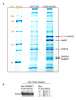
Barbato, Frisone, Braccini et al
Cells (2022) 11 (6) DOI: 10.3390/cells11061052
Cited by 10
AI Summary: OriGene’s full-length Serpine1 3′UTR clone (SC119781) was used to generate reporter constructs for studying the role of SERBP1 in miRNA-mediated regulation in this paper.
Snippet: EcoRI/NotI). PSSG: control firefly luciferase no containing 3′UTR was derived from SG-Luc-SLC12A5. Serpine1 3′UTR: The last 1332 nts of the Serpine1 3′UTR within the full-length clone SC119781 (Origene, Rockville, MD, USA) (SacII/NotI) and the first 509 nts of the Serpine1 3′UTR within the SG-Luc- Serpine1 plasmid (XbaI/SacII) (Amplicon start: chr7: 100362990;Amplicon end: chr7: 100363963
Alteration in global DNA methylation status following preconditioning injury influences axon growth competence of the sensory neurons
Shin, Kim, Kwon et al
Exp. Neurol. (2020) 326, 113177 DOI: 10.1016/j.expneurol.2020.113177
Shin, Kim, Kwon et al
Exp. Neurol. (2020) 326, 113177 DOI: 10.1016/j.expneurol.2020.113177
Cited by 28
Mineralocorticoid Receptor (MR) Trans-Activation of Inflammatory AP-1 Signaling: Dependence on DNA Sequence, MR Conformation, and AP-1 Family Member Expression
Dougherty, Elinoff, Ferreyra et al
J. Biol. Chem. (2016)
Dougherty, Elinoff, Ferreyra et al
J. Biol. Chem. (2016)
AI Summary: OriGene products, specifically the DDK-myc/pCMV6 empty vector, human GR-DDK-myc/pCMV6, and MR-DDK-myc/pCMV6 plasmids, were used to transiently transfect HEK293 cells for overexpression studies of glucocorticoid and mineralocorticoid receptors, enabling investigation of their roles in inflammatory AP-1 signaling.
Snippet: Forty-eight hours prior to transfection, 5x10⁵ HEK293 cells were seeded onto 35 mm plates. Cells were transiently transfected with 1 µg of empty-vector (DDK-myc/pCMV6;Origene, Rockville, MD) plus 0.5 µg of human GRDDK-myc/pCMV6 (Origene), MR-DDKmyc/pCMV6 (Origene), or additional empty-vector using lipofectamine 2000 (Life Technologies)
Redox regulation of soluble epoxide hydrolase by 15-deoxy-delta-prostaglandin J2 controls coronary hypoxic vasodilation
Charles, Burgoyne, Mayr et al
Circ. Res. (2011) 108 (3), 324-34 DOI: 10.1161/CIRCRESAHA.110.235879
Charles, Burgoyne, Mayr et al
Circ. Res. (2011) 108 (3), 324-34 DOI: 10.1161/CIRCRESAHA.110.235879
Cited by 16
AI Summary: OriGene contributed to this study by providing the cDNA for mouse wild-type soluble epoxide hydrolase (sEH), which was used to generate both wild-type and mutant (Cys521Ser) sEH constructs for investigating the redox regulation of sEH in coronary vasodilation.
Snippet: 15. sEH Wild-Type and Cys521Ser Construct Generation. The cDNA for mouse wild-type sEH was obtained from Origene and the Cys521Ser mutant created using the QuikChanger kit (Stratagene). Assessing Whether Thiol-Oxidizing Agents Inhibit sEH in Cells.
Showing 1-4 of 4 papers.
Powered by BizGenius
*Delivery time may vary from web posted schedule. Occasional delays may occur due to unforeseen
complexities in the preparation of your product. International customers may expect an additional 1-2 weeks
in shipping.
Related Products
- Price:
- Actual Price:
Welcome to OriGene AI!
I'm your AI-powered guide to everything OriGene.
Ask me anything:
- Product specs
- Ordering help
- Technical questions
- How to find exactly what your experiment needs
Prefer a live agent? Connect with us by clicking the green chat icon, as seen in the image below or email our team at custsupport@origene.com.
