
VEGF-A Mouse Protein

Specifications
| Product Data | |
| Species | Mouse |
|---|---|
| Expression Host | E. coli |
| Expression cDNA Clone or AA Sequence | |
| Predicted MW | 44.2 kDa |
| Purity | >95% by SDS-PAGE and silver stain |
| Presentation State | Purified |
| Buffer | Presentation State: Purified State: Lyophilized protein Buffer System: 50 mM Acetic Acid Stabilizer: None |
| Bioactivity | Biological: Determined by the dose-dependent stimulation of the proliferation of human umbilical vein endothelial cells (HUVEC) using a concentration range of 2-20 ng/ml. |
| Endotoxin | < 0.1 ng/µg of VEGF188 |
| Reconstitution Method | The lyophilized VEGF188 should be reconstituted in 50mM Acetic Acid to a concentration not lower than 50 μg/ml. For long term storage we recommend to add at least 0.1% Human or Bovine Serum Albumin. |
| Preparation | Lyophilized protein |
| Protein Description | Recombinant Murine Vascular Endothelial Growth Factor188. Result by N-terminal sequencing: APTTEGE |
| Note | Protein RefSeq: NP 001020421 mRNA RefSeq: NM 001025250 |
| Storage | Store lyophilized at 2-8°C for 6 months or at -20°C long term. After reconstitution store the antibody undiluted at 2-8°C for one month or (in aliquots) at -20°C long term. Avoid repeated freezing and thawing. |
| Stability | Shelf life: one year from despatch. |
| Shipping | Ambient |
| Reference Data | |
| RefSeq | NP_001020421 |
| Locus ID | 22339 |
| UniProt ID | Q00731 |
| Cytogenetics | 17 22.79 cM |
| Synonyms | VEGFA, VEGF, VPF, Vascular endothelial growth factor A, Vascular permeability factor |
| Summary | This gene is a member of the PDGF/VEGF growth factor family. It encodes a heparin-binding protein, which exists as a disulfide-linked homodimer. This growth factor induces proliferation and migration of vascular endothelial cells, and is essential for both physiological and pathological angiogenesis. Disruption of this gene in mice resulted in abnormal embryonic blood vessel formation. This gene is upregulated in many known tumors and its expression is correlated with tumor stage and progression. Alternatively spliced transcript variants encoding different isoforms have been found for this gene. There is also evidence for alternative translation initiation from upstream non-AUG (CUG) codons resulting in additional isoforms. A recent study showed that a C-terminally extended isoform is produced by use of an alternative in-frame translation termination codon via a stop codon readthrough mechanism, and that this isoform is antiangiogenic. Expression of some isoforms derived from the AUG start codon is regulated by a small upstream open reading frame, which is located within an internal ribosome entry site.provided by RefSeq, Nov 2015 |
| Protein Categories | Cytokines, Endocrine and metabolic diseases, Growth Factors, Intracellular Proteins, Membrane Proteins, Nervous system Diseases, Secreated Proteins |
Reviews


Documents
| FAQs |
| SDS |
Resources
| Recombinant Protein Resources |
Citations
Long noncoding RNA NEAT1 drives aggressive endometrial cancer progression via miR-361-regulated networks involving STAT3 and tumor microenvironment-related genes
Dong, Xiong, Yue et al
J. Exp. Clin. Cancer Res. (2019) 38 (1), 295 DOI: 10.1186/s13046-019-1306-9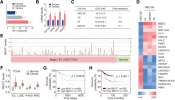
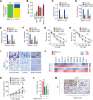
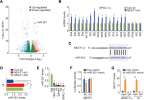
Dong, Xiong, Yue et al
J. Exp. Clin. Cancer Res. (2019) 38 (1), 295 DOI: 10.1186/s13046-019-1306-9
AI Summary: In this study, OriGene products including STAT3 (Cat# SC11991) and MEF2D (Cat# SC16397) expression plasmids were used to investigate the molecular mechanisms by which NEAT1 regulates aggressive endometrial cancer progression through the miR-361/STAT3 signaling pathway.
Snippet: …We identified 10 lncRNAs with upregulated expression (NEAT1, H19, PVT1, UCA1, MIR7-3HG, SNHG16, HULC, RMST, BCAR4 and LINC00152) and 10 lncRNAs with downregulated expression (MEG3, GAS5, DIO3OS, MIR155HG, LINC00261, FENDRR, MIAT, TMEM161B-AS1, HAND2-AS1 and NBR2) in the highly invasive, sphere-forming and TX-resistant derivatives. …We showed that NEAT1 functions as an oncogenic sponge for the tumor suppressor microRNA-361 (miR-361), which suppresses proliferation, invasion, sphere formation and TX resistance by directly targeting the oncogene STAT3. Furthermore, miR-361 also suppressed the expression of multiple prometastatic genes and tumor microenvironment-related genes, including MEF2D, ROCK1, WNT7A, VEGF-A, PDE4B, and KPNA4. …
Showing 1-1 of 1 papers.
Powered by BizGenius
*Delivery time may vary from web posted schedule. Occasional delays may occur due to unforeseen
complexities in the preparation of your product. International customers may expect an additional 1-2 weeks
in shipping.
Related Products
- Price:
- Actual Price:
Welcome to OriGene AI!
I'm your AI-powered guide to everything OriGene.
Ask me anything:
- Product specs
- Ordering help
- Technical questions
- How to find exactly what your experiment needs
Prefer a live agent? Connect with us by clicking the green chat icon, as seen in the image below or email our team at custsupport@origene.com.
