
STIM1 / GOK (23-213, Calmodulin Tag) Human Protein

Specifications
| Product Data | |
| Species | Human |
|---|---|
| Expression Host | E. coli |
| Expression cDNA Clone or AA Sequence | |
| Tag | Calmodulin Tag |
| Predicted MW | 38 kDa (343aa) confirmed by MALDI-TOF |
| Concentration | 1mg/ml (determined by Bradford assay) |
| Purity | > 90% by SDS-PAGE |
| Presentation State | Purified |
| Buffer | Liquid in. 20mM Tris-HCl buffer (pH 7.5) |
| Preparation | Liquid purified protein |
| Recommended Dilution | SDS-PAGE |
| Protein Description | Recombinant Calmodulin tagged STIM1 was expressed in E.coli and purified by using conventional chromatography techniques. |
| Storage | Can be stored at +2°C to +8°C for 1 week. For long term storage, aliquot and store at -20°C to -80C. Avoid repeated freezing and thawing cycles. |
| Stability | Shelf life: one year from despatch. |
| Shipping | Blue Ice |
| Reference Data | |
| RefSeq | NP_003147 |
| Locus ID | 6786 |
| UniProt ID | Q13586 |
| Cytogenetics | 11p15.4 |
| Synonyms | Stromal interaction molecule 1, GOK, D11S4896E, Stromal interaction molecule 1, STIM1, Stromal interaction molecule 1 D11S4896E, SIM, STIM 1, Stim1 stromal interaction molecule 1. |
| Summary | This gene encodes a type 1 transmembrane protein that mediates Ca2+ influx after depletion of intracellular Ca2+ stores by gating of store-operated Ca2+ influx channels (SOCs). It is one of several genes located in the imprinted gene domain of 11p15.5, an important tumor-suppressor gene region. Alterations in this region have been associated with the Beckwith-Wiedemann syndrome, Wilms tumor, rhabdomyosarcoma, adrenocrotical carcinoma, and lung, ovarian, and breast cancer. This gene may play a role in malignancies and disease that involve this region, as well as early hematopoiesis, by mediating attachment to stromal cells. Mutations in this gene are associated with fatal classic Kaposi sarcoma, immunodeficiency due to defects in store-operated calcium entry (SOCE) in fibroblasts, ectodermal dysplasia and tubular aggregate myopathy. This gene is oriented in a head-to-tail configuration with the ribonucleotide reductase 1 gene (RRM1), with the 3' end of this gene situated 1.6 kb from the 5' end of the RRM1 gene. Alternative splicing of this gene results in multiple transcript variants. provided by RefSeq, May 2013 |
| Protein Categories | Cardiovascular diseases, Immune system diseases, Intracellular Proteins, Membrane Proteins |
| Protein Families | Transmembrane |
Reviews


Documents
| FAQs |
| SDS |
Resources
| Recombinant Protein Resources |
Citations
Conformational dynamics of auto-inhibition in the ER calcium sensor STIM1
van Dorp, Qiu, Choi et al
Elife (2021) 10 DOI: 10.7554/eLife.66194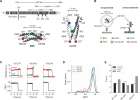
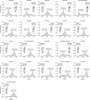
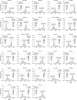
van Dorp, Qiu, Choi et al
Elife (2021) 10 DOI: 10.7554/eLife.66194
AI Summary: In the paper "Conformational dynamics of auto-inhibition in the ER calcium sensor STIM1," OriGene's human STIM1 cDNA (catalog # RC217445) was used to express STIM1 protein for experimental studies investigating the structural mechanisms of STIM1 auto-inhibition and activation.
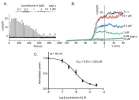
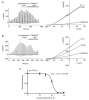
Anti-Inflammatory Effect of Licochalcone A via Regulation of ORAI1 and K+ Channels in T-Lymphocytes
Phan, Kim, Jo et al
Int J Mol Sci (2021) 22 (19) DOI: 10.3390/ijms221910847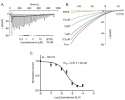
Phan, Kim, Jo et al
Int J Mol Sci (2021) 22 (19) DOI: 10.3390/ijms221910847
Cited by 25
AI Summary: OriGene’s green fluorescence vectors were used for transient co-transfection in the study to facilitate the investigation of licochalcone A’s effects on ORAI1 and K+ channels in T-lymphocytes.
Snippet: and green fluorescence vectors (Origene Technologies, Rockville, MD, USA) were transiently co-transfected into the cells using TurboFect (Thermo Scientific, Waltham, MA, USA) according to the manufacturer’s guidelines
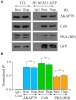
AKAP79 Orchestrates a Cyclic AMP Signalosome Adjacent to Orai1 Ca2+ Channels
Kar, Barak, Zerio et al
Function (Oxf) (2021) 2 (5), zqab036 DOI: 10.1093/function/zqab036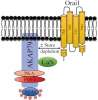
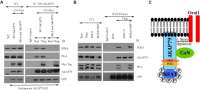
Kar, Barak, Zerio et al
Function (Oxf) (2021) 2 (5), zqab036 DOI: 10.1093/function/zqab036
Cited by 17
Snippet: 28. Plasmid Constructs and Transfection. Plasmids: cDNA Constructs-Orai1 and STIM1 were purchased from Origene. Orai1 was myc-tagged as previously described. 29 NFAT1-GFP was provided by Dr Paul Worley (Johns Hopkins, USA)
Inhibitory effects of α-Mangostin on T cell cytokine secretion via ORAI1 calcium channel and K+ channels inhibition
Kim, Park, Shin et al
PeerJ (2021) 9, e10973 DOI: 10.7717/peerj.10973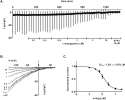
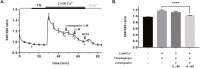
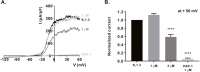
Kim, Park, Shin et al
PeerJ (2021) 9, e10973 DOI: 10.7717/peerj.10973
Cited by 17
AI Summary: In this study, OriGene products—specifically the human ORAI1 (hORAI1) and human STIM1 (hSTIM1) vectors—were used to transiently transfect HEK293T cells, enabling the measurement of ORAI1 channel activity to assess the inhibitory effects of α-mangostin.
Snippet: Transient transfection. To measure the ORAI1 current, HEK293T cells were co-transfected with the human ORAI1 (hORAI1) and human STIM1 (hSTIM1) vector, which were purchased from Origene Technologies (Rockville, MD, USA) Cached
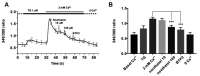
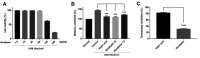
Nootkatol prevents ultraviolet radiation-induced photoaging via ORAI1 and TRPV1 inhibition in melanocytes and keratinocytes
Woo, Nam, Kim et al
Korean J Physiol Pharmacol (2021) 25 (1), 87-94 DOI: 10.4196/kjpp.2021.25.1.87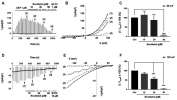
Woo, Nam, Kim et al
Korean J Physiol Pharmacol (2021) 25 (1), 87-94 DOI: 10.4196/kjpp.2021.25.1.87
Cited by 13
AI Summary: OriGene products contributed to this study by providing the cDNAs encoding human ORAI1 and human STIM1, which were used to investigate the role of these calcium channels in UV-induced photoaging.
Snippet: Transfection of hORAI1 and STIM1. cDNAs encoding human ORAI1 (hORAI1) and human STIM1 (hSTIM1) were purchased from Origene Technologies (Rockville, MD, USA). The cDNA was subcloned into the pcDNA3.1 vector (Thermo Fisher Scientific)
Coordination of a single calcium ion in the EF-hand maintains the off state of the stromal interaction molecule luminal domain
Enomoto, Nishikawa, Back et al
J. Mol. Biol. (2019) 432 (2), 367-383 DOI: 10.1016/j.jmb.2019.10.003
Enomoto, Nishikawa, Back et al
J. Mol. Biol. (2019) 432 (2), 367-383 DOI: 10.1016/j.jmb.2019.10.003
Showing 1-6 of 30 papers.
Powered by BizGenius
*Delivery time may vary from web posted schedule. Occasional delays may occur due to unforeseen
complexities in the preparation of your product. International customers may expect an additional 1-2 weeks
in shipping.
Related Products
- Price:
- Actual Price:
Welcome to OriGene AI!
I'm your AI-powered guide to everything OriGene.
Ask me anything:
- Product specs
- Ordering help
- Technical questions
- How to find exactly what your experiment needs
Prefer a live agent? Connect with us by clicking the green chat icon, as seen in the image below or email our team at custsupport@origene.com.
