
HSPA5 / GRP78 (Active Protein) Human Protein

$1,125.00
2 Weeks*
Specifications
| Product Data | |
| Species | Human |
|---|---|
| Expression Host | E. coli |
| Concentration | lot specific |
| Purity | >90% pure as determined by SDS-PAGE analysis |
| Presentation State | Purified |
| Buffer | Presentation State: Purified State: Liquid purified protein Buffer System: 50 mM Tris/HCl, pH 7.5, 150 mM NaCl and 10% Glycerol |
| Preparation | Liquid purified protein |
| Recommended Dilution | Western Blot Control. ATPase activity. This protein has ATPase activity at the time of manufacture of 2.3 µM Phosphate liberated/hr/µg protein in a 200 µl reaction at 37°C (pH 8) in the presence of 20 µl of 1mM ATP using Malachite Green Assay. Binding Assay. ELISA reference standard. |
| Protein Description | Recombinant Human GRP78 Protein with ATPase activity, His-tagged. |
| Storage | Upon receipt, store undiluted (in aliquots) at -20°C. Avoid repeated freezing and thawing. |
| Stability | Shelf life: one year from despatch. |
| Shipping | Blue Ice |
| Reference Data | |
| RefSeq | NP_005338 |
| Locus ID | 3309 |
| UniProt ID | P11021 |
| Cytogenetics | 9q33.3 |
| Synonyms | 78 kDa glucose-regulated protein, Heat shock 70 kDa protein 5, BiP |
| Summary | The protein encoded by this gene is a member of the heat shock protein 70 (HSP70) family. This protein localizes to the lumen of the endoplasmic reticulum (ER) where it operates as a typical HSP70 chaperone involved in the folding and assembly of proteins in the ER and is a master regulator of ER homeostasis. During cellular stress, as during viral infection or tumorogenesis, this protein interacts with the transmembrane stress sensor proteins PERK (protein kinase R-like endoplasmic reticulum kinase), IRE1 (inositol-requiring kinase 1), and ATF6 (activating transcription factor 6) where it acts as a repressor of the unfolded protein response (UPR) and also plays a role in cellular apoptosis and senescence. Elevated expression and atypical translocation of this protein to the cell surface has been reported in viral infections and some types of cancer cells. At the cell surface this protein may facilitate viral attachment and entry to host cells. This gene is a therapeutic target for the treatment of coronavirus diseases and chemoresistant cancers. provided by RefSeq, Jul 2020 |
| Protein Categories | Growth Factors, Intracellular Proteins |
| Protein Pathways | Antigen processing and presentation, Prion diseases |
Reviews


Documents
| FAQs |
| SDS |
Resources
| Recombinant Protein Resources |
Citations
ER stress sensor, glucose regulatory protein 78 (GRP78) regulates redox status in pancreatic cancer thereby maintaining "stemness"
Dauer, Sharma, Gupta et al
Cell Death Dis (2019) 10 (2), 132 DOI: 10.1038/s41419-019-1408-5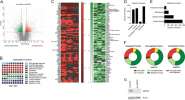
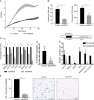
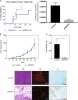
Dauer, Sharma, Gupta et al
Cell Death Dis (2019) 10 (2), 132 DOI: 10.1038/s41419-019-1408-5
AI Summary: OriGene’s pGFP-C-shLenti-HSPA5 plasmids (Cat # TL312303) and pGFP-C-shLenti-scrambled control were used to downregulate GRP78 in pancreatic cancer cells, enabling the study of GRP78’s role in regulating redox status and maintaining stemness.
Snippet: Four pGFP-C-shLenti-HSPA5 plasmids and one pGFP-C-shLenti-scrambled target were acquired from Origene (Cat # TL312303)
HSPA5 negatively regulates lysosomal activity through ubiquitination of MUL1 in head and neck cancer
Kim, Kim, Kim et al
Autophagy (2017)
Kim, Kim, Kim et al
Autophagy (2017)
AI Summary: In this study, recombinant HSPA5 protein from OriGene (TP305859) was used in ubiquitination assays to investigate the molecular interaction between HSPA5 and MUL1, helping to elucidate HSPA5’s role in regulating lysosomal activity in head and neck cancer.
Snippet: … Publisher: Taylor & Francis Journal: Autophagy DOI: https://doi.org/10.1080/15548627.2017.1414126 HSPA5 negatively regulates lysosomal activity through ubiquitination of MUL1 in head and neck cancer Sun-Yong;. Briefly, 1 g of MUL1 (Novus Biologicals, Downloaded by [RMIT University Library] at 16:49 21 December 2017 40 H00079594-P01) was incubated with 500 ng of HSPA5 (OriGene Technologies, TP305859) in 30 μl of ubiquitination reaction buffer, containing 10X E3 Ligase Reaction Buffer (Boston Biochem, B-71), Mg-ATP Solution (Boston Biochem, B-20), 150 ng Ubiquitin Activating Enzyme (UBA1/UBE1;Boston Biochem, E-305), 250 ng UBE2D3/UbcH5c (Boston Biochem, E2-627),
Glucose-regulated protein 78 autoantibody associates with blood-brain barrier disruption in neuromyelitis optica
Shimizu, Schaller, Owens et al
Sci Transl Med (2017) 9 (397) DOI: 10.1126/scitranslmed.aai9111
Shimizu, Schaller, Owens et al
Sci Transl Med (2017) 9 (397) DOI: 10.1126/scitranslmed.aai9111
AI Summary: In this study, purified GRP78 protein from OriGene was used for Western blot verification to confirm the presence and specificity of GRP78 autoantibodies in neuromyelitis optica patient samples.
Snippet: For Western blot verification, purified GRP78 protein [from OriGene (100 ng per well) and Novus Biologicals (0.5 μg per well)] was subjected to SDS–polyacrylamide gel electrophoresis, transferred to PVDF, incubated with 0.5% glutaraldehyde in PBS (15 min), with 0.25 M tris (pH 7.5) in PBS (15 min), washed three times in TBS (10 min), blocked, and then processed as described above
Human GRP78 affinity towards its signaling partners Ire1α and PERK is differently modulated by an unfolded protein client
Stan, Silva, de Camargo
Biochem. Biophys. Res. Commun. (2017) 487 (2), 375-380 DOI: 10.1016/j.bbrc.2017.04.069
Stan, Silva, de Camargo
Biochem. Biophys. Res. Commun. (2017) 487 (2), 375-380 DOI: 10.1016/j.bbrc.2017.04.069
Host glycosylation pathways and the unfolded protein response contribute to the infection by Francisella
Barel, Harduin-Lepers, Portier et al
Cell. Microbiol. (2016)
Barel, Harduin-Lepers, Portier et al
Cell. Microbiol. (2016)
Cited by 16
AI Summary: OriGene products contributed to this study by providing the anti-HSPA5 (BiP) antibody used for Western blot detection of BiP expression and the GAPDH control for transcript normalization.
Snippet: in Francisella-infected macrophages by Western-blot, using the anti-BiP antibody, anti- HSPA5 (from Origene, obtained with an immunogen, located between amino acids 645-654). ... The level for each transcript was normalized with GAPDH, also provided (Origene). ... Cite SaveSaving
Discovery of a Novel Target for the Dysglycemic Chromogranin A Fragment Pancreastatin: Interaction with the Chaperone GRP78 to Influence Metabolism
Biswas, Friese, Gayen et al
PLoS ONE (2014) 9 (1), e84132 DOI: 10.1371/journal.pone.0084132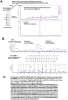
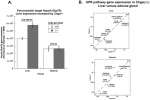
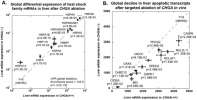
Biswas, Friese, Gayen et al
PLoS ONE (2014) 9 (1), e84132 DOI: 10.1371/journal.pone.0084132
Cited by 24
AI Summary: In this study, the OriGene pCMV promoter-driven human GRP78 (HSPA5) expression plasmid was used to overexpress GRP78 in hepatocytes, enabling the researchers to investigate the effects of GRP78 modulation on glucose metabolism and its interaction with pancreastatin.
Snippet: The GRP78 (BIP) promoter-luciferase reporter was a gift from Bruce M. Spiegelman (Harvard Medical School). The pCMV promoter-driven human GRP78 (HSPA5) expression plasmid was from Origene <www.origene.com/>. ... Cite SaveSaving
Showing 1-6 of 7 papers.
Powered by BizGenius
*Delivery time may vary from web posted schedule. Occasional delays may occur due to unforeseen
complexities in the preparation of your product. International customers may expect an additional 1-2 weeks
in shipping.
Related Products
- Price:
- Actual Price:
Welcome to OriGene AI!
I'm your AI-powered guide to everything OriGene.
Ask me anything:
- Product specs
- Ordering help
- Technical questions
- How to find exactly what your experiment needs
Prefer a live agent? Connect with us by clicking the green chat icon, as seen in the image below or email our team at custsupport@origene.com.
