
HSP90AA1 / HSP90 alpha Human Protein

$375.00
2 Weeks*
Specifications
| Product Data | |
| Species | Human |
|---|---|
| Expression Host | E. coli |
| Concentration | lot specific |
| Purity | >90% pure as determined by SDS-PAGE analysis (Purified by Multy-step Chromatography). |
| Presentation State | Purified |
| Buffer | Presentation State: Purified State: Liquid protein Buffer System: 50 mM Tris pH 7.5, 5 mM Bme, 0.3M NaCl, 10% Glycerol |
| Preparation | Liquid protein |
| Recommended Dilution | Western Blot Control, SDS-PAGE , ATPase Activity Assay, Surface Plasmon Resonance (SPR). Specificity: ~90 kDa |
| Protein Description | Recombinant Hsp90 alpha cloned from a Human cDNA library |
| Note | Centrifuge vial before opening. |
| Storage | Store at 2-8°C for one week or (in aliquots) at -20°C for longer. Avoid repeated freezing and thawing. |
| Stability | Shelf life: one year from despatch. |
| Shipping | Blue Ice |
| Reference Data | |
| RefSeq | NP_001017963 |
| Locus ID | 3320 |
| UniProt ID | P07900 |
| Cytogenetics | 14q32.31 |
| Synonyms | HSP90A, HSPC1, HSPCA, Heat shock 86 kDa, HSP86, NY-REN-38, Heat shock protein HSP 90-alpha |
| Summary | The protein encoded by this gene is an inducible molecular chaperone that functions as a homodimer. The encoded protein aids in the proper folding of specific target proteins by use of an ATPase activity that is modulated by co-chaperones. Two transcript variants encoding different isoforms have been found for this gene. provided by RefSeq, Jan 2012 |
| Protein Categories | Intracellular Proteins |
| Protein Families | ATPase Activity Assay, Surface Plasmon Resonance (SPR). Specificity: ~90 kDa, SDS-PAGE , Western Blot Control |
| Protein Pathways | Antigen processing and presentation, NOD-like receptor signaling pathway, Pathways in cancer, Progesterone-mediated oocyte maturation, Prostate cancer |
Reviews


Documents
| FAQs |
| SDS |
Resources
| Recombinant Protein Resources |
Citations
Targeting the Hsp90 C-terminal domain to induce allosteric inhibition and selective client downregulation
Goode, Petrov, Vickman et al
Biochim Biophys Acta Gen Subj (2017) 1861 (8), 1992-2006 DOI: 10.1016/j.bbagen.2017.05.006

Goode, Petrov, Vickman et al
Biochim Biophys Acta Gen Subj (2017) 1861 (8), 1992-2006 DOI: 10.1016/j.bbagen.2017.05.006
Cited by 38
AI Summary: OriGene products, specifically the anti-AR antibody (TA312204) and BRCA1 antibody (TA309281), were used in this study to detect and quantify the downregulation of androgen receptor (AR) and BRCA1 proteins following Hsp90 C-terminal domain inhibitor treatment, supporting the investigation of selective client protein degradation.
Oxidation and interaction of DJ-1 with 20S proteasome in the erythrocytes of early stage Parkinson's disease patients
Saito, Akazawa-Ogawa, Matsumura et al
Sci Rep (2016) 6, 30793 DOI: 10.1038/srep30793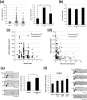
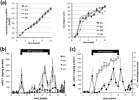
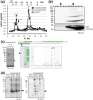
Saito, Akazawa-Ogawa, Matsumura et al
Sci Rep (2016) 6, 30793 DOI: 10.1038/srep30793
Cited by 41
AI Summary: OriGene products contributed to this paper by providing the anti-DJ-1 antibody (Cat# TA300166) used for detecting DJ-1 and its oxidized forms in erythrocyte lysates, enabling analysis of DJ-1 oxidation and interaction with the 20S proteasome in Parkinson’s disease research.
Experimental Anti-Inflammatory Drug Semapimod Inhibits TLR Signaling by Targeting the TLR Chaperone gp96
Wang, Grishin, Ford
J Immunol (2016) 196 (12), 5130-7 DOI: 10.4049/jimmunol.1502135

Wang, Grishin, Ford
J Immunol (2016) 196 (12), 5130-7 DOI: 10.4049/jimmunol.1502135
Cited by 30
AI Summary: In this study, OriGene products—including the anti-gp96 antibody (Cat# TA500602) and TLR4 cDNA clone (Cat# RC210926)—were used to detect gp96 protein and overexpress TLR4, respectively, thereby enabling key experiments that demonstrated Semapimod’s inhibition of TLR signaling via targeting the chaperone gp96.
Identification of new FGF1 binding partners-Implications for its intracellular function
Bober, Olsnes, Kostas et al
IUBMB Life (2016) 68 (3), 242-51 DOI: 10.1002/iub.1480
Bober, Olsnes, Kostas et al
IUBMB Life (2016) 68 (3), 242-51 DOI: 10.1002/iub.1480
Cited by 16
AI Summary: OriGene products contributed to this study by providing pEX-N-GST vectors encoding full-length nucleophosmin and a fragment of major vault protein, which were used to identify and confirm novel intracellular binding partners of FGF1.
Snippet: pEX-N-GST vectors encoding full-length nucleophosmin or fragment of major vault protein (113–474) [15] were obtained from Origene Technologies (MD, USA). Stable Transfection of HEK 293 Cells. Flp-In T-Rex 293 cells were seeded on polylysine-coated culture ... Cite SaveSaving
The rapid and direct determination of ATPase activity by ion exchange chromatography and the application to the activity of heat shock protein-90
Bartolini, Wainer, Bertucci et al
J Pharm Biomed Anal (2013) 73, 77-81 DOI: 10.1016/j.jpba.2012.03.021

Bartolini, Wainer, Bertucci et al
J Pharm Biomed Anal (2013) 73, 77-81 DOI: 10.1016/j.jpba.2012.03.021
Cited by 14
AI Summary: OriGene’s recombinant human Hsp90 protein (Cat# TP308508) was used as the enzyme source to assess ATPase activity with the newly developed ion exchange chromatography method described in the paper.
Chaxamycins A-D, bioactive ansamycins from a hyper-arid desert Streptomyces sp
Rateb, Houssen, Arnold et al
J Nat Prod (2011) 74 (6), 1491-9 DOI: 10.1021/np200320u
Rateb, Houssen, Arnold et al
J Nat Prod (2011) 74 (6), 1491-9 DOI: 10.1021/np200320u
Cited by 149
AI Summary: In this study, OriGene's HSP90 (NM_005348) human cDNA clone was used to facilitate experiments assessing the inhibitory effects of the newly discovered chaxamycins on Hsp90 ATPase activity.
Showing 1-6 of 7 papers.
Powered by BizGenius
*Delivery time may vary from web posted schedule. Occasional delays may occur due to unforeseen
complexities in the preparation of your product. International customers may expect an additional 1-2 weeks
in shipping.
Related Products
- Price:
- Actual Price:
Welcome to OriGene AI!
I'm your AI-powered guide to everything OriGene.
Ask me anything:
- Product specs
- Ordering help
- Technical questions
- How to find exactly what your experiment needs
Prefer a live agent? Connect with us by clicking the green chat icon, as seen in the image below or email our team at custsupport@origene.com.
