
IAP4 / BIRC5 (1-142, Calmodulin Tag) Human Protein

Specifications
| Product Data | |
| Species | Human |
|---|---|
| Expression Host | E. coli |
| Expression cDNA Clone or AA Sequence | |
| Tag | Calmodulin Tag |
| Predicted MW | 33 kDa (294aa) confirmed by MALDI-TOF |
| Concentration | 1mg/ml (determined by Bradford assay) |
| Purity | > 90% by SDS-PAGE |
| Presentation State | Purified |
| Buffer | Liquid in. 20mM Tris-HCl buffer (pH 7.5) containing 0.1M NaCl |
| Endotoxin | < 1 EU per 1ug of protein (determined by LAL method) |
| Preparation | Liquid protein, purified by conventional chromatography techniques |
| Recommended Dilution | SDS-PAGE |
| Protein Description | Recombinant human Survivin fused to CaM-tag at N-terminus |
| Note | NCBI Accession No: AAH34148 |
| Storage | Can be stored at +2°C to +8°C for 1 week. For long term storage, aliquot and store at -20°C to -80C. Avoid repeated freezing and thawing cycles. |
| Stability | Shelf life: six months from despatch. |
| Shipping | Blue Ice |
| Reference Data | |
| RefSeq | AAH34148.1 |
| Locus ID | 332 |
| UniProt ID | O15392 |
| Cytogenetics | 17q25.3 |
| Synonyms | Baculoviral IAP repeat-containing protein 5 isoform 1, BIRC5, Baculoviral IAP repeat-containing 5, API4, EPR-1, Baculoviral IAP repeat-containing protein 5 isoform 1, Survivin, Baculoviral IAP repeat-containing protein 5 isoform 1 API4, Apoptosis Inhibitor 4, Apoptosis inhibitor survivin, Apoptosis inhibitor4, Baculoviral IAP repeat containing 5, Baculoviral IAP repeat containing protein 5, BIRC 5, EPR 1, IAP4, SVV, TIAP. |
| Summary | This gene is a member of the inhibitor of apoptosis (IAP) gene family, which encode negative regulatory proteins that prevent apoptotic cell death. IAP family members usually contain multiple baculovirus IAP repeat (BIR) domains, but this gene encodes proteins with only a single BIR domain. The encoded proteins also lack a C-terminus RING finger domain. Gene expression is high during fetal development and in most tumors, yet low in adult tissues. Alternatively spliced transcript variants encoding distinct isoforms have been found for this gene. provided by RefSeq, Jun 2011 |
| Protein Categories | Cytokines, Intracellular Proteins |
| Protein Families | Druggable Genome, Stem cell - Pluripotency |
| Protein Pathways | Colorectal cancer, Pathways in cancer |
Reviews


Documents
| FAQs |
| SDS |
Resources
| Recombinant Protein Resources |
Citations
Serum SNTF, a Surrogate Marker of Axonal Injury, Is Prognostic for Lasting Brain Dysfunction in Mild TBI Treated in the Emergency Department
Siman, Cui, Wewerka et al
Front Neurol (2020) 11, 249 DOI: 10.3389/fneur.2020.00249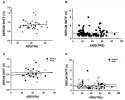
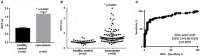
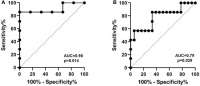
Siman, Cui, Wewerka et al
Front Neurol (2020) 11, 249 DOI: 10.3389/fneur.2020.00249
Cited by 20
AI Summary: OriGene’s recombinant human full-length αII-spectrin was used to generate the SNTF fragment for assay development, enabling the study to evaluate serum SNTF as a prognostic marker for brain dysfunction after mild traumatic brain injury.
Snippet: The latter was generated by digesting purified recombinant human full-length αII-spectrin (Origene) with purified human calpain I (Millipore-Sigma;100: 1 molar ratio). The second generation SNTF immunoassay has an experimentally determined lower limit of
A two-step lineage reprogramming strategy to generate functionally competent human hepatocytes from fibroblasts
Xie, Sun, Du et al
Cell Res. (2019) 29 (9), 696-710 DOI: 10.1038/s41422-019-0196-x
Xie, Sun, Du et al
Cell Res. (2019) 29 (9), 696-710 DOI: 10.1038/s41422-019-0196-x
AI Summary: In this study, human full-length TrueClones™ cDNA clones from OriGene were used as templates to amplify five hepatic transcription factors, which were essential for reprogramming fibroblasts into hepatic progenitor-like cells and functionally competent hepatocytes.
Snippet: Complementary DNA of the five hepatic transcription factors were amplified from human full-length TrueClones (Origene) and inserted into pCDH-EF1-MCS-T2A-Puro (System Biosciences) according to the user’s manual. c-MYC was cloned into an inducible system of Fu-tet-hOct4 (hOct4 was replaced by cMYC).37 FUdeltaGW-rtTA was from Addgene. The oligonucleotides encodi
The CH25H-CYP7B1-RORα axis of cholesterol metabolism regulates osteoarthritis
Choi, Lee, Song et al
Nature (2019) 566 (7743), 254-258 DOI: 10.1038/s41586-019-0920-1
Choi, Lee, Song et al
Nature (2019) 566 (7743), 254-258 DOI: 10.1038/s41586-019-0920-1
AI Summary: OriGene’s full-length recombinant RORα protein was used in competition binding assays to determine how cholesterol and its metabolites interact with RORα, helping elucidate the role of cholesterol metabolism in osteoarthritis pathogenesis.
Snippet: Binding of cholesterol, 25-HC and 7α,25-HC to RORα were determined by competition assays performed using fluorescent 22-NBD cholesterol (Thermo Fisher Scientific), which binds to full-length recombinant RORα protein (OriGene)
Structure-Based Identification of Potent Natural Product Chemotypes as Cannabinoid Receptor 1 Inverse Agonists
Pandey, Roy, Liu et al
Molecules (2018) 23 (10) DOI: 10.3390/molecules23102630
Pandey, Roy, Liu et al
Molecules (2018) 23 (10) DOI: 10.3390/molecules23102630
AI Summary: OriGene’s full-length human CB1 and CB2 receptor cDNA expression clones were used to transiently transfect HEK293 cells, enabling the creation of cell lines essential for the study’s binding and functional assays of potential CB1 inverse agonists.
Snippet: HEK293 cells were collected and transiently transfected with full-length human recombinant cDNA (OriGene, Rockville, MD, USA) containing expression clones to generate separate cell lines expressing either the CB1 or CB2 receptors (50 µg/mL) using electroporation (70 ms, single pulse, 150 volts). Transfected cells were grown in a 150 cm2 Petri dish at 37 ◦C. G418 antibiotic solution (800 µg/mL) was...
Regenerating islet-derived 1α (REG-1α) protein increases tau phosphorylation in cell and animal models of tauopathies
Moussaed, Huc-Brandt, Cubedo et al
Neurobiol. Dis. (2018) 119, 136-148 DOI: 10.1016/j.nbd.2018.07.029
Moussaed, Huc-Brandt, Cubedo et al
Neurobiol. Dis. (2018) 119, 136-148 DOI: 10.1016/j.nbd.2018.07.029
AI Summary: OriGene's full-length human REG-1α cDNA in pCMV6-XL5 was used in this study to enable overexpression of REG-1α and investigate its effects on tau phosphorylation in cell and animal models of tauopathies.
Snippet: 2.3. Plasmid and transfections. Full-length human REG-1α cDNA (GenBankTM accession number NM_002909.3) in pCMV6-XL5 (OriGene Technologies) was subcloned in the pCAG GS/ES vector (Addgene) after insertion of the Kpn1 and Sac1 sites to facilitate cloning
Radiation resistance of the lung adenocarcinoma is related to the AKT-Onzin-POU5F1 axis
Jin, Guan, Xiang et al
Biochem. Biophys. Res. Commun. (2018) 499 (3), 538-543 DOI: 10.1016/j.bbrc.2018.03.185
Jin, Guan, Xiang et al
Biochem. Biophys. Res. Commun. (2018) 499 (3), 538-543 DOI: 10.1016/j.bbrc.2018.03.185
AI Summary: OriGene's full-length human Onzin cDNA was used to generate A549 cell lines overexpressing Onzin, enabling the study of Onzin’s role in promoting stemness and radiation resistance in lung adenocarcinoma.
Snippet: through lentivirus transfection. Full-length human Onzin cDNA (OriGene) was inserted and over-expressed by the pCDH expression construct (Systems Biosciences) with puromycin selection markers in lentiviruses. The culture
Showing 1-6 of 40 papers.
Powered by BizGenius
*Delivery time may vary from web posted schedule. Occasional delays may occur due to unforeseen
complexities in the preparation of your product. International customers may expect an additional 1-2 weeks
in shipping.
Related Products
- Price:
- Actual Price:
Welcome to OriGene AI!
I'm your AI-powered guide to everything OriGene.
Ask me anything:
- Product specs
- Ordering help
- Technical questions
- How to find exactly what your experiment needs
Prefer a live agent? Connect with us by clicking the green chat icon, as seen in the image below or email our team at custsupport@origene.com.
