
Human Creatine Kinase MB Isoenzyme (CKMB) ELISA kit

Specifications
| Product Data | |
| Species | Human |
|---|---|
| Format | 8x12 divisible strips |
| Assay Type | Solid Phase Sandwich ELISA |
| Assay Length | 3 hours |
| Signal | Colorimetric |
| Sample Type | Serum |
| Specificity | This kit is used for quantitative detection human Creatine Kinase MB Isoenzyme (CKMB) |
| Reactivity | Human |
| Cross Reactivity | There is no detectable cross-reactivity with other relevant proteins. |
| Interference | No significant interference observed with available related molecules. |
| Components |
|
| Background | Creatine Kinase (CK-MB) is the enzyme being used as the definitive serum marker for the diagnosis or exclusion of acute myocardial infarction (AMI).The determination of CK-MB mass has proven to be more specific for myocardial necrosis than the long-standing CK-MB activity and CK-MB inhibition assays. CK- MB, released after AMI, is detectable in blood as early as 3-4 hours after the onset of symptoms, and remains elevated for approximately 65 hours post infarct 8-9. CK-MB mass levels are reportedly 50% diagnostic for AMI after 3 hours and > 90% diagnostic at 6 hours 10. Such accuracy makes CK-MB mass determinations useful in confirming AMI in patients presenting to the ER with non-diagnostic ECGs > 6 hours after the onset of symptoms. |
| Gene Symbol | CKM |
| Locus ID | 1158 |
| Shipping | Blue Ice |
Reviews


Documents
| Datasheet | |
| SDS | |
Citations
An Inhibitor of Nuclear Factor-Kappa B Pathway Attenuates the Release of TGF-β1 and Inhibits the Fibrogenic Progress in a Model of Airway Remodeling Induced by Acrolein
Chen, Wang, Li et al
Comput Math Methods Med (2022) 2022, 4984634 DOI: 10.1155/2022/4984634


Chen, Wang, Li et al
Comput Math Methods Med (2022) 2022, 4984634 DOI: 10.1155/2022/4984634
Cited by 3
AI Summary: OriGene’s commercial ELISA kits were used in this study to measure TGF-β1 and Muc5ac protein levels in bronchoalveolar lavage fluid, enabling the assessment of airway remodeling and fibrogenic processes.
Snippet: rbent Assay (ELISA) Total protein in BALF was evaluated using the Bradford method. TGF-β1 and Muc5ac protein levels in BALF were determined according to the instruction of the commercial ELISA kits (OriGene, USA). Samples were measured photometrically by an automated plate reader. 2.6. Reverse Transcription-Quantitative Polymerase Chain Reaction (RT-qPCR) Total RNA was extracted from pulmonary t;...
Bidirectional effects of moxifloxacin on the pro‑inflammatory response in lipopolysaccharide‑stimulated mouse peritoneal macrophages
Qiu, Yuan, Li et al
Mol Med Rep (2018) 18 (6), 5399-5408 DOI: 10.3892/mmr.2018.9569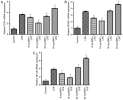
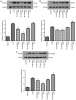
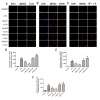
Qiu, Yuan, Li et al
Mol Med Rep (2018) 18 (6), 5399-5408 DOI: 10.3892/mmr.2018.9569
AI Summary: OriGene’s HRP-conjugated goat anti-rabbit IgG secondary antibody (ZB-2305) was used in western blot experiments to detect protein expression levels in the study.
Snippet: The membranes were subsequently incubated with horseradish peroxidase (HRP)‑conjugated goat anti-rabbit immunoglobulin G secondary antibodies (ZB‑2305;OriGene Technologies, Inc., Beijing, China) at a dilution of 1:2,000 at room temperature for 90 min;The membranes were subsequently incubated with horseradish peroxidase (HRP)-conjugated goat anti-rabbit immunoglobulin G secondary antibodies (ZB-230...
Diazoxide protects rat vascular endothelial cells against hypoxia and cold-induced damage
Zhang, Huang, Li et al
Exp Ther Med (2017) 13 (6), 3257-3266 DOI: 10.3892/etm.2017.4437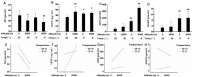
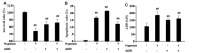
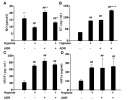
Zhang, Huang, Li et al
Exp Ther Med (2017) 13 (6), 3257-3266 DOI: 10.3892/etm.2017.4437
Cited by 6
AI Summary: OriGene products contributed to this study by providing the anti-VEGF antibody (cat. no. TA364117) used to assess vascular endothelial growth factor levels in rat vascular endothelial cells exposed to hypoxia and cold-induced damage.
Showing 1-3 of 3 papers.
Powered by BizGenius
*Delivery time may vary from web posted schedule. Occasional delays may occur due to unforeseen
complexities in the preparation of your product. International customers may expect an additional 1-2 weeks
in shipping.
Related Products
- Price:
- Actual Price:
Welcome to OriGene AI!
I'm your AI-powered guide to everything OriGene.
Ask me anything:
- Product specs
- Ordering help
- Technical questions
- How to find exactly what your experiment needs
Prefer a live agent? Connect with us by clicking the green chat icon, as seen in the image below or email our team at custsupport@origene.com.
