
PAK4 Mouse Monoclonal Antibody [Clone ID: OTI1C7]


$447.00
In Stock*
Specifications
| Product Data | |
| Clone Name | OTI1C7 |
|---|---|
| Application | IHC, WB |
| Recommended Dilution | WB 1:2000, IHC 1:150 |
| Reactivity | Human, Mouse, Rat |
| Antibody Host | Mouse |
| Isotype | IgG1 |
| Clonality | Monoclonal |
| Immunogen | Human recombinant protein fragment corresponding to amino acids 1-308 of human PAK4(NP_005875) produced in E.coli. |
| Buffer | PBS (pH 7.3) containing 1% BSA, 50% glycerol and 0.02% sodium azide |
| Concentration | 1 mg/ml |
| Purification | Purified from mouse ascites fluids or tissue culture supernatant by affinity chromatography (protein A/G) |
| Conjugation | Unconjugated |
| Storage | Store at -20°C as received. |
| Stability | Stable for 12 months from date of receipt. |
| Shipping | Blue Ice |
| Predicted Protein Size | 63.9 kDa |
| Gene Name | p21 (RAC1) activated kinase 4 |
| Database Link | |
| Background | PAK proteins, a family of serine/threonine p21-activating kinases, include PAK1, PAK2, PAK3 and PAK4. PAK proteins are critical effectors that link Rho GTPases to cytoskeleton reorganization and nuclear signaling. They serve as targets for the small GTP binding proteins Cdc42 and Rac and have been implicated in a wide range of biological activities. PAK4 interacts specifically with the GTP-bound form of Cdc42Hs and weakly activates the JNK family of MAP kinases. PAK4 is a mediator of filopodia formation and may play a role in the reorganization of the actin cytoskeleton. Multiple alternatively spliced transcript variants encoding distinct isoforms have been found for this gene. provided by RefSeq, Jul 2008 |
| Reference Data | |
| Protein Categories | Enzyme: Kinases, Intracellular Proteins |
| Protein Families | Druggable Genome, Protein Kinase |
| Protein Pathways | Axon guidance, ErbB signaling pathway, Focal adhesion, Regulation of actin cytoskeleton, Renal cell carcinoma, T cell receptor signaling pathway |
Reviews


Documents
| Product Manuals |
| FAQs |
| SDS |
Resources
Other "OTI1C7" antibodies (4)
| SKU | Description | Size | Price | |
|---|---|---|---|---|
| CF807297 | Carrier-free (BSA/glycerol-free) PAK4 mouse monoclonal antibody, clone OTI1C7 (formerly 1C7) | 100 ug |
$620.00
|
|
| TA807297AM | PAK4 mouse monoclonal antibody, clone OTI1C7 (formerly 1C7), Biotinylated | 100 ul |
$509.00
|
|
| TA807297BM | PAK4 mouse monoclonal antibody, clone OTI1C7 (formerly 1C7), HRP conjugated | 100 ul |
$509.00
|
|
| TA807297S | PAK4 mouse monoclonal antibody, clone OTI1C7 (formerly 1C7) | 30 ul |
$200.00
|
|
Citations
β2-Adrenergic receptor regulates osteoblast differentiation and migration and C-terminal β-catenin phosphorylation
Worton, Curtin, Gardiner
Biochem Biophys Res Commun (2025) 781, 152490 DOI: 10.1016/j.bbrc.2025.152490
Worton, Curtin, Gardiner
Biochem Biophys Res Commun (2025) 781, 152490 DOI: 10.1016/j.bbrc.2025.152490
Cited by 6
PAK4 suppresses RELB to prevent senescence-like growth arrest in breast cancer
Costa, Zhuang, Lorent et al
Nat Commun (2019) 10 (1), 3589 DOI: 10.1038/s41467-019-11510-4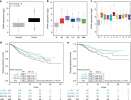
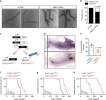
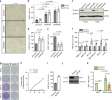
Costa, Zhuang, Lorent et al
Nat Commun (2019) 10 (1), 3589 DOI: 10.1038/s41467-019-11510-4
AI Summary: In this study, OriGene products—specifically the PAK4 shRNA (OriGene, #TF314627) and PAK4 cDNA plasmid (OriGene, #RC204307)—were used to manipulate PAK4 expression levels in breast cancer cells, enabling the authors to investigate PAK4's role in suppressing RELB and preventing senescence-like growth arrest.
Snippet: gnosis in several cancer forms10. Yet, the potential functional role of PAK4 during cancer development in vivo has remained unknown and our understanding of the PAK4 signaling pathways that affect tumorigenesis is so far sparse. Here we show that PAK4 is overexpressed in breast cancer associated with poor prognosis. PAK4 overexpression abrogates OIS in untransformed human mammary epithelial cells
Showing 1-2 of 2 papers.
Powered by BizGenius
*Delivery time may vary from web posted schedule. Occasional delays may occur due to unforeseen
complexities in the preparation of your product. International customers may expect an additional 1-2 weeks
in shipping.
Related Products
- Price:
- Actual Price:
Welcome to OriGene AI!
I'm your AI-powered guide to everything OriGene.
Ask me anything:
- Product specs
- Ordering help
- Technical questions
- How to find exactly what your experiment needs
Prefer a live agent? Connect with us by clicking the green chat icon, as seen in the image below or email our team at custsupport@origene.com.
