
ABCD1 Mouse Monoclonal Antibody [Clone ID: OTI4C2]


$447.00
In Stock*
Specifications
| Product Data | |
| Clone Name | OTI4C2 |
|---|---|
| Application | IHC, Simple Western, WB |
| Recommended Dilution | WB 1:2000, IHC 1:150, Simple Western 1:20-1:50 |
| Reactivity | Human |
| Antibody Host | Mouse |
| Isotype | IgG2a |
| Clonality | Monoclonal |
| Immunogen | Human recombinant protein fragment corresponding to amino acids 508-745 of human ABCD1 (NP_000024) produced in E.coli. |
| Buffer | PBS (pH 7.3) containing 1% BSA, 50% glycerol and 0.02% sodium azide |
| Concentration | 1 mg/ml |
| Purification | Purified from mouse ascites fluids or tissue culture supernatant by affinity chromatography (protein A/G) |
| Conjugation | Unconjugated |
| Storage | Store at -20°C as received. |
| Stability | Stable for 12 months from date of receipt. |
| Shipping | Blue Ice |
| Predicted Protein Size | 82.8 kDa |
| Gene Name | ATP binding cassette subfamily D member 1 |
| Database Link | |
| Background | The protein encoded by this gene is a member of the superfamily of ATP-binding cassette (ABC) transporters. ABC proteins transport various molecules across extra- and intra-cellular membranes. ABC genes are divided into seven distinct subfamilies (ABC1, MDR/TAP, MRP, ALD, OABP, GCN20, White). This protein is a member of the ALD subfamily, which is involved in peroxisomal import of fatty acids and/or fatty acyl-CoAs in the organelle. All known peroxisomal ABC transporters are half transporters which require a partner half transporter molecule to form a functional homodimeric or heterodimeric transporter. This peroxisomal membrane protein is likely involved in the peroxisomal transport or catabolism of very long chain fatty acids. Defects in this gene have been identified as the underlying cause of adrenoleukodystrophy, an X-chromosome recessively inherited demyelinating disorder of the nervous system. provided by RefSeq, Jul 2008 |
| Synonyms | ABC42; ALD; ALDP; AMN |
| Note | WB application: Only overexpression results are guaranteed, not endogenous. |
| Reference Data | |
| Protein Categories | Cytokines, Membrane Proteins |
| Protein Families | Druggable Genome |
| Protein Pathways | ABC transporters |
Reviews


Documents
| Product Manuals |
| FAQs |
| SDS |
Resources
Other "OTI4C2" antibodies (4)
| SKU | Description | Size | Price | |
|---|---|---|---|---|
| CF803208 | Carrier-free (BSA/glycerol-free) ABCD1 mouse monoclonal antibody, clone OTI4C2 (formerly 4C2) | 100 ug |
$620.00
|
|
| TA803208AM | ABCD1 mouse monoclonal antibody,clone 4C2, Biotinylated | 100 ul |
$509.00
|
|
| TA803208BM | ABCD1 mouse monoclonal antibody,clone 4C2, HRP conjugated | 100 ul |
$509.00
|
|
| TA803208S | ABCD1 mouse monoclonal antibody, clone OTI4C2 (formerly 4C2) | 30 ul |
$200.00
|
|
Citations
Genetic analysis of the X-linked adrenoleukodystrophy gene ABCD1 in Drosophila uncovers a conserved phenotype
Manor, Jangam, Chung et al
Commun Biol (2026)
Manor, Jangam, Chung et al
Commun Biol (2026)
Hematopoietic stem-cell gene therapy is associated with restored white matter microvascular function in cerebral adrenoleukodystrophy
Lauer, Speroni, Choi et al
Nat Commun (2023) 14 (1), 1900 DOI: 10.1038/s41467-023-37262-w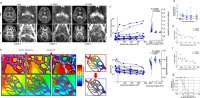
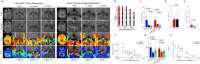
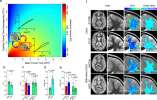
Lauer, Speroni, Choi et al
Nat Commun (2023) 14 (1), 1900 DOI: 10.1038/s41467-023-37262-w
Cited by 26
AI Summary: OriGene’s Mouse ABCD1 antibody (TA803208) was used in this study to detect ABCD1 protein expression, helping to assess the presence and function of gene-corrected cells in brain tissue following hematopoietic stem-cell gene therapy for cerebral adrenoleukodystrophy.
Snippet: each), and blocking agent was applied. Incubation was followed at room temperature for 45 minutes in 5% BSA in PBS with 3% normal goat serum (Vector Lab, #S-1000). Primary antibodies (Mouse ABCD1, Origene, TA803208, 1:250, Rabbit (alternating): IBA1, Wako, 019-19741, 1:200 and Von Willebrand Factor, Abcam, ab6994, 1:500) were applied in 3% BSA solution in PBS, and incubated o/n at 4 degrees. Pr
In vivo gene editing via homology-independent targeted integration for adrenoleukodystrophy treatment
Hong, Seo, Wi et al
Mol Ther (2021)
Hong, Seo, Wi et al
Mol Ther (2021)
Cited by 29
AI Summary: OriGene's mouse anti-human ABCD1 antibody was used for immunohistochemistry staining to detect ABCD1 protein expression in tissue samples, contributing to the evaluation of gene editing efficacy in the study.
Snippet: Leica 1860, Leica biosystem, MI, Italy). The immunohistochemistry staining was performed with 484 mouse anti-human ABCD1 antibody (1:500, Origene, Rockville, MD), as well as secondary 485 antibodies such as Alexa Fluor 594 goat anti-mouse (1:400, Invitrogen;The immunohistochemistry staining was performed with mouse anti-human ABCD1 antibody (1:500, Origene, Rockville, MD),
Generation of a WA14 hESC sub-line carrying a hemizygous ABCD1 (C.1696_1710 del) mutation introduced by CRISPR/Cas9 technology
Hong, Yun, Choi et al
Stem Cell Res (2021) 52, 102244 DOI: 10.1016/j.scr.2021.102244
Hong, Yun, Choi et al
Stem Cell Res (2021) 52, 102244 DOI: 10.1016/j.scr.2021.102244
Cited by 1
Successful Correction of ALD Patient-derived iPSCs Using CRISPR/Cas9
Jung, Quan, Chang et al
bioRxiv (2020)
Jung, Quan, Chang et al
bioRxiv (2020)
Cited by 2
Snippet: … Membranes were blocked in TBS-T (1% Tween 20) with 5% BSA for 30 min and incubated with primary antibody against human ABCD1 (1:1,000;Origene, MD, US;Cat. … TA803208) and;- by electrophoresis and transferred to polyvinylidene fluoride membranes. Membranes were blocked in TBS-T (1% Tween 20) with 5% BSA for 30 min and incubated with primary antibody against human ABCD1 (1:1,000
SIRT1 activation alleviates brain microvascular endothelial dysfunction in peroxisomal disorders
Zhang, Cui, Wang et al
Int. J. Mol. Med. (2019) 44 (3), 995-1005 DOI: 10.3892/ijmm.2019.4250
Zhang, Cui, Wang et al
Int. J. Mol. Med. (2019) 44 (3), 995-1005 DOI: 10.3892/ijmm.2019.4250
AI Summary: OriGene's Anti-ABCD1 antibody (cat. no. TA327322) was used in this study to detect ABCD1 protein levels, helping to assess the molecular effects of peroxisomal dysfunction in brain microvascular endothelial cells.
Snippet: Membranes were blocked with 5% non‑fat milk in phosphate‑buffered saline containing 0.05% Tween‑20 at room temperature for 2 h and probed with antibodies at 4˚C for 14 h including Anti‑ABCD1 (1:1,000;OriGene Technologies, Inc.;cat. no
Showing 1-6 of 9 papers.
Powered by BizGenius
*Delivery time may vary from web posted schedule. Occasional delays may occur due to unforeseen
complexities in the preparation of your product. International customers may expect an additional 1-2 weeks
in shipping.
Related Products
- Price:
- Actual Price:
Welcome to OriGene AI!
I'm your AI-powered guide to everything OriGene.
Ask me anything:
- Product specs
- Ordering help
- Technical questions
- How to find exactly what your experiment needs
Prefer a live agent? Connect with us by clicking the green chat icon, as seen in the image below or email our team at custsupport@origene.com.
