
CD3E Mouse Monoclonal Antibody [Clone ID: OTI3E10]


$447.00
In Stock*
Specifications
| Product Data | |
| Clone Name | OTI3E10 |
|---|---|
| Application | IF, WB |
| Recommended Dilution | WB 1:200~4000, IF 1:100 |
| Reactivity | Human |
| Antibody Host | Mouse |
| Isotype | IgG2b |
| Clonality | Monoclonal |
| Immunogen | Full length human recombinant protein of human CD3E(NP_000724) produced in HEK293T cell. |
| Buffer | PBS (pH 7.3) containing 1% BSA, 50% glycerol and 0.02% sodium azide |
| Concentration | 1 mg/ml |
| Purification | Purified from mouse ascites fluids or tissue culture supernatant by affinity chromatography (protein A/G) |
| Conjugation | Unconjugated |
| Storage | Store at -20°C as received. |
| Stability | Stable for 12 months from date of receipt. |
| Shipping | Blue Ice |
| Predicted Protein Size | 20.7 kDa |
| Gene Name | CD3e molecule |
| Database Link | |
| Background | The protein encoded by this gene is the CD3-epsilon polypeptide, which together with CD3-gamma, -delta and -zeta, and the T-cell receptor alpha/beta and gamma/delta heterodimers, forms the T-cell receptor-CD3 complex. This complex plays an important role in coupling antigen recognition to several intracellular signal-transduction pathways. The genes encoding the epsilon, gamma and delta polypeptides are located in the same cluster on chromosome 11. The epsilon polypeptide plays an essential role in T-cell development. Defects in this gene cause immunodeficiency. This gene has also been linked to a susceptibility to type I diabetes in women. provided by RefSeq, Jul 2008 |
| Synonyms | IMD18; T3E; TCRE |
| Reference Data | |
| Protein Categories | ADC Targets, CD Markers, Immune system diseases, Membrane Proteins |
| Protein Families | Druggable Genome, Transmembrane |
| Protein Pathways | Hematopoietic cell lineage, Primary immunodeficiency, T cell receptor signaling pathway |
Reviews


Documents
| Product Manuals |
| FAQs |
| SDS |
Resources
Other "OTI3E10" antibodies (4)
| SKU | Description | Size | Price | |
|---|---|---|---|---|
| CF506064 | Carrier-free (BSA/glycerol-free) CD3E mouse monoclonal antibody,clone OTI3E10 | 100 ug |
$620.00
|
|
| TA506064AM | CD3E mouse monoclonal antibody,clone 3E10, Biotinylated | 100 ul |
$509.00
|
|
| TA506064BM | CD3E mouse monoclonal antibody,clone 3E10, HRP conjugated | 100 ul |
$509.00
|
|
| TA506064S | CD3E mouse monoclonal antibody,clone OTI3E10 | 30 ul |
$200.00
|
|
Citations
Characterization of PAPP-A Patterns in Chronic Rhinosinusitis
Ennahal, Wendler, Pesold et al
J Inflamm Res (2026) 19, 587722 DOI: 10.2147/JIR.S587722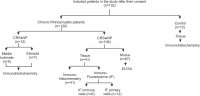
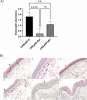
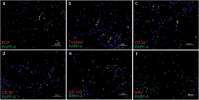
Ennahal, Wendler, Pesold et al
J Inflamm Res (2026) 19, 587722 DOI: 10.2147/JIR.S587722
AI Summary: In this study, OriGene products Anti-CD3e antibody (Cat.TA506064S) and Anti-CD163 antibody (Cat.TA506380S) were used for immunofluorescence to identify T-cells and macrophages, respectively, contributing to the cellular localization of PAPP-A in chronic rhinosinusitis tissue.
Snippet: cence. The following diluted primary antibodies in 0.1% BSA in TBS were incubated over night at 4 °C: mouse-Anti-tryptase (Cat.08506;DAKO-Agilent, Santa-Clara, USA);mouse Anti-CD3e (Cat.TA506064S;OriGene Technologies, Rockville, USA);mouse Anti-ECP (Cat.MA5-43604;ThermoFischer Scientific, Bonn, Germany);mouse Anti-CD163 (Cat.TA506380S;mouse Anti-CD20
Exploring fibrosis and immune cell infiltrate in Rheumatic Heart Disease
Kilian
Thesis (2025)
Kilian
Thesis (2025)
AI Summary: OriGene's 3e Mouse IgG2b antibody (OT13E10, TA506064) was used at a 1:250 dilution in this study to investigate fibrosis and immune cell infiltration in Rheumatic Heart Disease.
Snippet: 3e Mouse IgG2b OT13E10 Origene TA506064 1:250 CD8 Mouse IgG2b 4B11 BioRad MCA1817 1:50 CD8 Mouse IgG1 C8/144B BioLege
Porphyromonas Gingivalis Load is Balanced by 0.20% Chlorhexidine Gel. A Randomized, Double-Blind, Controlled, Microbiological and Immunohistochemical Human Study
D'Ercole, D'Addazio, Di Lodovico et al
J Clin Med (2020) 9 (1) DOI: 10.3390/jcm9010284
D'Ercole, D'Addazio, Di Lodovico et al
J Clin Med (2020) 9 (1) DOI: 10.3390/jcm9010284
Cited by 39
AI Summary: In this study, OriGene products—specifically antibodies against CD20, CD3, CD68, and CD31—were used for immunohistochemical staining to assess inflammatory cell infiltration in peri-implant tissues.
Snippet: The immuno-histochemical staining of CD20, CD3, CD68, CD31 (OriGene Technologies, Inc., Rockville, MD, USA) was performed using the Streptavidine-Biotine- Peroxidase (strep-ABC) method as previously described [45] Cached;The immuno-histochemical staining of CD20, CD3, CD68, CD31 (OriGene Technologies, Inc., Rockville, MD, USA) was performed using the Streptavidine- Biotine-Peroxidase (strep-ABC) method as previously described [45] Cached;- The immuno-histochemical staining of CD20, CD3, CD68, CD31 (OriGene Technologies, Inc., Rockville, MD, USA) was performed using the Streptavidine-Biotine- Peroxidase (strep-ABC) method as previously described [45] Cached
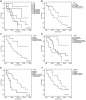
Clinical analysis of 42 cases of EBV-positive mature T/NK-cell neoplasms
Yang, Fu, Liu et al
Exp Ther Med (2017) 14 (1), 567-574 DOI: 10.3892/etm.2017.4531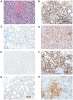
Yang, Fu, Liu et al
Exp Ther Med (2017) 14 (1), 567-574 DOI: 10.3892/etm.2017.4531
Cited by 2
AI Summary: In this study, OriGene products—specifically, the anti-CD5 (TA506916) and anti-CD20 (TA802733) antibodies—were used for immunohistochemical analysis to assess CD5 and CD20 expression as prognostic factors in EBV-positive T/NK-cell neoplasms.
T cell receptor rearrangements in a patient with γ-heavy chain disease: A case report
Zhou, Chen, Zhang et al
Oncol Lett (2016) 11 (6), 4147-4151 DOI: 10.3892/ol.2016.4515
Zhou, Chen, Zhang et al
Oncol Lett (2016) 11 (6), 4147-4151 DOI: 10.3892/ol.2016.4515
AI Summary: OriGene products, specifically the Human IGHG1 (NM_001083.3) qPCR Primer Pair (HP208634) and Human TCRB (NM_001243.4) qPCR Primer Pair (HP209227), were used in this study to detect and analyze immunoglobulin heavy chain and T cell receptor gene rearrangements in patient tissue samples.
Clinical analysis of 42 cases of EBV‑positive mature T/NK‑cell neoplasms
Yang, Fu, Liu et al
Experimental and Therapeutic Medicine (2017)
Yang, Fu, Liu et al
Experimental and Therapeutic Medicine (2017)
Snippet: ZM‑0417, TA506064, ZM‑0280, ZM‑0057, ZA‑0293, ZM‑0010 and ZM‑0011, respectively;1:1,000;Origene Technologies, Inc., Rockville, MD, USA) at 4˚C for 24 h. Samples were subsequently incubated goat anti‑rabbit IgG (GA1014) and goat anti‑mouse IgG (GA1004
Showing 1-6 of 6 papers.
Powered by BizGenius
*Delivery time may vary from web posted schedule. Occasional delays may occur due to unforeseen
complexities in the preparation of your product. International customers may expect an additional 1-2 weeks
in shipping.
Related Products
- Price:
- Actual Price:
Welcome to OriGene AI!
I'm your AI-powered guide to everything OriGene.
Ask me anything:
- Product specs
- Ordering help
- Technical questions
- How to find exactly what your experiment needs
Prefer a live agent? Connect with us by clicking the green chat icon, as seen in the image below or email our team at custsupport@origene.com.
