
RGS5 Mouse Monoclonal Antibody [Clone ID: OTI1C1]


$447.00
In Stock*
Specifications
| Product Data | |
| Clone Name | OTI1C1 |
|---|---|
| Application | FC, IF, IHC, WB |
| Recommended Dilution | WB 1:2000, IHC 1:150, IF 1:100, FLOW 1:100 |
| Reactivity | Human |
| Antibody Host | Mouse |
| Isotype | IgG1 |
| Clonality | Monoclonal |
| Immunogen | Full length human recombinant protein of human RGS5 (NP_003608) produced in HEK293T cell. |
| Buffer | PBS (pH 7.3) containing 1% BSA, 50% glycerol and 0.02% sodium azide |
| Concentration | 1 mg/ml |
| Purification | Purified from mouse ascites fluids or tissue culture supernatant by affinity chromatography (protein A/G) |
| Conjugation | Unconjugated |
| Storage | Store at -20°C as received. |
| Stability | Stable for 12 months from date of receipt. |
| Shipping | Blue Ice |
| Predicted Protein Size | 20.8 kDa |
| Gene Name | regulator of G protein signaling 5 |
| Database Link | |
| Background | This gene encodes a member of the regulators of G protein signaling (RGS) family. The RGS proteins are signal transduction molecules which are involved in the regulation of heterotrimeric G proteins by acting as GTPase activators. This gene is a hypoxia-inducible factor-1 dependent, hypoxia-induced gene which is involved in the induction of endothelial apoptosis. This gene is also one of three genes on chromosome 1q contributing to elevated blood pressure. Alternatively spliced transcript variants encoding different isoforms have been identified. |
| Synonyms | MST092; MST106; MST129; MSTP032; MSTP092; MSTP106; MSTP129 |
| Note | WB application:Only overexpression results are guaranteed, not endogenous |
| Reference Data | |
| Protein Categories | Intracellular Proteins |
| Protein Families | Druggable Genome |
Reviews


Documents
| Product Manuals |
| FAQs |
| SDS |
Resources
Other "OTI1C1" antibodies (4)
| SKU | Description | Size | Price | |
|---|---|---|---|---|
| CF503075 | Carrier-free (BSA/glycerol-free) RGS5 mouse monoclonal antibody, clone OTI1C1 (formerly 1C1) | 100 ug |
$620.00
|
|
| TA503075AM | RGS5 mouse monoclonal antibody, clone 1C1, Biotinylated | 100 ul |
$509.00
|
|
| TA503075BM | RGS5 mouse monoclonal antibody, clone 1C1, HRP conjugated | 100 ul |
$509.00
|
|
| TA503075S | RGS5 mouse monoclonal antibody, clone OTI1C1 (formerly 1C1) | 30 ul |
$200.00
|
|
Citations
Single-cell RNA-seq recognized the initiator of epithelial ovarian cancer recurrence
Kan, Zhang, Zhou et al
Oncogene (2022)
Kan, Zhang, Zhou et al
Oncogene (2022)
Cited by 71
Ex vivo intact tissue analysis reveals alternative calcium-sensing behaviors in parathyroid adenomas
Koh, Zhang, Roman et al
J Clin Endocrinol Metab (2021)
Koh, Zhang, Roman et al
J Clin Endocrinol Metab (2021)
Cited by 7
Pro-angiogenic Activity Discriminates Human Adipose-Derived Stromal Cells From Retinal Pericytes: Considerations for Cell-Based Therapy of Diabetic Retinopathy
Kremer, Gebauer, Elvers-Hornung et al
Front Cell Dev Biol (2020) 8, 387 DOI: 10.3389/fcell.2020.00387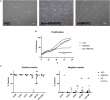
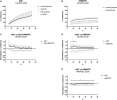
Kremer, Gebauer, Elvers-Hornung et al
Front Cell Dev Biol (2020) 8, 387 DOI: 10.3389/fcell.2020.00387
Cited by 19
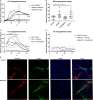
AI Summary: OriGene Technologies' mouse anti-human RGS5 antibody (clone OTI1C1) was used in this study to identify and characterize pericyte markers, contributing to the comparison of adipose-derived stromal cells and retinal pericytes.
Snippet: to-use mouse anti-human α-SMA (Progen, Heidelberg, Germany), mouse anti-human NG-2 (1:100;Santa Cruz Biotechnology), mouse anti-human RGS5 (RGS5 and RGS5-AF647 clone B4, 1:100;Santa Cruz Biotechnology or clone OTI1C1;OriGene Technologies
Brain pericytes acquire a microglial phenotype after stroke
Ozen, Deierborg, Miharada et al
Acta Neuropathol. (2014)
Ozen, Deierborg, Miharada et al
Acta Neuropathol. (2014)
Cited by 213
AI Summary: In this study, the OriGene mouse anti-RGS5 antibody was used to identify and track pericytes, helping demonstrate their activation and phenotypic shift to microglia-like cells after stroke.
Snippet: rabbit, Page 3. Acta Neuropathol 1 3 Abcam), Ng2 (1:500, rabbit, Chemicon), IBA1 (1:2,000, rab- bit, Wako), anti-Ki67 (1:100, rabbit, Novacostra), anti- PDgFrβ (1:200, rabbit, cell signaling), rgS5 (1:200, mouse, OrIgeNe). After ... Cite SaveSaving
Lipid rafts are required for signal transduction by AGTR1 in neonatal glomerular mesangial cells
Adebiyi, Soni, John et al
Exp. Cell Res. (2014)
Adebiyi, Soni, John et al
Exp. Cell Res. (2014)
Cited by 23
Showing 1-5 of 5 papers.
Powered by BizGenius
*Delivery time may vary from web posted schedule. Occasional delays may occur due to unforeseen
complexities in the preparation of your product. International customers may expect an additional 1-2 weeks
in shipping.
Related Products
- Price:
- Actual Price:
Welcome to OriGene AI!
I'm your AI-powered guide to everything OriGene.
Ask me anything:
- Product specs
- Ordering help
- Technical questions
- How to find exactly what your experiment needs
Prefer a live agent? Connect with us by clicking the green chat icon, as seen in the image below or email our team at custsupport@origene.com.
