
Catalase (CAT) Mouse Monoclonal Antibody [Clone ID: OTI1B8]


$447.00
In Stock*
Specifications
| Product Data | |
| Clone Name | OTI1B8 |
|---|---|
| Application | FC, IF, IHC, WB |
| Recommended Dilution | WB 1:500~2000, IHC 1:150, IF 1:100, FLOW 1:100 |
| Reactivity | Human, Monkey, Mouse, Rat |
| Antibody Host | Mouse |
| Isotype | IgG1 |
| Clonality | Monoclonal |
| Immunogen | Full length human recombinant protein of human CAT (NP_111743) produced in HEK293T cell. |
| Buffer | PBS (pH 7.3) containing 1% BSA, 50% glycerol and 0.02% sodium azide |
| Concentration | 1 mg/ml |
| Purification | Purified from mouse ascites fluids or tissue culture supernatant by affinity chromatography (protein A/G) |
| Conjugation | Unconjugated |
| Storage | Store at -20°C as received. |
| Stability | Stable for 12 months from date of receipt. |
| Shipping | Blue Ice |
| Predicted Protein Size | 59.6 kDa |
| Gene Name | catalase |
| Database Link | |
| Background | This gene encodes catalase, a key antioxidant enzyme in the bodies defense against oxidative stress. Catalase is a heme enzyme that is present in the peroxisome of nearly all aerobic cells. Catalase converts the reactive oxygen species hydrogen peroxide to water and oxygen and thereby mitigates the toxic effects of hydrogen peroxide. Oxidative stress is hypothesized to play a role in the development of many chronic or late-onset diseases such as diabetes, asthma, Alzheimer's disease, systemic lupus erythematosus, rheumatoid arthritis, and cancers. Polymorphisms in this gene have been associated with decreases in catalase activity but, to date, acatalasemia is the only disease known to be caused by this gene. provided by RefSeq |
| Synonyms | MGC138422; MGC138424 |
| Reference Data | |
| Protein Categories | Growth Factors, Intracellular Proteins |
| Protein Families | Druggable Genome |
| Protein Pathways | Amyotrophic lateral sclerosis (ALS), Metabolic pathways, Methane metabolism, Tryptophan metabolism |
Reviews


Documents
| Product Manuals |
| FAQs |
| SDS |
Resources
Other "OTI1B8" antibodies (4)
| SKU | Description | Size | Price | |
|---|---|---|---|---|
| CF502564 | Carrier-free (BSA/glycerol-free) CAT mouse monoclonal antibody, clone OTI1B8 (formerly 1B8) | 100 ug |
$620.00
|
|
| TA502564AM | CAT (Catalase) mouse monoclonal antibody, clone OTI1B8 (formerly 1B8), Biotinylated | 100 ul |
$509.00
|
|
| TA502564BM | CAT (Catalase) mouse monoclonal antibody, clone OTI1B8 (formerly 1B8), HRP conjugated | 100 ul |
$509.00
|
|
| TA502564S | CAT (Catalase) mouse monoclonal antibody, clone OTI1B8 (formerly 1B8) | 30 ul |
$200.00
|
|
Citations
Nobiletin Reduces LPS-Induced Neuroinflammation through TLR4/MyD88/NF-κB and Oxidative Stress via Nrf2/HO-1 Signaling in Human Microglial HMC3 Cells
Kritika, Sood, Sanjay et al
Mol Neurobiol (2025) 63 (1), 103 DOI: 10.1007/s12035-025-05421-3
Kritika, Sood, Sanjay et al
Mol Neurobiol (2025) 63 (1), 103 DOI: 10.1007/s12035-025-05421-3
Cited by 7
AI Summary: In this study, the CAT antibody (CF502564) from OriGene was used to assess catalase protein expression, helping to evaluate the antioxidant effects of nobiletin in LPS-induced neuroinflammation in human microglial HMC3 cells.
Snippet: binding domain, leucine-rich–containing family, pyrin domain-containing-3 (NLRP3, D4D8T), NF-κB (D14E12), and p-NF-κB (S536) were purchased from Cell Signaling Technology (Massachusetts, USA), and the CAT antibody (CF502564) was obtained from OriGene (Rockville, USA). LPS was purchased from Sigma-Aldrich (St. Louis, USA). The NOB (CFN987
Malvidin-3-O-Glucoside Mitigates α-Syn and MPTP Co-Induced Oxidative Stress and Apoptosis in Human Microglial HMC3 Cells
Sood, Sanjay, Kang et al
IJMS (2024) 25 (23), 12733 DOI: 10.3390/ijms252312733
Sood, Sanjay, Kang et al
IJMS (2024) 25 (23), 12733 DOI: 10.3390/ijms252312733
Cited by 6
AI Summary: In this study, the OriGene mouse monoclonal antibody against Catalase (CAT; CF502564) was used to assess oxidative stress responses in human microglial HMC3 cells under Parkinson’s disease-like conditions.
Snippet: peroxide dismutase 1 (SOD1, sc-101523, 24), glutathione peroxidase 1/2 (GPX1/2, sc-133160, B-6), and β-actin (sc-47778, 1:5000). Catalase (CAT;CF502564) mouse monoclonal antibody was purchased from OriGene (Rockville, MD, USA). Human reactive primary antibodies against Bcl-2 (2876S), Bax (2772S), caspase-3 (9662S), cleaved caspase-3 (9661S), and caspase-8 (9746S) were obtained from Cell Signalin
Protection from cisplatin-induced hearing loss with lentiviral vector-mediated ectopic expression of the anti-apoptotic protein BCL-XL
Nassauer, Staecker, Huang et al
Molecular Therapy - Nucleic Acids (2024) 35 (1), 102157 DOI: 10.1016/j.omtn.2024.102157
Nassauer, Staecker, Huang et al
Molecular Therapy - Nucleic Acids (2024) 35 (1), 102157 DOI: 10.1016/j.omtn.2024.102157
Cited by 8
AI Summary: OriGene's anti-CAT antibody (catalog no. TA502564) was used in this study to detect catalase protein levels as part of the analysis of molecular mechanisms underlying protection from cisplatin-induced hearing loss.
Snippet: … MA5-15520), anti-CAT (1:1,000, Origene, Herford, Germany, catalog no. TA502564) anti-GPX1 (1:1,000, Thermo Fisher Scientific, catalog no. …
Illuminating the effect of beneficial blue light and ROS-modulating enzymes in Dupuytren's disease
Jaekel, Thelen, Oezel et al
PLoS One (2021) 16 (7), e0253777 DOI: 10.1371/journal.pone.0253777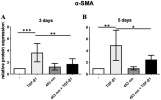
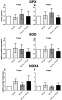
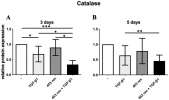
Jaekel, Thelen, Oezel et al
PLoS One (2021) 16 (7), e0253777 DOI: 10.1371/journal.pone.0253777
Cited by 1
AI Summary: In this study, the OriGene catalase antibody (TA502564) was used to assess catalase protein expression, helping to elucidate how blue light irradiation and ROS modulation affect myofibrogenesis in Dupuytren's disease fibroblasts.
Snippet: Antibody Manufacturer Catalogue No Species Application α-smooth muscle actin Abcam Ab7817 Mouse 1:1000 in 5% BSA β-Catenin Abcam Ab16051 Rabbit 1:3000 in 5% BSA Mn-SOD StressMarq Biosciences SPC-118C/D Rabbit 1:4000 in 5% BSA Katalase Origene TA502564 Mouse 1:3000 in 5% BSA SOD1 Cell Signaling Technology 2770 Rabbit 1:1000 in 5% BSA SOD1 StressMarq Biosciences SPC-116-D Rabbit 1:1000 in 5% BSA NFκB Santa Cruz Biotechnology Sc-8414 Mouse 1:500 in 5% Milch NOX4 Novus–a biotechne brand NB110-58849 Rabbit 1:1000 in 5% BSA Antibody Manufacturer Catalogue No Application
The impact of non-toxic blue light (453 nm) on cellular antioxidative capacity, TGF-β1 signaling, and myofibrogenesis of human skin fibroblasts
Krassovka, Suschek, Prost et al
J. Photochem. Photobiol. B, Biol. (2020) 209, 111952 DOI: 10.1016/j.jphotobiol.2020.111952
Krassovka, Suschek, Prost et al
J. Photochem. Photobiol. B, Biol. (2020) 209, 111952 DOI: 10.1016/j.jphotobiol.2020.111952
Cited by 32
Molekulare Grundlagen der durch blaues Licht induzierten Differenzierungshemmung humaner Fibroblasten zu Myofibroblasten
Krassovka
Thesis (2017)
Krassovka
Thesis (2017)
Snippet: Maus anti-Human Catalase #TA502564 OriGene EU;Acris Antibodies GmbH;Herford;Deutschland Maus anti-Human Fibronektin ab6328 Abcam plc;Cambridge;Großbritannien Maus anti-Human GAPDH IMG-6665A IMGENEX;Novus Biologicals;Großbritannien
Showing 1-6 of 7 papers.
Powered by BizGenius
*Delivery time may vary from web posted schedule. Occasional delays may occur due to unforeseen
complexities in the preparation of your product. International customers may expect an additional 1-2 weeks
in shipping.
Related Products
- Price:
- Actual Price:
Welcome to OriGene AI!
I'm your AI-powered guide to everything OriGene.
Ask me anything:
- Product specs
- Ordering help
- Technical questions
- How to find exactly what your experiment needs
Prefer a live agent? Connect with us by clicking the green chat icon, as seen in the image below or email our team at custsupport@origene.com.
