
SF2 (SRSF1) Rabbit Polyclonal Antibody

Specifications
| Product Data | |
| Application | WB |
|---|---|
| Recommended Dilution | WB |
| Reactivity | Human |
| Antibody Host | Rabbit |
| Isotype | IgG |
| Clonality | Polyclonal |
| Immunogen | The immunogen for anti-SFRS1 antibody: synthetic peptide directed towards the C terminal of human SFRS1. Synthetic peptide located within the following region: EFVRKEDMTYAVRKLDNTKFRSHEGETAYIRVKVDGPRSPSYGRSRSRSR |
| Buffer | Liquid. Purified antibody supplied in 1x PBS buffer with 0.09% (w/v) sodium azide and 2% sucrose. |
| Purification | Affinity Purified |
| Conjugation | Unconjugated |
| Storage | Store at -20°C as received. |
| Stability | Stable for 12 months from date of receipt. |
| Shipping | Blue Ice |
| Predicted Protein Size | 27 kDa |
| Gene Name | serine/arginine-rich splicing factor 1 |
| Database Link | |
| Background | SFRS1 is a member of the arginine/serine-rich splicing factor protein family, and functions in both constitutive and alternative pre-mRNA splicing. The protein binds to pre-mRNA transcripts and components of the spliceosome, and can either activate or repress splicing depending on the location of the pre-mRNA binding site. The protein's ability to activate splicing is regulated by phosphorylation and interactions with other splicing factor associated proteins. Multiple transcript variants encoding different isoforms have been found for this gene.Alternative mRNA splicing plays an important role in development and differentiation; many transcripts are spliced differently in distinct cell types and tissues. Both constitutive and alternative splicing occurs on spliceosomes, which are complex particles composed of small nuclear ribonucleoproteins (snRNPs) and non-snRNP proteins. The SR family of non-snRNP splicing factors is characterized by the presence of an RNA recognition motif and a serine- and arginine-rich (SR) domain. SR proteins are required at early stages of spliceosome assembly, have distinct but overlapping specificities for different pre-mRNAs, and can alter splice site choice, suggesting that they may be involved in the regulation of alternative splicing in vivo. Two of the SR proteins, ASF/SF2 (SFRS1) and SC35 (SFRS2; MIM 600813), have been extensively characterized.Alternative mRNA splicing plays an important role in development and differentiation; many transcripts are spliced differently in distinct cell types and tissues. Both constitutive and alternative splicing occurs on spliceosomes, which are complex particles composed of small nuclear ribonucleoproteins (snRNPs) and non-snRNP proteins. The SR family of non-snRNP splicing factors is characterized by the presence of an RNA recognition motif and a serine- and arginine-rich (SR) domain. SR proteins are required at early stages of spliceosome assembly, have distinct but overlapping specificities for different pre-mRNAs, and can alter splice site choice, suggesting that they may be involved in the regulation of alternative splicing in vivo. Two of the SR proteins, ASF/SF2 (SFRS1) and SC35 (SFRS2; MIM 600813), have been extensively characterized (Bermingham et al., 1995). supplied by OMIM |
| Synonyms | ASF; SF2; SF2p33; SFRS1; SRp30a |
| Note | Immunogen Sequence Homology: Dog: 100%; Pig: 100%; Rat: 100%; Horse: 100%; Human: 100%; Mouse: 100%; Bovine: 100%; Zebrafish: 100%; Guinea pig: 100% |
| Reference Data | |
| Protein Categories | Intracellular Proteins |
| Protein Families | Stem cell - Pluripotency |
| Protein Pathways | Spliceosome |
Reviews


Documents
| Product Manuals |
| FAQs |
| SDS |
Citations
Targeting novel human transient receptor potential ankyrin 1 splice variation with splice-switching antisense oligonucleotides
Huang, Tay, Ng et al
Pain (2021) 162 (7), 2097-2109 DOI: 10.1097/j.pain.0000000000002216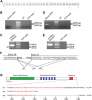
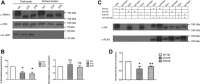
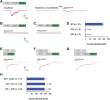
Huang, Tay, Ng et al
Pain (2021) 162 (7), 2097-2109 DOI: 10.1097/j.pain.0000000000002216
Cited by 7
AI Summary: OriGene products contributed to this study by providing the human TRPA1 (hTRPA1) cDNA clone (OriGene, Cat# RC221771) and SRSF1 shRNA plasmids (OriGene, Cat# TL313406), which were used to investigate the functional consequences of TRPA1 splice variants and the role of SRSF1 in splicing regulation.
Showing 1-1 of 1 papers.
Powered by BizGenius
*Delivery time may vary from web posted schedule. Occasional delays may occur due to unforeseen
complexities in the preparation of your product. International customers may expect an additional 1-2 weeks
in shipping.
Related Products
- Price:
- Actual Price:
Welcome to OriGene AI!
I'm your AI-powered guide to everything OriGene.
Ask me anything:
- Product specs
- Ordering help
- Technical questions
- How to find exactly what your experiment needs
Prefer a live agent? Connect with us by clicking the green chat icon, as seen in the image below or email our team at custsupport@origene.com.
