
CPEB2 Rabbit Polyclonal Antibody

Specifications
| Product Data | |
| Application | WB |
|---|---|
| Recommended Dilution | WB |
| Reactivity | Human |
| Antibody Host | Rabbit |
| Isotype | IgG |
| Clonality | Polyclonal |
| Immunogen | The immunogen for anti-CPEB2 antibody: synthetic peptide directed towards the N terminal of human CPEB2. Synthetic peptide located within the following region: FLQQRNSYNHHQPLLKQSPWSNHQSSGWGTGSMSWGAMHGRDHRRTGNMG |
| Buffer | Liquid. Purified antibody supplied in 1x PBS buffer with 0.09% (w/v) sodium azide and 2% sucrose. |
| Purification | Affinity Purified |
| Conjugation | Unconjugated |
| Storage | Store at -20°C as received. |
| Stability | Stable for 12 months from date of receipt. |
| Shipping | Blue Ice |
| Predicted Protein Size | 65 kDa |
| Gene Name | cytoplasmic polyadenylation element binding protein 2 |
| Database Link | |
| Background | CPEB2 is highly similar to cytoplasmic polyadenylation element binding protein (CPEB), an mRNA-binding protein that regulates cytoplasmic polyadenylation of mRNA as a trans factor in oogenesis and spermatogenesis. Studies of the similar gene in mice suggested a possible role of this protein in transcriptionally inactive haploid spermatids.The protein encoded by this gene is highly similar to cytoplasmic polyadenylation element binding protein (CPEB), an mRNA-binding protein that regulates cytoplasmic polyadenylation of mRNA as a trans factor in oogenesis and spermatogenesis. Studies of the similar gene in mice suggested a possible role of this protein in transcriptionally inactive haploid spermatids. Alternatively spliced transcript variants encoding distinct isoforms have been described. |
| Synonyms | CPE-BP2; CPEB-2; hCPEB-2 |
| Note | Immunogen Sequence Homology: Pig: 100%; Rat: 100%; Human: 100%; Mouse: 100%; Guinea pig: 100% |
| Reference Data | |
| Protein Categories | Intracellular Proteins |
Reviews


Documents
| Product Manuals |
| FAQs |
| SDS |
Citations
Tumor suppressor role of cytoplasmic polyadenylation element binding protein 2 (CPEB2) in human mammary epithelial cells
Tordjman, Majumder, Amiri et al
BMC Cancer (2019) 19 (1), 561 DOI: 10.1186/s12885-019-5771-5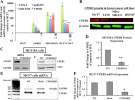
Tordjman, Majumder, Amiri et al
BMC Cancer (2019) 19 (1), 561 DOI: 10.1186/s12885-019-5771-5
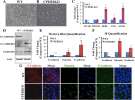
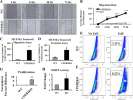
AI Summary: In this study, OriGene products including the Human CPEB2 (NM_001178137) cDNA clone and CPEB2-specific siRNAs were used to manipulate CPEB2 expression in breast epithelial cell lines, enabling the authors to demonstrate CPEB2’s tumor suppressor role by assessing the effects of its knockout and knockdown on oncogenic phenotypes.
Snippet: …Cytoplasmic Polyadenylation Element-Binding Protein 2 (CPEB2) was the single common target of both microRNAs, the functions of which remain controversial. CPEB2 has multiple isoforms (A-F), and paradoxically, a high B/A ratio was reported to impart anoikis-resistance and metastatic phenotype in triple- negative breast cancer cells. We tested whether CPEB2 is a tumor suppressor in mammary epithelial cells. We knocked-out CPEB2 in the non-tumorigenic mammary epithelial cell line MCF10A by CRISPR/Cas9-double nickase approach, and knocked-down CPEB2 with siRNAs in the poorly malignant MCF7 cell line, both lines being high CPEB2-expressing. The resultant phenotypes for oncogenity were tested in vitro for both lines and in vivo for CPEB2KO cells. Finally, CPEB2 expression was compared between human breast cancer and non-tumor breast tissues. CPEB2 (isoform A) expression was inversely correlated with COX-2 or the above microRNAs in COX-2-divergent breast cancer cell lines. CPEB2KO MCF10A cells exhibited oncogenic properties including increased proliferation, migration, invasion, EMT (decreased E-Cadherin, increased Vimentin, N-Cadherin, SNAI1, and ZEB1) and SLC phenotype (increased tumorsphere formation and SLC marker-expression). Tumor-suppressor p53 protein was shown to be a novel translationally-regulated target of CPEB2, validated with polysome profiling. CPEB2KO, but not wild-type cells produced lung colonies upon intravenous injection and subcutaneous tumors and spontaneous lung metastases upon implantation at mammary sites in NOD/SCID/IL2Rϒ-null mice, identified with HLA immunostaining. Similarly, siRNA-mediated CPEB2 knockdown in MCF7 cells promoted oncogenic properties in vitro. Human breast cancer tissues (n = 105) revealed a lower mRNA expression for CPEB2 isoform A and also a lower A/B isoform ratio than in non-tumour breast tissues (n = 20), suggesting that CPEB2A accounts for the tumor-suppressor functions of CPEB2. CPEB2, presumably the isoform A, plays a key role in suppressing tumorigenesis in mammary epithelial cells by repressing EMT, migration, invasion, proliferation and SLC phenotype, via multiple targets, including a newly-identified translational target p53
Showing 1-1 of 1 papers.
Powered by BizGenius
*Delivery time may vary from web posted schedule. Occasional delays may occur due to unforeseen
complexities in the preparation of your product. International customers may expect an additional 1-2 weeks
in shipping.
Related Products
- Price:
- Actual Price:
Welcome to OriGene AI!
I'm your AI-powered guide to everything OriGene.
Ask me anything:
- Product specs
- Ordering help
- Technical questions
- How to find exactly what your experiment needs
Prefer a live agent? Connect with us by clicking the green chat icon, as seen in the image below or email our team at custsupport@origene.com.
