
Hcrtr1 Rabbit Polyclonal Antibody

Specifications
| Product Data | |
| Application | IF, IHC, WB |
|---|---|
| Recommended Dilution | WB: 1:200-1:2000; IHC: 1:100-1:3000 |
| Reactivity | Human, Mouse, Rat |
| Antibody Host | Rabbit |
| Clonality | Polyclonal |
| Immunogen | Peptide (C)RNWKRPSEQLEAQH, corresponding to amino acid residues 256-269 of rat OX1R . 3rd intracellular loop. |
| Buffer | Lyophilized. Concentration before lyophilization ~0.8mg/ml (lot dependent, please refer to CoA along with shipment for actual concentration). Buffer before lyophilization: Phosphate buffered saline (PBS), pH 7.4, 1% BSA, 0.025% NaN3. |
| Reconstitution Method | Add 50 ul double distilled water (DDW) to the lyophilized powder. |
| Purification | Affinity purified on immobilized antigen. |
| Conjugation | Unconjugated |
| Storage | Store at -20°C as received. |
| Stability | Stable for 12 months from date of receipt. |
| Shipping | Ambient |
| Gene Name | hypocretin receptor 1 |
| Database Link | |
| Background | Orexin Receptor 1 (OX1R) (also known as hypocretin receptor 1) is one of two receptors that recognize the peptide neurotransmitters orexin A and orexin B.Orexin A and B are 33 and 28 amino acids in length, respectively, and are derived from a common precursor termed prepro-orexin. OX1R binds orexin A with greater affinity than orexin B (a one order of magnitude difference), while OX2R binds both ligands with similar affinities.Both OX1R and OX2R belong to the 7-transmembrane domain, G protein-coupled receptor (GPCR) superfamily. OX1R is thought to transmit signals through the Ga11 class of G proteins, resulting in the activation of phospholipase C with subsequent triggering of the phosphatidylinositol cascade and an influx of extracellular Ca2+, probably through transient receptor potential (TRP) channels.The physiological functions of the orexin system (OX1R, OX2R, and their ligands) have been a matter of intense research in the last few years. OX1R is expressed in both the central nervous system and peripheral locations such as gastrointestinal tissues, pancreas, and testis.It appears to be involved in the regulation of feeding behavior in rodents since an OX1R antagonist is able to inhibit baseline feeding.The orexin system has been shown to be involved in the regulation of sleep and wakefulness states and OX1R knockout mice show defects in the regulation of rapid eye movement (REM) sleep, among other phenotypic alterations.In addition, the orexin system is involved in regulating autonomic functions such as blood pressure and heart rate, as well as in mechanisms that regulate the reward response in the brain. |
| Synonyms | OX1R |
| Reference Data | |
Reviews


Documents
| Product Manuals |
| FAQs |
| SDS |
Citations
Investigating a role of orexin and 'cocaine- and amphetamine-regulated transcript' in the nucleus accumbens shell in binge eating of male rats and the relationship with impulsivity
Schuller, Koch
Physiol Behav (2022) 257, 114000 DOI: 10.1016/j.physbeh.2022.114000
Schuller, Koch
Physiol Behav (2022) 257, 114000 DOI: 10.1016/j.physbeh.2022.114000
Cited by 8
AI Summary: OriGene contributed to this study by providing the Rabbit polyclonal Anti-Orexin Receptor 1 antibody (Catalog No.: TA328918), which was used to assess OX1R density in the nucleus accumbens shell via immunohistochemical staining.
Snippet: Binge eating disorder (BED) is the most prevalent eating disorder in the adult population. It is characterized by recurrent episodes of uncontrollable overconsumption of Save;OX1R (1:1000;Rabbit polyclonal Anti-Orexin Receptor 1, OriGene Technologies, Inc., USA, Catalog No.: TA328918) for 72 h at room temperature (RT). …
Bidirectional and context-dependent changes in theta and gamma oscillatory brain activity in noradrenergic cell-specific Hypocretin/Orexin receptor 1-KO mice
Li, Franken, Vassalli
Sci Rep (2018) 8 (1), 15474 DOI: 10.1038/s41598-018-33069-8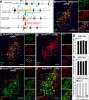
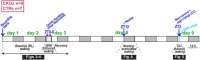
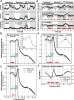
Li, Franken, Vassalli
Sci Rep (2018) 8 (1), 15474 DOI: 10.1038/s41598-018-33069-8
AI Summary: In this study, the OriGene anti-HCRTR1 antibody (Cat#TA328918) was used to specifically detect HCRTR1 protein expression, enabling the researchers to assess the effectiveness of Hcrtr1 gene disruption in noradrenergic neurons.
Snippet: om mouse (Incstar, Cat#22941;1:5000), anti-green fluorescent protein (GFP) from chicken (Aves Labs, Cat#1020;1:500), anti-CRE from rabbit (Novagen, Cat#69050-3;1:500), and anti-HCRTR1 from rabbit (Origene Cat#TA328918;1:100–1:500). This HCRTR1 antibody was raised against a 15-aa peptide from the third intracellular loop of rat HCRTR1, i.e. a region downstream of the 126-aa deletion mediated;;... om mouse (Incstar, Cat#22941
Hypocretin (Orexin) Receptor 1
LI, FRANKEN, VASSALLI
Encyclopedia of Signaling Molecules (2018)
LI, FRANKEN, VASSALLI
Encyclopedia of Signaling Molecules (2018)
Snippet: Antibodies were: anti-tyrosine hydroxylase (TH) from mouse (Incstar, Cat#22941;1:5000), anti-green fluorescent protein (GFP) from chicken (Aves Labs, Cat#1020;1:500), anti-CRE from rabbit (Novagen, Cat#69050-3;1:500), and anti-HCRTR1 from rabbit (Origene Cat#TA328918;1:100-1:500). This HCRTR1 antibody was raised against a 15-aa peptide from the third intracellular loop of rat HCRTR1, i.e. a region downstream of the 126-aa deletion mediated by CRE/loxP recombination of the floxed Hcrtr1 allele Secondary antibodies were donkey IgGs coupled to Alexa-594, or -488 fluorophores, and were incubated at a 1:500 dilution for 1h at r.t
Showing 1-3 of 3 papers.
Powered by BizGenius
*Delivery time may vary from web posted schedule. Occasional delays may occur due to unforeseen
complexities in the preparation of your product. International customers may expect an additional 1-2 weeks
in shipping.
Related Products
- Price:
- Actual Price:
Welcome to OriGene AI!
I'm your AI-powered guide to everything OriGene.
Ask me anything:
- Product specs
- Ordering help
- Technical questions
- How to find exactly what your experiment needs
Prefer a live agent? Connect with us by clicking the green chat icon, as seen in the image below or email our team at custsupport@origene.com.
