
Drd1 Rabbit Polyclonal Antibody

Specifications
| Product Data | |
| Application | IHC, WB |
|---|---|
| Recommended Dilution | WB: 1:200-1:2000; IHC: 1:100-1:3000 |
| Reactivity | Mouse, Rat |
| Antibody Host | Rabbit |
| Clonality | Polyclonal |
| Immunogen | Peptide SSHHEPRGSISKDC, corresponding to amino acid residues 372-385 of rat D1 Dopamine Receptor. Intracellular, C-terminus. |
| Buffer | Lyophilized. Concentration before lyophilization ~0.8mg/ml (lot dependent, please refer to CoA along with shipment for actual concentration). Buffer before lyophilization: Phosphate buffered saline (PBS), pH 7.4, 1% BSA, 0.025% NaN3. |
| Reconstitution Method | Add 50 ul double distilled water (DDW) to the lyophilized powder. |
| Purification | Affinity purified on immobilized antigen. |
| Conjugation | Unconjugated |
| Storage | Store at -20°C as received. |
| Stability | Stable for 12 months from date of receipt. |
| Shipping | Ambient |
| Gene Name | dopamine receptor D1 |
| Database Link | |
| Background | The D1 Dopamine Receptor (D1 Receptor) is one of five receptors that mediate the effects of the catecholamine neurotransmitter dopamine. Dopamine regulates a variety of functions including locomotor activity, emotion, positive reinforcement, food intake, and hormone secretion. The dopaminergic system has been extensively studied in the last thirty years mainly because its dysregulation has been linked to several neurological and neuropsychiatric diseases including Parkinson’s disease and schizophrenia. All five dopamine receptors belong to the 7-transmembrane domain, G-Protein Coupled Receptor (GPCR) superfamily. Historically, the five receptors have been divided into two subfamilies based on pharmacological and structural considerations: the D1-like subfamily (that includes the D1 and D5 subtypes) and the D2-like subfamily (that includes the D2-, D3- and D4 subtypes). The D1-like Receptors are coupled to Gs-type G proteins and enhance adenylate cyclase activity while the D2-like Receptors are coupled to Gi-type G proteins and inhibit adenylate cyclase activity. The D1 Receptor is widely distributed throughout the brain with the highest expression in the cerebral cortex and striatum. In the periphery the D1 Receptor has been detected in the adrenal cortex, kidney and heart. Functionally, the D1 Receptor has been implicated in the regulation of both locomotor and cognitive functions including the maintaining of spontaneous motor behaviors, the control of working memory and cognition as well as the regulation of craving and reward pathways. In addition, D1 Receptor plays an important role in the pathogenesis of hypertension by regulating epithelial Na+ transport and by interacting with vasoactive hormones/humoral factors, such as aldosterone and angiotensin. |
| Synonyms | DADR; DRD1A; OTTHUMP00000161116 |
| Reference Data | |
Reviews


Documents
| Product Manuals |
| FAQs |
| SDS |
Citations
Alteration of the Dopamine Receptors' Expression in the Cerebellum of the Lysosomal Acid Phosphatase 2 Mutant (Naked-Ataxia (NAX)) Mouse
Mehdizadeh, Ashtari, Jiao et al
Int J Mol Sci (2020) 21 (8) DOI: 10.3390/ijms21082914
Mehdizadeh, Ashtari, Jiao et al
Int J Mol Sci (2020) 21 (8) DOI: 10.3390/ijms21082914
Cited by 11
AI Summary: OriGene products contributed to this study by providing the primary antibodies against dopamine receptors—anti-Drd1 (TA328798), anti-Drd2 (TA328800), anti-Drd3 (TA328800), anti-DRD4 (TA321202), and anti-Drd5 (TA328802)—which were used for immunohistochemistry and Western blot analyses to assess dopamine receptor expression in mouse cerebellum.
Snippet: … D1: rabbit polyclonal anti–D1 dopamine receptor (TA328798, anti–Drd1, diluted 1:1000;OriGene Biotech Co., Rockville, MD, USA);D2: rabbit polyclonal anti–D2 dopamine receptor (TA328800, anti–Drd2, diluted 1:1000;OriGene Biotech Co., Rockville, MD, USA), produced against recombinant rat dopamine receptor 2 (DR2);D3: rabbit polyclonal anti–D3 dopamine receptor (TA328800, anti–Drd3, diluted 1:1000;OriGene Biotech Co., Rockville, MD, USA), produced against recombinant rat dopamine receptor 3 (DR3);D4: rabbit polyclonal anti–D4 dopamine receptor (TA321202, anti–DRD4, diluted 1:1000;OriGene Biotech Co., Rockville, MD, USA), produced against recombinant rat dopamine receptor D4 (DRD4);and D5: rabbit polyclonal anti–D5 dopamine receptor (TA328802, anti–Drd5, diluted 1:1000;OriGene Biotech Co., Rockville, MD, USA), produced against recombinant rat dopamine receptor 5 (DR5)
C-terminal di-leucine motif of dopamine D₁ receptor plays an important role in its plasma membrane trafficking
Guo, Jose
PLoS ONE (2011) 6 (12), e29204 DOI: 10.1371/journal.pone.0029204
Guo, Jose
PLoS ONE (2011) 6 (12), e29204 DOI: 10.1371/journal.pone.0029204
Cited by 18
AI Summary: OriGene's Rabbit anti-D1R antibody was used in this study to detect dopamine D₁ receptor expression and analyze the effects of C-terminal mutations on its plasma membrane trafficking.
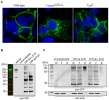
Snippet: Rabbit anti-D 1 R antibody was from Origene (Rockville, MD). ... It is clear that much more YFP-wt D 1 R (lane E;~90 kDa) than YFP-di-L D 1 R proteins (lane E;~70 kDa) were eluted down after cell surface biotinylation and isolation.
Showing 1-2 of 2 papers.
Powered by BizGenius
*Delivery time may vary from web posted schedule. Occasional delays may occur due to unforeseen
complexities in the preparation of your product. International customers may expect an additional 1-2 weeks
in shipping.
Related Products
- Price:
- Actual Price:
Welcome to OriGene AI!
I'm your AI-powered guide to everything OriGene.
Ask me anything:
- Product specs
- Ordering help
- Technical questions
- How to find exactly what your experiment needs
Prefer a live agent? Connect with us by clicking the green chat icon, as seen in the image below or email our team at custsupport@origene.com.
