
TRPC1 Rabbit Polyclonal Antibody

Specifications
| Product Data | |
| Application | IHC, WB |
|---|---|
| Recommended Dilution | WB: 1:200-1:2000; IHC: 1:100-1:3000 |
| Reactivity | Human, Mouse, Rat |
| Antibody Host | Rabbit |
| Clonality | Polyclonal |
| Immunogen | Peptide QLYDKGYTSKEQKDC, corresponding to amino acid residues 557-571 of human TRPC1.Intracellular. |
| Buffer | Lyophilized. Concentration before lyophilization ~0.8mg/ml (lot dependent, please refer to CoA along with shipment for actual concentration). Buffer before lyophilization: phosphate buffered saline (PBS), pH 7.4, 1% BSA, 0.05% NaN3. |
| Reconstitution Method | Add 50 ul double distilled water (DDW) to the lyophilized powder. |
| Purification | Affinity purified on immobilized antigen. |
| Conjugation | Unconjugated |
| Storage | Store at -20°C as received. |
| Stability | Stable for 12 months from date of receipt. |
| Shipping | Ambient |
| Gene Name | transient receptor potential cation channel subfamily C member 1 |
| Database Link | |
| Background | The Transient Receptor Potential (TRP) superfamily is one of the largest ion channel families and consists of diverse groups of proteins. In mammals about 28 genes encode the TRP ion channel subunits. The mammalian TRP superfamily comprises six subfamilies known as the TRPC (canonical), TRPV (vanilloid), TRPM (melastatin), TRPML (mucolipins), TRPP (polycystin) and the TRPA (ANKTM1) ion channels. The TRPC subfamily consists of seven proteins named TRPC1 to 7, which can be further divided into four subgroups based on their sequence homology and functional similarities: 1) TRPC1 2) TRPC4 and TRPC5 3) TRPC3, TRPC6, TRPC7 4) TRPC2. They are highly expressed in the central nervous system and to a lesser extent in peripheral tissues. TRPC1 was the first mammalian TRP protein that was reported to form an ion channel.2 It can co-assemble with other TRPC subunits (TRPC3, TRPC4, TRPC5) to form heterotetramers whose properties are distinct from that of their homomeric form. The existence of the TRPC1 homomers has not been established as yet. The TRPC1, TRPC4 and TRPC5 can be activated either by Ca2+ store depletion or by GPCR stimulation pathways, while TRPC3, TRPC6 and TRPC7 form non-selective cationic channels that are activated by the stimulation of GPCRs. TRPC1, 4 and TRPC5 are assumed to form components of store operated channels in some cell types such as salivary gland cells, endothelial cells and vascular smooth muscle cells. |
| Synonyms | HTRP-1; TRP1 |
| Reference Data | |
| Protein Categories | Membrane Proteins |
| Protein Families | Druggable Genome, Ion Channels: Transient receptor potential, Transmembrane |
| Protein Pathways | Calcium signaling pathway, Huntington's disease, Parkinson's disease |
Reviews


Documents
| Product Manuals |
| FAQs |
| SDS |
Citations
Stanniocalcin2, A Promising New Target for Identifying Patients with Stroke/Ictus
Bermejo, López, Berna-Erro et al
Int J Mol Sci (2025) 26 (20) DOI: 10.3390/ijms26209999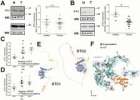
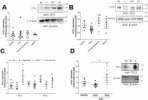
Bermejo, López, Berna-Erro et al
Int J Mol Sci (2025) 26 (20) DOI: 10.3390/ijms26209999
Cited by 1
AI Summary: In this study, the OriGene polyclonal anti-TRPC1 antibody (SKU TA328677) was used to detect TRPC1 protein expression by Western blotting, contributing to the analysis of calcium channel alterations in platelets from stroke/ictus patients.
Snippet: , Madrid, Spain #08264) for 2 h (1:1000 in TBST);monoclonal anti-Orai3 antibody (Clone 1B4F1;Sigma-Aldrich , Madrid, Spain #SAB3500121) overnight (1:250 in TBST);polyclonal anti-TRPC1 antibody (Origene , Rockville, MD, USA # SKU TA328677) for 2 h (1:1000 in TBST);polyclonal anti-TRPC3 antibody (Abcam , Cambridge, UK #ab51560) overnight (1:1000 in TBST);polyclonal anti-TRPC6 antibody (Alo
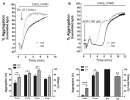
Stanniocalcin 2 Regulates Non-capacitative Ca2+ Entry and Aggregation in Mouse Platelets
López, Gómez-Gordo, Cantonero et al
Front Physiol (2018) 9, 266 DOI: 10.3389/fphys.2018.00266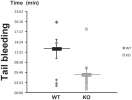
López, Gómez-Gordo, Cantonero et al
Front Physiol (2018) 9, 266 DOI: 10.3389/fphys.2018.00266
Cited by 11
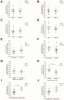
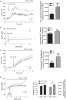
AI Summary: In this paper, OriGene products—including anti-Orai3 (Cat# TA322352), anti-TRPC3 (Cat# TA322366), and anti-TRPC6 (Cat# TA322368) antibodies—were used for Western blot analysis to assess the expression of calcium channels in mouse platelets, helping to reveal that Orai3 expression is enhanced in STC2-deficient mice.
Stanniocalcin 2 Regulates Non-capacitative Ca2+ Entry and Aggregation in Mouse Platelets
López, Gómez-Gordo, Cantonero et al
Front. Physiol. (2018) 9 DOI: 10.3389/fphys.2018.00266
López, Gómez-Gordo, Cantonero et al
Front. Physiol. (2018) 9 DOI: 10.3389/fphys.2018.00266
AI Summary: OriGene contributed to this study by providing the rabbit polyclonal anti-TRPC1 antibody, which was used to investigate the role of TRPC1 in platelet Ca2+ entry mechanisms.
Snippet: Mouse anti-STIM1 [Clone 44 Clone 44-GOK (RUO)] antibody was from BD Biosciences (Madrid, Spain). Rabbit polyclonal anti-TRPC1 (against peptide QLYDKGYTSKEQKDC) antibody was supplied by OriGene (Rockville (MD) USA) Cached
Showing 1-3 of 3 papers.
Powered by BizGenius
*Delivery time may vary from web posted schedule. Occasional delays may occur due to unforeseen
complexities in the preparation of your product. International customers may expect an additional 1-2 weeks
in shipping.
Related Products
- Price:
- Actual Price:
Welcome to OriGene AI!
I'm your AI-powered guide to everything OriGene.
Ask me anything:
- Product specs
- Ordering help
- Technical questions
- How to find exactly what your experiment needs
Prefer a live agent? Connect with us by clicking the green chat icon, as seen in the image below or email our team at custsupport@origene.com.
