
Argonaute 2 (AGO2) Rabbit Polyclonal Antibody

Specifications
| Product Data | |
| Application | IHC |
|---|---|
| Recommended Dilution | IHC: 15-50 Positive control: Human thyroid cancer Predicted cell location: Cytoplasm |
| Reactivity | Human, Mouse, Rat |
| Antibody Host | Rabbit |
| Isotype | IgG |
| Clonality | Polyclonal |
| Immunogen | Fusion protein corresponding to C terminal 250 amino acids of human argonaute RISC catalytic component 2 |
| Buffer | PBS pH7.3, 0.05% NaN3, 50% glycerol |
| Concentration | lot specific |
| Purification | Antigen affinity purification |
| Conjugation | Unconjugated |
| Storage | Store at -20°C as received. |
| Stability | Stable for 12 months from date of receipt. |
| Shipping | Blue Ice |
| Gene Name | argonaute 2, RISC catalytic component |
| Database Link | |
| Background | This gene encodes a member of the Argonaute family of proteins which play a role in RNA interference. The encoded protein is highly basic, and contains a PAZ domain and a PIWI domain. It may interact with dicer1 and play a role in short-interfering-RNA-mediated gene silencing. Multiple transcript variants encoding different isoforms have been found for this gene. |
| Synonyms | EIF2C2; Q10 |
| Reference Data | |
| Protein Categories | Intracellular Proteins |
| Protein Families | Druggable Genome |
Reviews


Documents
| Product Manuals |
| FAQs |
| SDS |
Citations
Extracellular vesicles from rat-bone-marrow mesenchymal stromal/stem cells improve tendon repair in rat Achilles tendon injury model in dose-dependent manner: A pilot study
Gissi, Radeghieri, Antonetti Lamorgese Passeri et al
PLoS ONE (2020) 15 (3), e0229914 DOI: 10.1371/journal.pone.0229914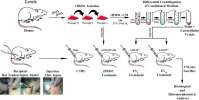
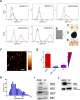
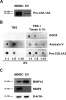
Gissi, Radeghieri, Antonetti Lamorgese Passeri et al
PLoS ONE (2020) 15 (3), e0229914 DOI: 10.1371/journal.pone.0229914
Cited by 63
AI Summary: In this study, OriGene's antibodies against pro-collagen1A2 (Cat# TA327322) and MMP14 (Cat# TA506771) were used to detect and analyze the presence of these proteins in extracellular vesicles derived from rat bone marrow mesenchymal stromal/stem cells, helping to elucidate their role in tendon repair mechanisms.
Snippet: livery of bioactive cargos by EV induces the same beneficial responses as stem-cell transplantation, offering remarkable benefits over conventional cell-therapy: for example, EVs avoid the risk of tumorigenesis, and heterotopic ossification and calcification[3,4] and are immunologically unresponsive agents[7, 8]. Finally EVs play a role in tendon-healing by modulating inflammatory responses [9, 10
Showing 1-1 of 1 papers.
Powered by BizGenius
*Delivery time may vary from web posted schedule. Occasional delays may occur due to unforeseen
complexities in the preparation of your product. International customers may expect an additional 1-2 weeks
in shipping.
Related Products
- Price:
- Actual Price:
Welcome to OriGene AI!
I'm your AI-powered guide to everything OriGene.
Ask me anything:
- Product specs
- Ordering help
- Technical questions
- How to find exactly what your experiment needs
Prefer a live agent? Connect with us by clicking the green chat icon, as seen in the image below or email our team at custsupport@origene.com.
