
SHISA3 Rabbit Polyclonal Antibody

Specifications
| Product Data | |
| Application | IF, IHC, WB |
|---|---|
| Recommended Dilution | WB: 1 ug/mL |
| Reactivity | Human, Mouse, Rat |
| Antibody Host | Rabbit |
| Isotype | IgG |
| Clonality | Polyclonal |
| Immunogen | SHISA3 antibody was raised against a 15 amino acid peptide near the center of human SHISA3 . |
| Buffer | SHISA3 Antibody is supplied in PBS containing 0.02% sodium azide. |
| Concentration | 1ug/ul |
| Purification | SHISA3 Antibody is affinity chromatography purified via peptide column. |
| Conjugation | Unconjugated |
| Storage | Store at -20°C as received. |
| Stability | Stable for 12 months from date of receipt. |
| Shipping | Blue Ice |
| Predicted Protein Size | Predicted: 26 kDa; Observed: 28 kDa |
| Gene Name | shisa family member 3 |
| Database Link | |
| Background | SHISA3 Antibody: SHISA3 plays an essential role in the maturation of presomitic mesoderm cells by individual attenuation of both FGF and WNT signaling. The Shisa family of single-transmembrane proteins is characterized by an N-terminal cysteine-rich domain and a proline-rich C-terminal region. Its founding member, Xenopus Shisa, promotes head development by antagonizing Wnt and FGF signaling. Shisa physically interacted with immature forms of the Wnt receptor Frizzled and the FGF receptor within the ER and inhibited their posttranslational maturation and trafficking to the cell surface. Loss of Shisa function sensitized the neuroectoderm to Wnt signaling and suppressed head formation during gastrulation. |
| Synonyms | hShisa3 |
| Reference Data | |
| Protein Categories | Membrane Proteins |
| Protein Families | Transmembrane |
Reviews


Documents
| Product Manuals |
| FAQs |
| SDS |
Citations
Distinct fibroblast subsets regulate lacteal integrity through YAP/TAZ-induced VEGF-C in intestinal villi
Hong, Yang, Cho et al
Nat Commun (2020) 11 (1), 4102 DOI: 10.1038/s41467-020-17886-y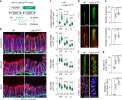
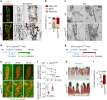
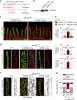
Hong, Yang, Cho et al
Nat Commun (2020) 11 (1), 4102 DOI: 10.1038/s41467-020-17886-y
Cited by 75
AI Summary: In this study, the OriGene anti-Shisa3 antibody (TA320118) was used to identify and characterize specific fibroblast subsets in intestinal villi, contributing to the investigation of how these cells regulate lacteal integrity through YAP/TAZ-induced VEGF-C secretion.
Snippet: al, sc-5297, Santa Cruz, 1:100);anti-Serpina3n (Goat polyclonal, AF4709, R&D, 1:200);anti-Fosb (rabbit monoclonal, 2251, Cell Signaling Technology, 1:400);anti-Shisa3 (rabbit polyclonal, TA320118, Origene, 1:400);anti-P2X1 (rabbit polyclonal, APR-001, Alomone labs, 1:800);anti-Ackr4 (rabbit polyclonal, SAB4502137, Sigma-Aldrich, 1:200);anti-Grem1 (goat polyclonal, AF956, R&D, 1:200);anti-So
Showing 1-1 of 1 papers.
Powered by BizGenius
*Delivery time may vary from web posted schedule. Occasional delays may occur due to unforeseen
complexities in the preparation of your product. International customers may expect an additional 1-2 weeks
in shipping.
Related Products
- Price:
- Actual Price:
Welcome to OriGene AI!
I'm your AI-powered guide to everything OriGene.
Ask me anything:
- Product specs
- Ordering help
- Technical questions
- How to find exactly what your experiment needs
Prefer a live agent? Connect with us by clicking the green chat icon, as seen in the image below or email our team at custsupport@origene.com.
