
HTT Rabbit Polyclonal Antibody

Specifications
| Product Data | |
| Application | ELISA, IHC, WB |
|---|---|
| Recommended Dilution | WB: 1:500 - 1:3,000 IHC: 1:50 - 1:100 ELISA: 1:10,000 - 1:40,000 |
| Reactivity | Human |
| Modification | Phospho-specific |
| Antibody Host | Rabbit |
| Isotype | IgG |
| Clonality | Polyclonal |
| Immunogen | Huntingtin pS421 Antibody was prepared from whole rabbit serum produced by repeated immunizations with a synthetic peptide corresponding to an internal region near aa 400-425 of Human Huntington Disease Protein. |
| Specificity | Anti-Huntingtin pS421 is an affinity purified antibody produced by immunoaffinity chromatography using phospho peptide coupled to agarose beads followed by solid phase adsorption(s) against non-phospho peptide and non-specific peptide to remove any unwanted reactivities. This antibody is specific for phosphorylated human Huntington protein at the pS421 residue. BLAST analysis indicates 100 % homology of the immunizing sequence with Huntington homologues from chimpanzee, pig and chicken. Cross reactivity with Huntington protein homologues from mouse and rat may also occur as sequence homology varies by one amino acid residue in this sequence. Reactivity with Huntington protein from other sources is not known. Minimal reactivity is expected with the non-phosphorylated form of the protein. |
| Buffer | 0.02 M Potassium Phosphate, 0.15 M Sodium Chloride, pH 7.2 Stabilizer: None Preservative: 0.01% (w/v) Sodium Azide |
| Concentration | 0.96 mg/mL - lot specific |
| Conjugation | Unconjugated |
| Storage | Store vial at -20° C prior to opening. Aliquot contents and freeze at -20° C or below for extended storage. Avoid cycles of freezing and thawing. Centrifuge product if not completely clear after standing at room temperature. This product is stable for several weeks at 4° C as an undiluted liquid. Dilute only prior to immediate use. |
| Stability | Expiration date is one (1) year from date of receipt. |
| Shipping | Blue Ice |
| Gene Name | huntingtin |
| Database Link | |
| Background | Huntingtin (also known as Huntington's disease protein, Htt and HD protein) is the protein product of a disease gene linked to Huntington's disease, a neuro-degenerative disorder characterized by loss of striatal neurons. This may be caused by an expanded, unstable trinucleotide repeat in the huntingtin gene, which translates as a polyglutamine repeat in the protein product (see partial protein sequence below). The huntingtin gene locus is large, spanning 180 kb and consisting of 67 exons. It is expressed as 2 alternatively polyadenylated forms displaying different relative abundance in various fetal and adult tissues. The genetic defect leading to Huntington's disease may not necessarily eliminate transcription, but may confer a new property on the mRNA or alter the function of the protein. One candidate is the huntingtin-associated protein-1, highly expressed in brain, which has increased affinity for huntingtin protein with expanded polyglutamine repeats. Normal huntingtin protein shows a cytoplasmic localization. This protein is widely expressed with the highest level of expression in the brain (nerve fibers, varicosities, and nerve endings). In the brain, the regions where it can be mainly found are the cerebellar cortex, the neocortex, the striatum, and the hippocampal formation. |
| Synonyms | rabbit anti-Huntington pS421 antibody, rabbit anti-Huntingtin pS421 antibody, HD protein, HTT, Huntington Disease Protein, Huntington disease, IT15, LOMARS |
| Note | Anti-Huntingtin pS421 antibody has been tested for use in ELISA, immunohistochemistry, and by western blot. Specific conditions for reactivity should be optimized by the end user. Expect bands at approximately 350 kDa and 200 kDa in size corresponding to full-length Huntingtin protein and truncated (hypothetical) Huntingtin protein, respectively, by western blotting in the appropriate cell lysate or extract. This antibody is specific for the phosphorylated form of Huntingtin protein at the pS421 residue. The identity of lower molecular bands ~130 kDa is not known. |
| Reference Data | |
Reviews


Documents
| Product Manuals |
| FAQs |
| SDS |
Citations
Nuclear retention of full-length HTT RNA is mediated by splicing factors MBNL1 and U2AF65
Sun, Li, Zhu et al
Sci Rep (2015) 5, 12521 DOI: 10.1038/srep12521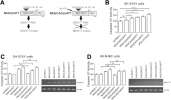
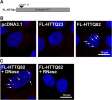
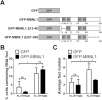
Sun, Li, Zhu et al
Sci Rep (2015) 5, 12521 DOI: 10.1038/srep12521
Cited by 55
AI Summary: OriGene's anti-FLAG antibody (4C5) was used in this study to detect FLAG-tagged proteins, facilitating the investigation of how splicing factors influence the nuclear retention and cytotoxicity of expanded HTT RNA in Huntington's disease.
Snippet: anti-MBNL1 (A2764, 1:1000) from Dr. Charles A. Thornton (University of Rochester, Rochester, NY);anti-mRFP (5F8, 1:1000) from Chromotek (Martinsried, Germany);anti-N-terminus of huntingtin (sc-8767, 1:200) from Santa Cruz Biotechnology;anti-FLAG (4C5, 1:1000) from Origene (Rockville, MD)
Showing 1-1 of 1 papers.
Powered by BizGenius
*Delivery time may vary from web posted schedule. Occasional delays may occur due to unforeseen
complexities in the preparation of your product. International customers may expect an additional 1-2 weeks
in shipping.
Related Products
- Price:
- Actual Price:
Welcome to OriGene AI!
I'm your AI-powered guide to everything OriGene.
Ask me anything:
- Product specs
- Ordering help
- Technical questions
- How to find exactly what your experiment needs
Prefer a live agent? Connect with us by clicking the green chat icon, as seen in the image below or email our team at custsupport@origene.com.
