
PFKM Rabbit Polyclonal Antibody

$665.00
5 Days*
Specifications
| Product Data | |
| Application | WB |
|---|---|
| Recommended Dilution | WB:1:1000-1:10000 |
| Reactivity | Bovine), Dog, Human, Mouse (Predicted: Chicken, Pig, Rat, Xenopus |
| Antibody Host | Rabbit |
| Isotype | IgG |
| Clonality | Polyclonal |
| Immunogen | Recombinant fragment corresponding to a region within amino acids 1 and 253 of PFK (muscle) (Uniprot ID#P08237) |
| Buffer | 1XPBS, 20% Glycerol (pH7). 0.025% ProClin 300 was added as a preservative. |
| Concentration | lot specific |
| Purification | Purified by antigen-affinity chromatography. |
| Conjugation | Unconjugated |
| Storage | Store at -20°C as received. |
| Stability | Stable for 12 months from date of receipt. |
| Shipping | Blue Ice |
| Predicted Protein Size | 85 kDa |
| Gene Name | phosphofructokinase, muscle |
| Database Link | |
| Background | The PFKM gene encodes the muscle isoform of phosphofructokinase (PFK) (ATP:D-fructose-6-phosphate-1-phosphotransferase, EC 2.7.1.11). PFK catalyzes the irreversible conversion of fructose-6-phosphate to fructose-1,6-bisphosphate and is a key regulatory enzyme in glycolysis. Mammalian PFK is a tetramer made up of various combinations of 3 subunits: muscle (PFKM), liver (PFKL; MIM 171860), and platelet (PFKP; MIM 171840), the genes for which are located on chromosomes 12q13, 21q22, and 10p, respectively. The composition of the tetramers differs according to the tissue type. Muscle and liver PFK are a homotetramers of 4M and 4L subunits, respectively. Erythrocytes contain both L and M subunits, which randomly tetramerize to form M4, L4, and M3L, M2L2, and ML3 hybrid forms of the holoenzyme (Vora et al., 1980 PubMed 6444721; Raben and Sherman, 1995 PubMed 7550225). supplied by OMIM |
| Synonyms | ATP-PFK; GSD7; PFK-1; PFK1; PFKA; PFKX; PPP1R122 |
| Note | Seq homology of immunogen across species: Chicken (88%), Dog (97%), Pig (95%), Rat (94%), Xenopus laevis (89%), Bovine (96%) |
| Reference Data | |
| Protein Categories | Intracellular Proteins |
| Protein Families | Druggable Genome |
| Protein Pathways | Fructose and mannose metabolism, Galactose metabolism, Glycolysis / Gluconeogenesis, Metabolic pathways, Pentose phosphate pathway |
Reviews


Documents
| Product Manuals |
| FAQs |
| SDS |
Citations
Adipose tissue proteomic analysis in ketotic or healthy Holstein cows in early lactation1
Xu, Li, Ma et al
J Anim Sci (2019) 97 (7), 2837-2849 DOI: 10.1093/jas/skz132
Xu, Li, Ma et al
J Anim Sci (2019) 97 (7), 2837-2849 DOI: 10.1093/jas/skz132
Cited by 30
AI Summary: In this study, OriGene products—specifically anti-PLIN1 (TA326524), anti-LIPA (TA326082), anti-PKM2 (TA326704), anti-PKM (TA326703), and anti-LDHA (TA326788) antibodies—were used for western blot validation of differentially expressed proteins identified in the adipose tissue of ketotic versus healthy Holstein cows.
Adipose tissue proteomic analysis in ketotic or healthy Holstein cows in early lactation
Xu, Li, Ma et al
J. Anim. Sci. (2019)
Xu, Li, Ma et al
J. Anim. Sci. (2019)
AI Summary: OriGene contributed to this study by providing the anti-PFK antibody (TA308655), which was used to validate the differential expression of phosphofructokinase 1 (PFK) in adipose tissue from ketotic and healthy Holstein cows.
Snippet: Antibodies against LDHA (NBP1-48336) were from Novus Biologicals (Littleton, USA). Antibodies against PFK (TA308655) were from OriGene Technologies, Inc. (Rockville, USA). Antibodies against PKA (06-903) were from EMD Millipore, Inc. (Hong Kong, China) View as HTML
An efficient proteome-wide strategy for discovery and characterization of cellular nucleotide-protein interactions
Lim, Prabhu, Dai et al
PLoS ONE (2018) 13 (12), e0208273 DOI: 10.1371/journal.pone.0208273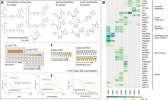
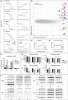
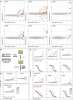
Lim, Prabhu, Dai et al
PLoS ONE (2018) 13 (12), e0208273 DOI: 10.1371/journal.pone.0208273
AI Summary: OriGene products, specifically the anti-PFKM and anti-RIA antibodies, were used for protein detection in western blot analyses to validate nucleotide-protein interactions identified by the proteome-wide CETSA strategy in this study.
Snippet: The membrane was blocked in 5% skim milk for 15 min and incubated with primary antibodies: anti-PFKM and anti-RIA (Origene);anti-RIIB (Thermo Scientific);anti-beta-actin (Santa Cruz);anti-ABCF2 (Atlas Antibodies) and anti-RRM1 (Sigma Aldrich) overnight at 4 Cached;Cells or lysates were treated with compounds or metabolites prior to CETSA heat pulse. … The membrane was blocked in 5% skim milk for 15 min and incubated with primary antibodies: anti-PFKM and anti-RIA (Origene)
Showing 1-3 of 3 papers.
Powered by BizGenius
*Delivery time may vary from web posted schedule. Occasional delays may occur due to unforeseen
complexities in the preparation of your product. International customers may expect an additional 1-2 weeks
in shipping.
Related Products
- Price:
- Actual Price:
Welcome to OriGene AI!
I'm your AI-powered guide to everything OriGene.
Ask me anything:
- Product specs
- Ordering help
- Technical questions
- How to find exactly what your experiment needs
Prefer a live agent? Connect with us by clicking the green chat icon, as seen in the image below or email our team at custsupport@origene.com.
