
GFP Goat Polyclonal Antibody

$1,170.00
3 Days*
Specifications
| Product Data | |
| Application | FLISA, IF, WB |
|---|---|
| Recommended Dilution | WB: >1:10,000 IF: 1:500 - 1:2,500 FLISA: >1:20,000 |
| Reactivity | eGFP, GFP, rGFP |
| Antibody Host | Goat |
| Clonality | Polyclonal |
| Immunogen | Recombinant Green Fluorescent Protein (GFP) fusion protein corresponding to the full length amino acid sequence (246aa) derived from the jellyfish Aequorea victoria. |
| Specificity | GFP Texas Red™ Conjugated Antibody was prepared from monospecific antiserum by immunoaffinity chromatography using Green Fluorescent Protein (Aequorea victoria) coupled to agarose beads followed by solid phase adsorption(s) to remove any unwanted reactivities. Assay by immunoelectrophoresis resulted in a single precipitin arc against anti-Goat Serum and purified and partially purified Green Fluorescent Protein (Aequorea victoria) Serum. No reaction was observed against Human, Mouse and Rat Serum Proteins. |
| Buffer | 0.02 M Potassium Phosphate, 0.15 M Sodium Chloride, pH 7.2 Stabilizer: 10 mg/mL Bovine Serum Albumin (BSA) - Immunoglobulin and Protease free Preservative: 0.01% (w/v) Sodium Azide |
| Reconstitution Method | Restore with deionized water (or equivalent) - Reconstitution Volume: 1.0 mL |
| Concentration | 1.0 mg/mL - lot specific |
| Purification | Immunoaffinity Chromatography using Green Fluorescent Protein (Aequorea victoria) coupled to agarose beads followed by solid phase adsorption(s) to remove any unwanted reactivities. |
| Conjugation | Unconjugated |
| Storage | Store GFP antibody at 4° C prior to restoration. For extended storage aliquot contents and freeze at -20° C or below. Avoid cycles of freezing and thawing. Centrifuge product if not completely clear after standing at room temperature. This product is stable for several weeks at 4° C as an undiluted liquid. Dilute only prior to immediate use. |
| Stability | Expiration date is one (1) year from date of receipt. |
| Shipping | Ambient |
| Database Link | |
| Background | GFP Texas Red™ Conjugated Antibody is designed for immunofluorescence microscopy, fluorescence based plate assays (FLISA) and fluorescent western blotting. This product is also suitable for multiplex analysis, including multicolor imaging, utilizing various commercial platforms. |
| Synonyms | goat anti-GFP Antibody Texas Red™ Conjugation, Texas Red™ conjugated goat anti-GFP antibody, Green Fluorescent Protein, GFP antibody, Green Fluorescent Protein antibody, EGFP, enhanced Green Fluorescent Protein, Aequorea victoria, Jellyfish |
| Note | Polyclonal anti-GFP is designed to detect GFP and its variants. This antibody can be used to detect GFP by ELISA (sandwich or capture) for the direct binding of antigen and recognizes wild type, recombinant and enhanced forms of GFP. Biotin conjugated polyclonal anti-GFP used in a sandwich ELISA is well suited to titrate GFP in solution using this antibody in combination with Rockland's monoclonal anti-GFP (600-301-215) using either form of the antibody as the capture or detection antibodies. However, use the monoclonal form only for the detection of wild type or recombinant GFP as this form does not sufficiently detect 'enhanced' GFP. The detection antibody is typically conjugated to biotin and subsequently reacted with streptavidin conjugated HRP (code # S000-03). Fluorochrome conjugated polyclonal anti-GFP can be used to detect GFP by immunofluorescence microscopy in prokaryotic (E.coli) and eukaryotic (CHO cells) expression systems and can detect GFP containing inserts. Significant amplification of signal is achieved using fluorochrome conjugated polyclonal anti-GFP relative to the fluorescence of GFP alone. For immunoblotting use either alkaline phosphatase or peroxidase conjugated polyclonal anti-GFP to detect GFP or GFP containing proteins on western blots. Optimal titers for applications should be determined by the researcher. |
| Reference Data | |
Reviews


Documents
| Product Manuals |
| FAQs |
| SDS |
Citations
Connexin 37 sequestering of activated-ERK in the cytoplasm promotes p27-mediated endothelial cell cycle arrest
Acharya, Fang, Jeffery et al
Life Sci Alliance (2023) 6 (8) DOI: 10.26508/lsa.202201685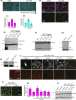
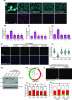
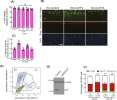
Acharya, Fang, Jeffery et al
Life Sci Alliance (2023) 6 (8) DOI: 10.26508/lsa.202201685
Cited by 10
AI Summary: In this study, OriGene's GFP-tag (Cat# R1091TR) was used to label and track proteins in endothelial cells, facilitating the investigation of Connexin 37's role in cell cycle regulation.
Snippet: Cell Signaling Technology Cat# 9472 P44/42 MAPK (Erk1/2) Cell Signaling Technology Cat# 9102 Phospho p44/42 MAPK (Erk1/2) Cell Signaling Technology Cat# 9106 GFP-tag Origene Cat# R1091TR HA-tag R&D Systems Cat# MAB060 VE-Cadherin R&D Systems Cat# AF938 Alpha Tubulin (YOL1/34) Novus Biologicals Cat# NB100-1639 Beta-Actin Cell;MAPK (Erk1/2) Cell Signaling Technology Cat# 9106 GFP-tag Origene Cat# R1091TR HA-tag R&D Systems Cat# MAB060
Aberrant neurogenesis after stroke: a retroviral cell labeling study
Niv, Keiner, Krishna et al
Stroke (2012) 43 (9), 2468-75 DOI: 10.1161/STROKEAHA.112.660977
Niv, Keiner, Krishna et al
Stroke (2012) 43 (9), 2468-75 DOI: 10.1161/STROKEAHA.112.660977
Unique secretory dynamics of tissue plasminogen activator and its modulation by plasminogen activator inhibitor-1 in vascular endothelial cells
Suzuki, Mogami, Ihara et al
Blood (2009) 113 (2), 470-8 DOI: 10.1182/blood-2008-03-144279
Suzuki, Mogami, Ihara et al
Blood (2009) 113 (2), 470-8 DOI: 10.1182/blood-2008-03-144279
Cited by 47
AI Summary: In this study, OriGene’s tPA-GFP construct (RC217571) and PAI-1 siRNA (SR304112) were used to visualize and manipulate tissue plasminogen activator and PAI-1 expression in vascular endothelial cells, enabling detailed analysis of their secretory dynamics and interactions.
Showing 1-3 of 3 papers.
Powered by BizGenius
*Delivery time may vary from web posted schedule. Occasional delays may occur due to unforeseen
complexities in the preparation of your product. International customers may expect an additional 1-2 weeks
in shipping.
Related Products
- Price:
- Actual Price:
Welcome to OriGene AI!
I'm your AI-powered guide to everything OriGene.
Ask me anything:
- Product specs
- Ordering help
- Technical questions
- How to find exactly what your experiment needs
Prefer a live agent? Connect with us by clicking the green chat icon, as seen in the image below or email our team at custsupport@origene.com.
