
CEACAM7 Mouse Monoclonal Antibody [Clone ID: BAC2]

Specifications
| Product Data | |
| Clone Name | BAC2 |
|---|---|
| Application | ELISA, FC, IF, IHC |
| Recommended Dilution | ELISA: 1/200-1/400. Cell based ELISA with intakt, transiently transfected cells: 1/200. Flow cytometry: 1.2 µg/106 cells. |
| Reactivity | Human |
| Antibody Host | Mouse |
| Isotype | IgG1 |
| Clonality | Monoclonal |
| Immunogen | CEACAM7/Fc fusion protein |
| Specificity | This antibody recognizes CEACAM7. |
| Buffer | Phosphate buffered saline, pH 7.2 without preservatives State: Purified State: Liquid purified Ig fraction |
| Concentration | lot specific |
| Purification | Affinity Chromatography on Protein G |
| Conjugation | Unconjugated |
| Storage | Store the antibody undiluted at 2-8°C for one month or (in aliquots) at -20°C for longer. Avoid repeated freezing and thawing. |
| Stability | Shelf life: one year from despatch. |
| Shipping | Blue Ice |
| Gene Name | carcinoembryonic antigen related cell adhesion molecule 7 |
| Database Link | |
| Background | CEA-related cell adhesion molecule 7 (CEACAM7, CGM2) belongs to the carcinoembryonic antigen (CEA) family (1). It encodes a glycosyl phosphatidyl inositol (GPI)-linked glycoprotein which is only found on the apical surface of highly differentiated epithelial cells adult colon and on a small epithelial cell population in pancreatic ducts (2). CEACAM7 expression is completely lost upon malignant transformation already in hyperplastic polyps and early adenomas as well as in adenocarcinomas of the colon (2). Like all members of the CEACAM family, it consists of a single N domain, with structural homology to the immunoglobulin variable domains, followed by one immunoglobulin constant-like A domain. |
| Synonyms | CGM2 |
| Reference Data | |
| Protein Categories | Membrane Proteins |
Reviews


Documents
| Product Manuals |
| FAQs |
| SDS |
Citations
Deregulation of the CEACAM expression pattern causes undifferentiated cell growth in human lung adenocarcinoma cells
Singer, Scheffrahn, Kammerer et al
PLoS One (2010) 5 (1), e8747 DOI: 10.1371/journal.pone.0008747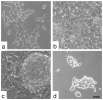
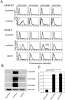
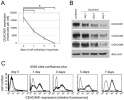
Singer, Scheffrahn, Kammerer et al
PLoS One (2010) 5 (1), e8747 DOI: 10.1371/journal.pone.0008747
Cited by 111
AI Summary: OriGene products, specifically CEACAM1, CEACAM5, and CEACAM6 cDNA clones, were used to manipulate and study the expression of these cell adhesion molecules in A549 lung adenocarcinoma cells, enabling the authors to elucidate their distinct roles in regulating cell growth and differentiation.
The prevalence and nature of glycan alterations on specific proteins in pancreatic cancer patients revealed using antibody-lectin sandwich arrays
Yue, Goldstein, Hollingsworth et al
Mol Cell Proteomics (2009) 8 (7), 1697-707 DOI: 10.1074/mcp.M900135-MCP200
Yue, Goldstein, Hollingsworth et al
Mol Cell Proteomics (2009) 8 (7), 1697-707 DOI: 10.1074/mcp.M900135-MCP200
AI Summary: OriGene products, specifically anti-MUC1 (Cat# TA502068), anti-MUC5AC (Cat# TA502048), and anti-MUC16 (Cat# TA324256) antibodies, were used to capture and analyze specific mucin proteins from patient sera, enabling the detailed assessment of glycan alterations associated with pancreatic cancer in this study.
Carcinoembryonic antigen and CD44 variant isoforms cooperate to mediate colon carcinoma cell adhesion to E- and L-selectin in shear flow
Thomas, Zhu, Schnaar et al
J Biol Chem (2008) 283 (23), 15647-55 DOI: 10.1074/jbc.M800543200
Thomas, Zhu, Schnaar et al
J Biol Chem (2008) 283 (23), 15647-55 DOI: 10.1074/jbc.M800543200
AI Summary: In this study, OriGene’s CD44 shRNA lentiviral particles (TL309458) were used to generate stable CD44-knockdown LS174T colon carcinoma cell lines, enabling the authors to investigate the distinct and cooperative roles of carcinoembryonic antigen (CEA) and CD44 variant isoforms in mediating cell adhesion to E- and L-selectin under shear flow.
Lymphatic reprogramming of microvascular endothelial cells by CEA-related cell adhesion molecule-1 via interaction with VEGFR-3 and Prox1
Kilic, Oliveira-Ferrer, Neshat-Vahid et al
Blood (2007) 110 (13), 4223-33 DOI: 10.1182/blood-2007-06-097592
Kilic, Oliveira-Ferrer, Neshat-Vahid et al
Blood (2007) 110 (13), 4223-33 DOI: 10.1182/blood-2007-06-097592
Cited by 48
AI Summary: In this study, OriGene’s Prox1 siRNA (SR311105) was used to silence Prox1 expression in human dermal microvascular endothelial cells (HDMECs), enabling the authors to demonstrate that Prox1 is essential for CEACAM1-induced upregulation of VEGFR-3 and lymphatic reprogramming.
Interferon-gamma tempers the expression of carcinoembryonic antigen family molecules in human colon cells: a possible role in innate mucosal defence
Fahlgren, Baranov, Frängsmyr et al
Scand J Immunol (2003) 58 (6), 628-41 DOI: 10.1111/j.1365-3083.2003.01342.x
Fahlgren, Baranov, Frängsmyr et al
Scand J Immunol (2003) 58 (6), 628-41 DOI: 10.1111/j.1365-3083.2003.01342.x
Cited by 58
AI Summary: OriGene products, specifically the CEACAM1, CEACAM6, CEACAM7, and CEA qPCR primer sets, were used to quantitatively measure changes in mRNA expression of carcinoembryonic antigen family molecules in colon carcinoma cells following interferon-gamma treatment.
Carcinoembryonic antigen family members CEACAM6 and CEACAM7 are differentially expressed in normal tissues and oppositely deregulated in hyperplastic colorectal polyps and early adenomas
Schölzel, Zimmermann, Schwarzkopf et al
Am J Pathol (2000) 156 (2), 595-605 DOI: 10.1016/S0002-9440(10)64764-5


Schölzel, Zimmermann, Schwarzkopf et al
Am J Pathol (2000) 156 (2), 595-605 DOI: 10.1016/S0002-9440(10)64764-5
AI Summary: OriGene products, specifically the CEACAM6 (NCA-50/90) and CEACAM7 (CGM2) monoclonal antibodies, were used to perform immunohistochemical studies that enabled the authors to analyze and compare the expression patterns of CEACAM6 and CEACAM7 in normal tissues, hyperplastic colorectal polyps, and early adenomas.
Showing 1-6 of 6 papers.
Powered by BizGenius
*Delivery time may vary from web posted schedule. Occasional delays may occur due to unforeseen
complexities in the preparation of your product. International customers may expect an additional 1-2 weeks
in shipping.
Related Products
- Price:
- Actual Price:
Welcome to OriGene AI!
I'm your AI-powered guide to everything OriGene.
Ask me anything:
- Product specs
- Ordering help
- Technical questions
- How to find exactly what your experiment needs
Prefer a live agent? Connect with us by clicking the green chat icon, as seen in the image below or email our team at custsupport@origene.com.
