
CCN2 Mouse Monoclonal Antibody [Clone ID: OTI5H7]

SKU
CF806803
Carrier-free (BSA/glycerol-free) CTGF mouse monoclonal antibody, clone OTI5H7 (formerly 5H7)

$620.00
3 Days*
Specifications
| Product Data | |
| Clone Name | OTI5H7 |
|---|---|
| Application | IHC, WB |
| Recommended Dilution | WB 1:2000, IHC 1:150 |
| Reactivity | Human |
| Antibody Host | Mouse |
| Isotype | IgG2a |
| Clonality | Monoclonal |
| Immunogen | Human recombinant protein fragment corresponding to amino acids 27-349 of human CTGF(NP_001892) produced in E.coli. |
| Buffer | Lyophilized powder (original buffer 1X PBS, pH 7.3, 8% trehalose) |
| Reconstitution Method | For reconstitution, we recommend adding 100uL distilled water to a final antibody concentration of about 1 mg/mL. To use this carrier-free antibody for conjugation experiment, we strongly recommend performing another round of desalting process. (OriGene recommends Zeba Spin Desalting Columns, 7KMWCO from Thermo Scientific) |
| Purification | Purified from mouse ascites fluids or tissue culture supernatant by affinity chromatography (protein A/G) |
| Conjugation | Unconjugated |
| Storage | Store at -20°C as received. |
| Stability | Stable for 12 months from date of receipt. |
| Shipping | Ambient |
| Predicted Protein Size | 37.9 kDa |
| Gene Name | cellular communication network factor 2 |
| Database Link | |
| Background | The protein encoded by this gene is a mitogen that is secreted by vascular endothelial cells. The encoded protein plays a role in chondrocyte proliferation and differentiation, cell adhesion in many cell types, and is related to platelet-derived growth factor. Certain polymorphisms in this gene have been linked with a higher incidence of systemic sclerosis. provided by RefSeq, Nov 2009 |
| Synonyms | CCN2; HCS24; IGFBP8; NOV2 |
| Reference Data | |
| Protein Categories | Growth Factors, Secreated Proteins |
| Protein Families | Druggable Genome, Secreted Protein |
Reviews


Documents
| Product Manuals |
| FAQs |
| SDS |
Resources
Other "OTI5H7" antibodies (4)
| SKU | Description | Size | Price | |
|---|---|---|---|---|
| TA806803 | CTGF mouse monoclonal antibody, clone OTI5H7 (formerly 5H7) | 100 ul |
$447.00
|
|
| TA806803AM | CTGF mouse monoclonal antibody, clone OTI5H7 (formerly 5H7), Biotinylated | 100 ul |
$509.00
|
|
| TA806803BM | CTGF mouse monoclonal antibody, clone OTI5H7 (formerly 5H7), HRP conjugated | 100 ul |
$509.00
|
|
| TA806803S | CTGF mouse monoclonal antibody, clone OTI5H7 (formerly 5H7) | 30 ul |
$200.00
|
|
Citations
Empagliflozin improves metabolism and prevents myocardial and coronary dysfunction in streptozotocin-diabetic and non-diabetic rats subjected to ischemia/reperfusion
Rocca, De Bartolo, Granieri et al
Basic Res Cardiol (2026)
Rocca, De Bartolo, Granieri et al
Basic Res Cardiol (2026)
Cited by 4
AI Summary: OriGene’s CTGF antibody (TA806803) was used in this study to assess connective tissue growth factor expression, contributing to the evaluation of fibrosis and myocardial remodeling in response to empagliflozin treatment.
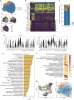
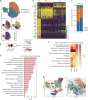
CCN2 mediates fibroblast-macrophage interaction in knee arthrofibrosis based on single-cell RNA-seq analysis
Li, Jiang, Cai et al
Bone Res (2025) 13 (1), 26 DOI: 10.1038/s41413-025-00400-9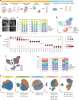
Li, Jiang, Cai et al
Bone Res (2025) 13 (1), 26 DOI: 10.1038/s41413-025-00400-9
Cited by 11
AI Summary: OriGene’s anti-CCN2 antibody (#TA806803) was used for immunohistochemistry staining to detect CCN2 expression in tissue sections, helping to elucidate its role in fibroblast-macrophage interactions in knee arthrofibrosis.
Snippet: 2.0.0) was used for calculation. CCN2/TGF-β immunohistochemistry staining CCN2/TGF-β immunohistochemistry staining was performed on all tissue sections. CCN2 was stained with anti-CCN2 (#TA806803, Origene, 1:50) antibody and TGF-β was stained with anti-TGF-β (#21898-1-AP, Proteintech, RRID: AB_2811115, 1:800) antibody according to the standard procedures of immunohistochemistry. The intensity
IGF-1/IGF-1R/FAK/YAP Transduction Signaling Prompts Growth Effects in Triple-Negative Breast Cancer (TNBC) Cells
Rigiracciolo, Nohata, Lappano et al
Cells (2020) 9 (4) DOI: 10.3390/cells9041010
Rigiracciolo, Nohata, Lappano et al
Cells (2020) 9 (4) DOI: 10.3390/cells9041010
Cited by 92
AI Summary: In this study, the OriGene CTGF antibody (TA806803) was used to detect CTGF protein expression, contributing to the analysis of signaling pathways involved in triple-negative breast cancer cell growth.
Snippet: ary antibodies were purchased from Santa Cruz Biotechnology (DBA, Milan, Italy): IGF-1R (7G11), AKT 1/2/3 (H-136), Cyr61 (H-78), and β-actin (AC-15) and the following primary antibody purchased from Origene (DBA, Milan, Italy): CTGF (TA806803). … The following primary antibodies were purchased from Santa Cruz Biotechnology (DBA, Milan, Italy): IGF-1R (7G11), AKT 1/2/3 (H-136), Cyr61 (H-78), and β-actin (AC-15) and the following primary antibody purchased from Origene (DBA, Milan, Italy): CTGF (TA806803). …
GPER Mediates a Feedforward FGF2/FGFR1 Paracrine Activation Coupling CAFs to Cancer Cells toward Breast Tumor Progression
Santolla, Vivacqua, Lappano et al
Cells (2019) 8 (3) DOI: 10.3390/cells8030223
Santolla, Vivacqua, Lappano et al
Cells (2019) 8 (3) DOI: 10.3390/cells8030223
AI Summary: OriGene’s CTGF antibody (TA806803) was used in this study to detect connective tissue growth factor expression, helping to assess the impact of FGF2/FGFR1 paracrine signaling on breast cancer cell migration and invasion.
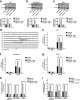
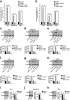
miR-221 stimulates breast cancer cells and cancer-associated fibroblasts (CAFs) through selective interference with the A20/c-Rel/CTGF signaling
Santolla, Lappano, Cirillo et al
J. Exp. Clin. Cancer Res. (2018) 37 (1), 94 DOI: 10.1186/s13046-018-0767-6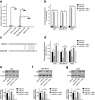
Santolla, Lappano, Cirillo et al
J. Exp. Clin. Cancer Res. (2018) 37 (1), 94 DOI: 10.1186/s13046-018-0767-6
AI Summary: OriGene’s CTGF antibody was used for western blot analysis to detect CTGF protein levels, helping the researchers assess how miR-221 regulates CTGF expression in breast cancer cells and cancer-associated fibroblasts.
Snippet: on SDS-polyacrylamide gel, transferred to a nitrocellulose membrane (Amersham Biosciences, Italy), probed overnight at 4 °C with antibodies against: A20 (A-12, sc-166,692) and β-Actin (AC-15, sc-69,879) (Santa Cruz Biotechnology, DBA, Italy), CTGF (Origene, DBA Cached
Showing 1-5 of 5 papers.
Powered by BizGenius
*Delivery time may vary from web posted schedule. Occasional delays may occur due to unforeseen
complexities in the preparation of your product. International customers may expect an additional 1-2 weeks
in shipping.
Related Products
- Price:
- Actual Price:
Welcome to OriGene AI!
I'm your AI-powered guide to everything OriGene.
Ask me anything:
- Product specs
- Ordering help
- Technical questions
- How to find exactly what your experiment needs
Prefer a live agent? Connect with us by clicking the green chat icon, as seen in the image below or email our team at custsupport@origene.com.
