
BTN1A1 Mouse Monoclonal Antibody [Clone ID: OTI7B5]

SKU
CF501529
Carrier-free (BSA/glycerol-free) BTN1A1 mouse monoclonal antibody, clone OTI7B5 (formerly 7B5)

$620.00
3 Days*
Specifications
| Product Data | |
| Clone Name | OTI7B5 |
|---|---|
| Application | FC, IF, IHC, WB |
| Recommended Dilution | WB 1:200~500, IHC 1:150, IF 1:100, FLOW 1:100 |
| Reactivity | Dog, Human |
| Antibody Host | Mouse |
| Isotype | IgG2a |
| Clonality | Monoclonal |
| Immunogen | Full length human recombinant protein of human BTN1A1 (NP_001723) produced in HEK293T cell. |
| Buffer | Lyophilized powder (original buffer 1X PBS, pH 7.3, 8% trehalose) |
| Reconstitution Method | For reconstitution, we recommend adding 100uL distilled water to a final antibody concentration of about 1 mg/mL. To use this carrier-free antibody for conjugation experiment, we strongly recommend performing another round of desalting process. (OriGene recommends Zeba Spin Desalting Columns, 7KMWCO from Thermo Scientific) |
| Purification | Purified from mouse ascites fluids or tissue culture supernatant by affinity chromatography (protein A/G) |
| Conjugation | Unconjugated |
| Storage | Store at -20°C as received. |
| Stability | Stable for 12 months from date of receipt. |
| Shipping | Ambient |
| Predicted Protein Size | 58.8 kDa |
| Gene Name | butyrophilin subfamily 1 member A1 |
| Database Link | |
| Background | Butyrophilin is the major protein associated with fat droplets in the milk. It is a member of the immunoglobulin superfamily. It may have a cell surface receptor function. The human butyrophilin gene is localized in the major histocompatibility complex (MHC) class I region of 6p and may have arisen relatively recently in evolution by the shuffling of exons between 2 ancestral gene families provided by RefSeq. |
| Synonyms | BT; BTN; BTN1 |
| Reference Data | |
| Protein Categories | Cytokines, Membrane Proteins |
| Protein Families | Druggable Genome, Transmembrane |
Reviews


Documents
| Product Manuals |
| FAQs |
| SDS |
Resources
Other "OTI7B5" antibodies (4)
| SKU | Description | Size | Price | |
|---|---|---|---|---|
| TA501529 | BTN1A1 mouse monoclonal antibody, clone OTI7B5 (formerly 7B5) | 100 ul |
$447.00
|
|
| TA501529AM | BTN1A1 mouse monoclonal antibody, clone OTI7B5 (formerly 7B5), Biotinylated | 100 ul |
$509.00
|
|
| TA501529BM | BTN1A1 mouse monoclonal antibody, clone OTI7B5 (formerly 7B5), HRP conjugated | 100 ul |
$509.00
|
|
| TA501529S | BTN1A1 mouse monoclonal antibody, clone OTI7B5 (formerly 7B5) | 30 ul |
$200.00
|
|
Citations
Palmitic acid reduces the methylation of the FOXO1 promoter to suppress the development of diffuse large B-cell lymphoma via modulating the miR-429/DNMT3A axis
Li, Gao, Xue et al
Chin J Nat Med (2024) 22 (6), 554-567 DOI: 10.1016/S1875-5364(24)60655-2
Li, Gao, Xue et al
Chin J Nat Med (2024) 22 (6), 554-567 DOI: 10.1016/S1875-5364(24)60655-2
AI Summary: OriGene’s pCMV6-DNMT3A overexpression plasmid (RC208192) and the pCMV6 empty control vector were used in this study to manipulate DNMT3A expression in DLBCL cells, enabling the authors to investigate the role of DNMT3A in the palmitic acid-mediated regulation of the miR-429/DNMT3A/FOXO1 axis.
Neonatal enteroids absorb extracellular vesicles from human milk-fed infant digestive fluid
Yung, Zhang, Kuhn et al
J Extracell Vesicles (2024) 13 (4), e12422 DOI: 10.1002/jev2.12422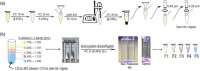
Yung, Zhang, Kuhn et al
J Extracell Vesicles (2024) 13 (4), e12422 DOI: 10.1002/jev2.12422
Cited by 29
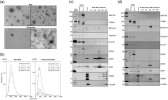
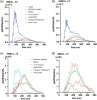
AI Summary: OriGene's anti-BTN1A1 antibody (TA501529S) was used in this study to detect the mammary gland protein BTN1A1 in extracellular vesicle fractions, helping to characterize the origin and composition of vesicles isolated from human milk and infant digestive fluid.
Snippet: , USA, 612697, 1:1000) and anti‐FLOT1 (rabbit, Cell Signalling Technology, Danvers, CT, USA, 3253S, 1:10,000–1:15,000). Lactating mammary gland protein butyrophilin (BTN1A1) anti‐BTN1A1 (mouse, OriGene Technologies, Rockville, MD, USA, TA501529S 1:3000). Anti‐ITGB1, (rabbit, Cell Signalling Technology, 34971T, 1:1000) was used to identify microvesicle contamination (Lötvall et al., 2014)
Showing 1-2 of 2 papers.
Powered by BizGenius
*Delivery time may vary from web posted schedule. Occasional delays may occur due to unforeseen
complexities in the preparation of your product. International customers may expect an additional 1-2 weeks
in shipping.
Related Products
- Price:
- Actual Price:
Welcome to OriGene AI!
I'm your AI-powered guide to everything OriGene.
Ask me anything:
- Product specs
- Ordering help
- Technical questions
- How to find exactly what your experiment needs
Prefer a live agent? Connect with us by clicking the green chat icon, as seen in the image below or email our team at custsupport@origene.com.
