
OB Cadherin (CDH11) Mouse Monoclonal Antibody [Clone ID: 16A]

$695.00
2 Weeks*
Specifications
| Product Data | |
| Clone Name | 16A |
|---|---|
| Application | IF, IHC, WB |
| Recommended Dilution | Immunoblotting. Immunocytochemistry. Immunohistochemistry on Frozen Sections: Use a PBS buffer containing 0.1 mM CaCl2 and 0.1 mM MgCl2. Recommended Dilutions: 1/25-1/50 for Immunohistochemistry with Avidin-biotinylated Horseradish Peroxidase Complex (ABC) as detection reagent and 1/25-1/250 for Immunoblotting applications. |
| Reactivity | Human, Rat |
| Antibody Host | Mouse |
| Isotype | IgG1 |
| Clonality | Monoclonal |
| Immunogen | Affinity purified extracellular domain of Human Cadherin-11-GST fusion protein. |
| Specificity | This antibody recognizes the extracellular domain of Cadherin-11. |
| Buffer | PBS with 0.09% Sodium Azide as preservative State: Purified State: Liquid purified IgG fraction |
| Concentration | lot specific |
| Purification | Affinity Chromatography |
| Conjugation | Unconjugated |
| Storage | Store undiluted at 2-8°C for one month or (in aliquots) at -20°C for longer. |
| Stability | Shelf life: one year from despatch. |
| Shipping | Blue Ice |
| Gene Name | cadherin 11 |
| Database Link | |
| Background | Cadherins constitute a family of transmembrane glycoproteins involved in Ca2+-dependent cell-cell interactions. The members of this family are differentially expressed in various tissues. They function in the maintenance of tissue integrity and morphogenesis. The cadherins generally contain five extracellular repeats, a transmembrane domain and a cytoplasmic tail that binds to the catenin family of cytoskeletal anchoring proteins which also function as signal transducers. The extracellular domains are responsible for the specificity of homophilic interactions between cells expressing the same cadherin. Cadherins are divided into type I and type II subgroups. Type I cadherins include epithelial cadherin (E-cadherin, cadherin-1 or uvomorulin), neural cadherin (N-cadherin or cadherin-2), placental cadherin (P-cadherin or cadherin-3) and retinal cadherin (R-cadherin or cadherin-4). Kidney cadherin (K-cadherin or cadherin-6) and osteoblast cadherin (OB-cadherin or cadherin-11) are type II cadherins. The progression of carcinomas is associated with the loss of epithelial morphology and a concomitant acquisition of a more mesenchymal phenotype, which is thought to contribute to the invasive and/or metastatic behavior. A putative role for cadherin-11 in these late stages of tumor progression is based on the fact that migration of mesenchymal cells is facilitated when cadherin-11 is highly expressed. |
| Synonyms | Osteoblast cadherin, OSF-4, CDH11, OB Cadherin |
| Reference Data | |
| Protein Categories | Cancer: Brain and CNS, Intracellular Proteins, Membrane Proteins |
Reviews


Documents
| Product Manuals |
| FAQs |
| SDS |
Citations
Resistin upregulates chemokine production by fibroblast-like synoviocytes from patients with rheumatoid arthritis
Sato, Muraoka, Kusunoki et al
Arthritis Res Ther (2017) 19 (1), 263 DOI: 10.1186/s13075-017-1472-0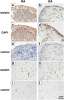
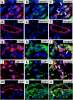
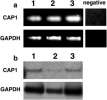
Sato, Muraoka, Kusunoki et al
Arthritis Res Ther (2017) 19 (1), 263 DOI: 10.1186/s13075-017-1472-0
Cited by 67
AI Summary: In this study, OriGene’s CAP1 siRNA (SR321838) and CAP1 antibody (TA326433) were used to investigate the role of CAP1 in resistin-induced chemokine production by fibroblast-like synoviocytes from rheumatoid arthritis patients.
Abrogation of CC chemokine receptor 9 ameliorates collagen-induced arthritis of mice
Yokoyama, Kohsaka, Kaneko et al
Arthritis Res Ther (2014) 16 (5), 445 DOI: 10.1186/s13075-014-0445-9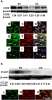
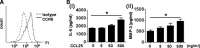
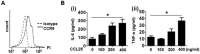
Yokoyama, Kohsaka, Kaneko et al
Arthritis Res Ther (2014) 16 (5), 445 DOI: 10.1186/s13075-014-0445-9
Cited by 47
AI Summary: In this study, OriGene products—including the anti-CCR9 antibody (Cat# TA326178) and anti-CCL25 antibody (Cat# TA328184)—were used for immunohistochemistry and Western blotting to detect the expression of CCR9 and CCL25 in synovial tissues, helping to elucidate their roles in rheumatoid arthritis.
Showing 1-2 of 2 papers.
Powered by BizGenius
*Delivery time may vary from web posted schedule. Occasional delays may occur due to unforeseen
complexities in the preparation of your product. International customers may expect an additional 1-2 weeks
in shipping.
Related Products
- Price:
- Actual Price:
Welcome to OriGene AI!
I'm your AI-powered guide to everything OriGene.
Ask me anything:
- Product specs
- Ordering help
- Technical questions
- How to find exactly what your experiment needs
Prefer a live agent? Connect with us by clicking the green chat icon, as seen in the image below or email our team at custsupport@origene.com.
