
Synaptopodin (SYNPO) Mouse Monoclonal Antibody [Clone ID: G1D4]

$685.00
2 Weeks*
Specifications
| Product Data | |
| Clone Name | G1D4 |
|---|---|
| Application | IF, IHC, WB |
| Recommended Dilution | Immunofluorescence. Immunohistochemistry on Frozen Sections. Immunohistochemistry on Paraffin Sections (After microwave treatment). Working Dilutions: 1/5-1/10 for 1h at RT. Western blot: 0.1-0.5 µg/ml. The antibody also reacts with a 44 kD degradation fragment of Synaptopodin. |
| Reactivity | Bovine, Gerbil, Guinea Pig, Human, Mouse, Rat |
| Antibody Host | Mouse |
| Isotype | IgG1 |
| Clonality | Monoclonal |
| Immunogen | Isolated Rat kidney glomeruli. |
| Specificity | The antibody reacts specifically with Synaptopodin. It recognizes differentiated podocytes (glomerular visceral epithelial cells) in vivo and in vitro (weaker additional reaction with arterial endothelial cells), co-localization with alpha-Actinin. Does not react with parietal cells. Reacts with a subset of exclusively telencephalic synapses. Differentiation dependent expression during postnatal maturation of Rat brain. Differentiation dependent expression in cultured hippocampal neurons. Negative Species: Rabbit, Frog and Chicken. |
| Buffer | Final Solution contains PBS, pH 7.4 with 0.09% Sodium Azide as preservative and 0.5% BSA as stabilizer State: Aff - Purified State: Lyophilized purified Ig fraction |
| Reconstitution Method | Restore with 1 ml distilled water |
| Purification | Affinity Chromatography on Protein A |
| Conjugation | Unconjugated |
| Storage | Prior to reconstitution store at 2-8°C. |
| Stability | Shelf life: one year from despatch. |
| Shipping | Ambient |
| Gene Name | synaptopodin |
| Database Link | |
| Background | Synaptopodin, a prolin-rich actin-binding protein with 2 binding sites for actin, represents a new class of actin-binding proteins which has first been localized in podocytes and a subset of telencephalic postsynaptic densities. In human tissue synaptopodin has a molecular weight of 73.7 kD and pI of 9.38 (calculated from sequence data); in mouse the corresponding data are 74 kD, pI 9.27. In SDS-PAGE the antigen appears as 100 kD polypeptide in brain and 110 kD polypeptide in kidney (the difference might be attributed to posttranslational modifications). |
| Synonyms | KIAA1029 |
| Reference Data | |
| Protein Categories | Intracellular Proteins |
Reviews


Documents
| Product Manuals |
| FAQs |
| SDS |
Citations
The Molecular Architecture of Somatic Spines of the Lateral Septum
Hacker, Weisheim, Schweizer et al
J Comp Neurol (2026) 534 (9), e70195 DOI: 10.1002/cne.70195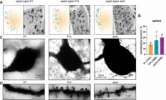
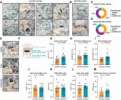
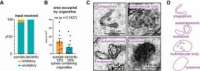
Hacker, Weisheim, Schweizer et al
J Comp Neurol (2026) 534 (9), e70195 DOI: 10.1002/cne.70195
Cited by 1
AI Summary: OriGene contributed to this study by providing the mouse Synaptopodin antibody (BM5086P), which was used for immunohistochemistry to investigate the molecular composition of somatic spines in the lateral septum.
Snippet: Synaptopodin IHC: 1:250 Rabbit Synaptic Systems 163002 Synaptopodin IHC: 1:500 Mouse Origene BM5086P Gephyrin IHC: 1:200 Guinea pig Synaptic Systems 147318 Gephyrin IHC: 1:1000 Mouse Synaptic Systems 147011
Pik3c3 Expression Profiling in the Mouse Kidney and Its Role in Proximal Tubule Cell Physiology
Liu, Yuan, Dai et al
Am J Physiol Cell Physiol (2024)
Liu, Yuan, Dai et al
Am J Physiol Cell Physiol (2024)
Cited by 1
AI Summary: OriGene products, including the mouse Pik3c3 cDNA clone (MC205646) and Pik3c3 shRNA plasmids (TG513419 and TG502097), were used in this study to manipulate Pik3c3 expression in proximal tubule cells, enabling the investigation of Pik3c3's role in EGFR signaling and lysosomal degradation in mouse kidney physiology.
Snippet: 50) antibodies were from Santa Cruz Biotechnology (Dallas, TX). Anti-synaptopodin antibody (BM5086p) was from Acris Antibodies GmbH (San Diego, CA). …
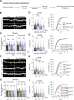
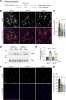
Autism-related KLHL17 and SYNPO act in concert to control activity-dependent dendritic spine enlargement and the spine apparatus
Hu, Lin, Wang et al
PLoS Biol (2023) 21 (8), e3002274 DOI: 10.1371/journal.pbio.3002274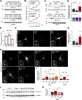
Hu, Lin, Wang et al
PLoS Biol (2023) 21 (8), e3002274 DOI: 10.1371/journal.pbio.3002274
Cited by 10
AI Summary: OriGene’s mouse monoclonal Synaptopodin antibody (G1D4, BM5086P) was used in this study to identify and analyze synaptopodin protein in experiments investigating the roles of KLHL17 and SYNPO in dendritic spine enlargement and synaptic plasticity.
Snippet: olyclonal HSP90 was a kind gift from Dr. Chung Wang [51]. Commercially available antibodies and chemicals used in this report are as follows: mouse monoclonal Synaptopodin (G1D4, BM5086P, 0.5 μg/ml, ORIGENE);mouse monoclonal beta-actin (AC-74, mouse, 1:5,000, Sigma);mouse monoclonal Myc (9B11, #2276, 1:1,000, Cell Signaling Technology);rabbit polyclonal HA (C29F4, #3724, 1:2,000, Cell Signalin
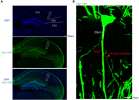
Quantification of the density and morphology of dendritic spines and synaptic protein distribution using Thy1-YFP transgenic mice
Lin, Huang, Hsueh
STAR Protoc (2023) 4 (2), 102290 DOI: 10.1016/j.xpro.2023.102290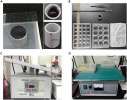
Lin, Huang, Hsueh
STAR Protoc (2023) 4 (2), 102290 DOI: 10.1016/j.xpro.2023.102290
Cited by 13
AI Summary: OriGene’s mouse monoclonal Synaptopodin antibody (BM5086P) was used in this study to visualize and quantify synaptic protein distribution in Thy1-YFP transgenic mice.
Snippet: dium EMS #17989-50 Ethanol Merck #100983 Immersion oil Carl Zeiss 63449-39-8 ------------------------- Antibodies ------------------------- Mouse monoclonal Synaptopodin (1:500) OriGene BM5086P Alexa Fluor 555-conjugated secondary antibody (1:500) Invitrogen #A32727 ------------------------- Software and algorithms ------------------------- Fiji-ImageJ https://d
Cre/loxP approach-mediated downregulation of Pik3c3 inhibits the hypertrophic growth of renal proximal tubule cells
Liu, Yuan, Dai et al
J. Cell. Physiol. (2020)
Liu, Yuan, Dai et al
J. Cell. Physiol. (2020)
Cited by 4
AI Summary: In this study, OriGene products including Pik3c3 shRNA (SR415885) and Pik3c3 antibody (TA805821) were used to knock down and detect Pik3c3 expression, respectively, thereby enabling the investigation of Pik3c3's role in regulating hypertrophic growth of renal proximal tubule cells.
Snippet: Synaptopodin antibodies (BM5086p) were from Acris Antibodies GmbH (San Diego, CA). Vectastain ABC Kits (PK‐6101) and fluorescein‐labeled Lotus tetragonolobus lectin (LTL;FL‐1321) were purchased from Vector Labs (Burlingame, CA);- Synaptopodin antibodies (BM5086p) were from Acris Antibodies GmbH (San Diego, CA). …
The expression level of class III phosphatidylinositol-3 kinase controls the degree of compensatory nephron hypertrophy
Liu, Dai, Xu et al
Am. J. Physiol. Renal Physiol. (2020) 318 (3), F628-F638 DOI: 10.1152/ajprenal.00381.2019
Liu, Dai, Xu et al
Am. J. Physiol. Renal Physiol. (2020) 318 (3), F628-F638 DOI: 10.1152/ajprenal.00381.2019
Cited by 8
AI Summary: OriGene contributed to this study by providing the mouse Pik3c3 (PIK3C3) cDNA clone (OriGene, MC202889), which was used to generate probes for detecting Pik3c3 expression levels in the analysis of compensatory nephron hypertrophy.
Showing 1-6 of 13 papers.
Powered by BizGenius
*Delivery time may vary from web posted schedule. Occasional delays may occur due to unforeseen
complexities in the preparation of your product. International customers may expect an additional 1-2 weeks
in shipping.
Related Products
- Price:
- Actual Price:
Welcome to OriGene AI!
I'm your AI-powered guide to everything OriGene.
Ask me anything:
- Product specs
- Ordering help
- Technical questions
- How to find exactly what your experiment needs
Prefer a live agent? Connect with us by clicking the green chat icon, as seen in the image below or email our team at custsupport@origene.com.
