
EIF3K (C-term) Rabbit Polyclonal Antibody

Specifications
| Product Data | |
| Application | WB |
|---|---|
| Recommended Dilution | WB:1/1000 |
| Reactivity | Human |
| Antibody Host | Rabbit |
| Isotype | IgG |
| Clonality | Polyclonal |
| Immunogen | KLH conjugated synthetic peptide between 175-204 amino acids from the C-terminal region of human EIF3K |
| Specificity | This EIF3K antibody is generated from rabbits immunized with a KLH conjugated synthetic peptide between 176-204 amino acids from the C-terminal region of human EIF3K. |
| Buffer | PBS State: Aff - Purified State: Liquid purified Ig fraction Preservative: 0.09% (W/V) sodium azide |
| Concentration | lot specific |
| Purification | Purified polyclonal antibody supplied in PBS with 0.09% (W/V) sodium azide. This antibody is purified through a protein A column, followed by peptide affinity purification. |
| Conjugation | Unconjugated |
| Storage | Store the antibody undiluted at 2-8°C for one month or (in aliquots) at -20°C for longer. |
| Stability | Shelf life: one year from despatch. |
| Shipping | Blue Ice |
| Predicted Protein Size | 25.1 kDa |
| Gene Name | eukaryotic translation initiation factor 3 subunit K |
| Database Link | |
| Background | The 700-kD eukaryotic translation initiation factor-3 (eIF3) is the largest eIF and contains at least 12 subunits, including EIF2S12. eIF3 plays an essential role in translation by binding directly to the 40S ribosomal subunit and promoting formation of the 40S preinitiation complex (Mayeur et al., 2003 PubMed 14519125). |
| Synonyms | Eukaryotic translation initiation factor 3 subunit K, eIF-3 p25, eIF-3 p28, PLAC-24 |
| Reference Data | |
Reviews


Documents
| Product Manuals |
| FAQs |
| SDS |
Citations
Mass spectrometry reveals modularity and a complete subunit interaction map of the eukaryotic translation factor eIF3
Zhou, Sandercock, Fraser et al
Proc Natl Acad Sci U S A (2008) 105 (47), 18139-44 DOI: 10.1073/pnas.0801313105
Zhou, Sandercock, Fraser et al
Proc Natl Acad Sci U S A (2008) 105 (47), 18139-44 DOI: 10.1073/pnas.0801313105
Cited by 256
AI Summary: In this study, OriGene products—including the anti-Flag antibody (OriGene, TA50011-100) and anti-HA antibody (OriGene, TA180128)—were used for immunoprecipitation experiments to validate subunit interactions within the eIF3 complex identified by mass spectrometry.
eIF3k regulates apoptosis in epithelial cells by releasing caspase 3 from keratin-containing inclusions
Lin, Chen, Lin et al
J Cell Sci (2008) 121 (Pt 14), 2382-93 DOI: 10.1242/jcs.021394
Lin, Chen, Lin et al
J Cell Sci (2008) 121 (Pt 14), 2382-93 DOI: 10.1242/jcs.021394
Cited by 34
AI Summary: OriGene products contributed to this study by providing the eIF3k shRNA plasmid (OriGene, Cat# TL313919) used for gene knockdown experiments and the K18 antibody (OriGene, Cat# TA800872) employed for immunodetection, enabling the authors to investigate the role of eIF3k in apoptosis regulation and its association with keratin filaments.
Reconstitution reveals the functional core of mammalian eIF3
Masutani, Sonenberg, Yokoyama et al
EMBO J (2007) 26 (14), 3373-83 DOI: 10.1038/sj.emboj.7601765


Masutani, Sonenberg, Yokoyama et al
EMBO J (2007) 26 (14), 3373-83 DOI: 10.1038/sj.emboj.7601765
Cited by 207
AI Summary: In this study, OriGene products—specifically, the pCMV6-XL5 and pCMV6-XL4 expression plasmids—were used to express various human eIF3 subunits, enabling the reconstitution and functional analysis of the mammalian eIF3 complex.
Structural characterization of the human eukaryotic initiation factor 3 protein complex by mass spectrometry
Damoc, Fraser, Zhou et al
Mol Cell Proteomics (2007) 6 (7), 1135-46 DOI: 10.1074/mcp.M600399-MCP200
Damoc, Fraser, Zhou et al
Mol Cell Proteomics (2007) 6 (7), 1135-46 DOI: 10.1074/mcp.M600399-MCP200
AI Summary: In this study, OriGene's Human eIF3a (Cat# RC200434), eIF3b (Cat# RC204933), and eIF3c (Cat# RC203225) cDNA clones were used to facilitate the structural and post-translational modification analysis of the human eIF3 protein complex by mass spectrometry.
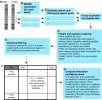
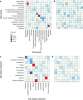
Large-scale mapping of human protein-protein interactions by mass spectrometry
Ewing, Chu, Elisma et al
Mol Syst Biol (2007) 3, 89 DOI: 10.1038/msb4100134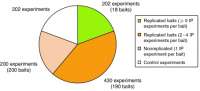
Ewing, Chu, Elisma et al
Mol Syst Biol (2007) 3, 89 DOI: 10.1038/msb4100134
Cited by 1005
AI Summary: OriGene contributed to this study by providing the Flag-tagged cDNA clones used to express the 338 bait proteins, enabling large-scale immunoprecipitation and subsequent mapping of human protein-protein interactions by mass spectrometry.
Showing 1-5 of 5 papers.
Powered by BizGenius
*Delivery time may vary from web posted schedule. Occasional delays may occur due to unforeseen
complexities in the preparation of your product. International customers may expect an additional 1-2 weeks
in shipping.
Related Products
- Price:
- Actual Price:
Welcome to OriGene AI!
I'm your AI-powered guide to everything OriGene.
Ask me anything:
- Product specs
- Ordering help
- Technical questions
- How to find exactly what your experiment needs
Prefer a live agent? Connect with us by clicking the green chat icon, as seen in the image below or email our team at custsupport@origene.com.
