
Mouse IgG1 Isotype Control

Specifications
| Product Data | |
| Application | FC |
|---|---|
| Antibody Host | Mouse |
| Isotype | IgG1 |
| Clonality | Monoclonal |
| Specificity | This Monoclonal antibody clone PPV-06 reacts with undefined epitope on a plant pathogen. The Monoclonal antibody clone PPV-06 does not cross-react with other species, and hence all the background that could be observed when working with this antibody would be a result of general non-specific interactions between an mouse IgG1 molecule and the respective sample under the particular conditions. This shall help the customer to set up the experimental conditions so that the non-specific binding of any antibody is abolished. Negative Species: Human, Porcine, Mouse, Rat, Other species Not tested (expected negative). |
| Buffer | PBS, pH~7.4 with 15 mM Sodium Azide |
| Concentration | 1 mg/ml |
| Purification | Protein-A Affinity Chromatography |
| Conjugation | Unconjugated |
| Presentation State | Aff - Purified |
| Storage | Store undiluted at 2-8°C. DO NOT FREEZE! Shelf life: one year from despatch. |
| Shipping | Blue Ice |
| Background | The specificity of staining by monoclonal antibodies to target antigens should be verified by establishing the amount of non-specific antibody binding. Especially at higher concentration (more than 15 μg/ml) the antibody staining usually has consignable background. To this end a non-reactive immunoglobulin of the same isotype is included as a negative control for each specific monoclonal antibody used in a particular immunoassay. |
Reviews


Documents
| Datasheet | |
| SDS | |
Citations
Immune marker spatial distribution and clinical outcome after PD-1 blockade in mismatch repair-deficient, advanced colorectal carcinomas
Saberzadeh-Ardestani, Graham, McMahon et al
Clin Cancer Res (2023)
Saberzadeh-Ardestani, Graham, McMahon et al
Clin Cancer Res (2023)
AI Summary: OriGene’s mouse monoclonal antibody MHC-I (clone #HCA2, Cat#: AM03095PU-N) was used in this study to analyze the spatial distribution of immune markers in mismatch repair-deficient colorectal carcinomas, contributing to the assessment of immune contexture and prediction of response to PD-1 blockade therapy.
Snippet: PD-1 rabbit monoclonal antibody, clone #E18664, Abcam Cat# ab224774, 1:25 dilution from the stock), mouse monoclonal antibody MHC-I (clone #HCA2, Acris/Origene Cat#: AM03095PU-N, 1:2500 dilution from stock), mouse
Platelet phagocytosis via PSGL1 and accumulation of microparticles in systemic sclerosis
Manfredi, Ramirez, Godino et al
Arthritis Rheumatol (2021)
Manfredi, Ramirez, Godino et al
Arthritis Rheumatol (2021)
Cited by 31
AI Summary: In this study, OriGene products including the anti-PSGL-1 antibody (TA506439) and anti-HMGB1 antibody (TA302371) were used for flow cytometry and immunochemistry to assess protein expression and distribution on platelets and microparticles, helping to demonstrate that impaired phagocytosis via PSGL-1 contributes to platelet and microparticle accumulation in systemic sclerosis.
Snippet: Page 1. This article has been accepted for publication and undergone full peer review but has not been through the copyediting, typesetting, pagination and proofreading process, which may lead to differences between this version and the Version of Record
Lipopolysaccharide induces proliferation and osteogenic differentiation of adipose-derived mesenchymal stromal cells in vitro via TLR4 activation
Herzmann, Salamon, Fiedler et al
Exp Cell Res (2017) 350 (1), 115-122 DOI: 10.1016/j.yexcr.2016.11.012
Herzmann, Salamon, Fiedler et al
Exp Cell Res (2017) 350 (1), 115-122 DOI: 10.1016/j.yexcr.2016.11.012
Cited by 54
AI Summary: In this study, OriGene products—specifically the TLR4 antibody (TA506629) and CD14 antibody (TA180632)—were used to quantify the protein expression of TLR4 and CD14 on adipose-derived mesenchymal stromal cells, enabling the authors to investigate the role of TLR4 in LPS-induced proliferation and osteogenic differentiation.
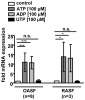
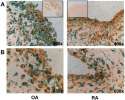
ATP induced brain-derived neurotrophic factor expression and release from osteoarthritis synovial fibroblasts is mediated by purinergic receptor P2X4
Klein, Aeschlimann, Jordan et al
PLoS One (2012) 7 (5), e36693 DOI: 10.1371/journal.pone.0036693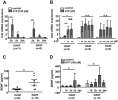
Klein, Aeschlimann, Jordan et al
PLoS One (2012) 7 (5), e36693 DOI: 10.1371/journal.pone.0036693
Cited by 52
AI Summary: In this study, OriGene’s P2X4 siRNA (SR304314) was used to specifically reduce endogenous P2X4 expression in synovial fibroblasts, allowing the authors to demonstrate that ATP-induced BDNF expression and release is mediated by the purinergic receptor P2X4.
Showing 1-4 of 4 papers.
Powered by BizGenius
*Delivery time may vary from web posted schedule. Occasional delays may occur due to unforeseen
complexities in the preparation of your product. International customers may expect an additional 1-2 weeks
in shipping.
Related Products
- Price:
- Actual Price:
Welcome to OriGene AI!
I'm your AI-powered guide to everything OriGene.
Ask me anything:
- Product specs
- Ordering help
- Technical questions
- How to find exactly what your experiment needs
Prefer a live agent? Connect with us by clicking the green chat icon, as seen in the image below or email our team at custsupport@origene.com.
