
CD8A (NM_001768) Human Tagged ORF Clone

$300.00
In Stock*
Specifications
| Product Data | |
| Type | Human Tagged ORF Clone |
|---|---|
| Target Symbol | CD8A |
| Synonyms | CD8; Leu2; p32 |
| Vector | pCMV6-Entry |
| E. coli Selection | Kanamycin (25 ug/mL) |
| Mammalian Cell Selection | Neomycin |
| Chromatograms |
Chromatograms
 Sequencher program is needed, download here |
| Restriction Sites |
SgfI-MluI Cloning Scheme for this gene
|
Plasmid Map

|
| ACCN | NM_001768 |
| ORF Size | 705 bp |
| OTI Disclaimer | The molecular sequence of this clone aligns with the gene accession number as a point of reference only. However, individual transcript sequences of the same gene can differ through naturally occurring variations (e.g. polymorphisms), each with its own valid existence. This clone is substantially in agreement with the reference, but a complete review of all prevailing variants is recommended prior to use. More info |
| OTI Annotation | This clone was engineered to express the complete ORF with an expression tag. Expression varies depending on the nature of the gene. |
| Components | The ORF clone is ion-exchange column purified and shipped in a 2D barcoded Matrix tube containing 10ug of transfection-ready, dried plasmid DNA (reconstitute with 100 ul of water). |
| Reconstitution Method | 1. Centrifuge at 5,000xg for 5min. 2. Carefully open the tube and add 100ul of sterile water to dissolve the DNA. 3. Close the tube and incubate for 10 minutes at room temperature. 4. Briefly vortex the tube and then do a quick spin (less than 5000xg) to concentrate the liquid at the bottom. 5. Store the suspended plasmid at -20°C. The DNA is stable for at least one year from date of shipping when stored at -20°C. |
| Note | Plasmids are not sterile. For experiments where strict sterility is required, filtration with 0.22um filter is required. |
| Shipping | Ambient |
| Reference Data | |
| RefSeq | NM_001768.2 |
| RefSeq Size | 3035 bp |
| RefSeq ORF | 708 bp |
| Locus ID | 925 |
| UniProt ID | P01732, Q8TAW8, Q6ZVS2 |
| Cytogenetics | 2p11.2 |
| Domains | ig, IG, IGv |
| Protein Families | Adult stem cells, Druggable Genome, ES Cell Differentiation/IPS, Secreted Protein, Transmembrane |
| Protein Pathways | Antigen processing and presentation, Cell adhesion molecules (CAMs), Hematopoietic cell lineage, Primary immunodeficiency, T cell receptor signaling pathway |
| MW | 25.7 kDa |
| Summary | The CD8 antigen is a cell surface glycoprotein found on most cytotoxic T lymphocytes that mediates efficient cell-cell interactions within the immune system. The CD8 antigen acts as a coreceptor with the T-cell receptor on the T lymphocyte to recognize antigens displayed by an antigen presenting cell in the context of class I MHC molecules. The coreceptor functions as either a homodimer composed of two alpha chains or as a heterodimer composed of one alpha and one beta chain. Both alpha and beta chains share significant homology to immunoglobulin variable light chains. This gene encodes the CD8 alpha chain. Multiple transcript variants encoding different isoforms have been found for this gene. The major protein isoforms of this gene differ by the presence or absence of a transmembrane domain and thus differ in being a membrane-anchored or secreted protein. provided by RefSeq, May 2020 |
Reviews


Documents
| Product Manuals |
| FAQs |
| SDS |
Resources
"NM_001768" in other vectors (7)
| SKU | Description | Size | Price | |
|---|---|---|---|---|
| RC206608L1 | Lenti ORF clone of Human CD8a molecule (CD8A), transcript variant 1, Myc-DDK-tagged | 10 ug |
$600.00
|
|
| RC206608L2 | Lenti ORF clone of Human CD8a molecule (CD8A), transcript variant 1, mGFP tagged | 10 ug |
$600.00
|
|
| RC206608L3 | Lenti ORF clone of Human CD8a molecule (CD8A), transcript variant 1, Myc-DDK-tagged | 10 ug |
$600.00
|
|
| RC206608L4 | Lenti ORF clone of Human CD8a molecule (CD8A), transcript variant 1, mGFP tagged | 10 ug |
$600.00
|
|
| RG206608 | CD8A (tGFP-tagged) - Human CD8a molecule (CD8A), transcript variant 1 | 10 ug |
$489.00
$500.00
|
|
| SC111602 | CD8A (untagged)-Human CD8a molecule (CD8A), transcript variant 1 | 10 ug |
$300.00
|
|
| SC322577 | CD8A (untagged)-Human CD8a molecule (CD8A), transcript variant 1 | 10 ug |
$300.00
|
|
Citations
Ano6 disruption impairs acinar cell regulatory volume decrease and protein secretion in murine submandibular salivary glands
Munemasa, Gao, Melvin et al
J. Cell. Physiol. (2020)
Munemasa, Gao, Melvin et al
J. Cell. Physiol. (2020)
Cited by 3
AI Summary: OriGene products, specifically the Ano6 (NM_175344), CD8a (NM_001768) plasmids, and the pCMV-Entry empty vector, were used to express target proteins in cells to investigate the role of Ano6 in regulatory volume decrease and protein secretion in murine submandibular salivary glands.
Snippet: … Plasmids encoding Ano6 (GenBank accession no. NM_175344), CD8a (GenBank accession no. NM_001768), and pCMV‐Entry (empty vector control) were obtained from OriGene (Rockville, MD). … Plasmids encoding Ano6 (GenBank accession no. NM_175344), CD8a (GenBank accession no. NM_001768), and pCMV‐Entry (empty vector control) were obtained from OriGene (Rockville, MD). …
Slc4a11 disruption causes duct cell loss and impairs NaCl reabsorption in female mouse submandibular glands
Yang, Mukaibo, Gao et al
Physiol Rep (2019) 7 (23), e14232 DOI: 10.14814/phy2.14232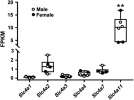
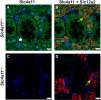
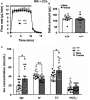
Yang, Mukaibo, Gao et al
Physiol Rep (2019) 7 (23), e14232 DOI: 10.14814/phy2.14232
Cited by 9
AI Summary: OriGene products contributed to this study by providing plasmids encoding mouse Slc4a11, human CD8A, and the empty pCMV6 entry vector, which were used for transfection experiments to investigate the function of Slc4a11 in mouse submandibular glands.
Snippet: 2001). Plasmids encoding mouse Slc4a11 (GenBank accession no. NM_ 001081162), human CD8A (GenBank accession no. NM_001768) and the empty pCMV6 entry vector as a transfection control were obtained from OriGene (OriGene Technologies, Rockville
Analysis of herpes simplex type 1 gB, gD, and gH/gL on production of infectious HIV-1: HSV-1 gD restricts HIV-1 by exclusion of HIV-1 Env from maturing viral particles
Polpitiya Arachchige, Henke, Kalamvoki et al
Retrovirology (2019) 16 (1), 9 DOI: 10.1186/s12977-019-0470-5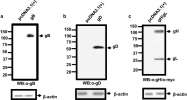
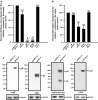
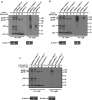
Polpitiya Arachchige, Henke, Kalamvoki et al
Retrovirology (2019) 16 (1), 9 DOI: 10.1186/s12977-019-0470-5
AI Summary: In this study, an OriGene plasmid expressing HSV-1 gL (myc-DDK-tagged, catalog number VC100788) was used to analyze the role of HSV-1 glycoproteins in restricting HIV-1 production, enabling the authors to assess the impact of gL on infectious HIV-1 release.
Snippet: H AIDS Reagent Branch. The HSV-1 gB and gH were kindly provided by Dr. Richard Longnecker (Northwestern University). A plasmid expressing the HSV-1 gL (myc-DDK-tagged at C-terminus) was obtained from Origene (gL: catalog number, VC100788;CD8: catalog number RC206608). Expression of HSV-1 proteins was confirmed by transfection with the Turbofect transfection reagent (ThermoFisher) and Western blot
The apical Na+ -HCO3- cotransporter Slc4a7 (NBCn1) does not contribute to bicarbonate transport by mouse salivary gland ducts
Yang, Mukaibo, Kurtz et al
J. Cell. Physiol. (2019)
Yang, Mukaibo, Kurtz et al
J. Cell. Physiol. (2019)
AI Summary: OriGene's rabbit anti-Slc4a7 antibody (Cat# TA322834) was used to immunolocalize Slc4a7 in mouse salivary gland tissues, helping determine its cellular distribution and role in bicarbonate transport.
Snippet: Skip to Main Content;Sections were blocked in 1% bovine serum albumin (BSA) in phosphate‐buffered saline (PBS) for 30 min at room temperature (RT), and then incubated at 4°C with rabbit anti‐Slc4a7 (1:100 dilution, Cat# TA322834, RRID: AB_2749851;OriGene, Rockville, MD) and goat anti‐Slc12a2 (Nkcc1, 1:100 dilution, Cat# sc‐21545, RRID: AB_2188633;Santa Cruz Biotechnology, Dallas, TX) antibodies overnight
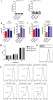
Gene-modified NK-92MI cells expressing a chimeric CD16-BB-ζ or CD64-BB-ζ receptor exhibit enhanced cancer-killing ability in combination with therapeutic antibody
Chen, You, Jiang et al
Oncotarget (2017) 8 (23), 37128-37139 DOI: 10.18632/oncotarget.16201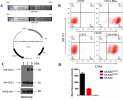
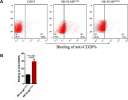
Chen, You, Jiang et al
Oncotarget (2017) 8 (23), 37128-37139 DOI: 10.18632/oncotarget.16201
Snippet: The FcRγIIIa CD16 (158F) cDNA extracellular domain (NM_001127593), FcγRI (CD64) cDNA extracellular domain (AK291451), and the CD8a (NM_001768) extracellular domain were obtained from Origene and synthesized. …
Showing 1-5 of 5 papers.
Powered by BizGenius
*Delivery time may vary from web posted schedule. Occasional delays may occur due to unforeseen
complexities in the preparation of your product. International customers may expect an additional 1-2 weeks
in shipping.
Related Products
- Price:
- Actual Price:
Welcome to OriGene AI!
I'm your AI-powered guide to everything OriGene.
Ask me anything:
- Product specs
- Ordering help
- Technical questions
- How to find exactly what your experiment needs
Prefer a live agent? Connect with us by clicking the green chat icon, as seen in the image below or email our team at custsupport@origene.com.
