
Slpi (NM_011414) Mouse Tagged ORF Clone

$289.00
In Stock*
Specifications
| Product Data | |
| Type | Mouse Tagged ORF Clone |
|---|---|
| Target Symbol | Slpi |
| Vector | pCMV6-Entry |
| E. coli Selection | Kanamycin (25 ug/mL) |
| Mammalian Cell Selection | Neomycin |
| Sequence Data | |
| Restriction Sites |
SgfI-MluI Cloning Scheme for this gene
|
Plasmid Map

|
| ACCN | NM_011414 |
| ORF Size | 393 bp |
| OTI Disclaimer | The molecular sequence of this clone aligns with the gene accession number as a point of reference only. However, individual transcript sequences of the same gene can differ through naturally occurring variations (e.g. polymorphisms), each with its own valid existence. This clone is substantially in agreement with the reference, but a complete review of all prevailing variants is recommended prior to use. More info |
| OTI Annotation | This clone was engineered to express the complete ORF with an expression tag. Expression varies depending on the nature of the gene. |
| Components | The ORF clone is ion-exchange column purified and shipped in a 2D barcoded Matrix tube containing 10ug of transfection-ready, dried plasmid DNA (reconstitute with 100 ul of water). |
| Reconstitution Method | 1. Centrifuge at 5,000xg for 5min. 2. Carefully open the tube and add 100ul of sterile water to dissolve the DNA. 3. Close the tube and incubate for 10 minutes at room temperature. 4. Briefly vortex the tube and then do a quick spin (less than 5000xg) to concentrate the liquid at the bottom. 5. Store the suspended plasmid at -20°C. The DNA is stable for at least one year from date of shipping when stored at -20°C. |
| Note | Plasmids are not sterile. For experiments where strict sterility is required, filtration with 0.22um filter is required. |
| Shipping | Ambient |
| Reference Data | |
| RefSeq | NM_011414.3 |
| RefSeq Size | 894 bp |
| RefSeq ORF | 396 bp |
| Locus ID | 20568 |
| UniProt ID | P97430 |
| Cytogenetics | 2 H3 |
| MW | 14.3 kDa |
| Summary | Acid-stable proteinase inhibitor with strong affinities for trypsin, chymotrypsin, elastase, and cathepsin G (PubMed:9126337). Modulates the innate immune response after bacterial infection (PubMed:12615907). Contributes to regulate the inflammatory and immune responses to the intracellular parasite L.major (PubMed:25030421). Down-regulates responses to bacterial lipopolysaccharide (LPS) (PubMed:9039268, PubMed:12615907, PubMed:25030421). Plays a role in regulating the activation of NF-kappa-B and inflammatory responses (PubMed:11017147, PubMed:12615907). Has antimicrobial activity against mycobacteria, but not against salmonella (PubMed:18322212). Contributes to normal resistance against infection by M.tuberculosis (PubMed:18322212). Required for normal resistance to L.major (PubMed:25030421). Required for normal wound healing, probably by preventing tissue damage by limiting protease activity (PubMed:11017147, PubMed:25030421). Together with ELANE, required for normal differentiation and proliferation of bone marrow myeloid cells (By similarity).UniProtKB/Swiss-Prot Function |
Reviews


Documents
| Product Manuals |
| FAQs |
| SDS |
Resources
"NM_011414" in other vectors (4)
| SKU | Description | Size | Price | |
|---|---|---|---|---|
| MC201386 | Slpi (untagged) - Mouse secretory leukocyte peptidase inhibitor (Slpi), (10ug) | 10 ug |
$150.00
|
|
| MG200750 | Slpi (tGFP-tagged) - Mouse secretory leukocyte peptidase inhibitor (Slpi) | 10 ug |
$489.00
|
|
| MR200750L3 | Lenti ORF clone of Slpi (Myc-DDK-tagged) - Mouse secretory leukocyte peptidase inhibitor (Slpi) | 10 ug |
$450.00
|
|
| MR200750L4 | Lenti ORF clone of Slpi (mGFP-tagged) - Mouse secretory leukocyte peptidase inhibitor (Slpi) | 10 ug |
$450.00
|
|
Citations
The DNA methylation profile of liver tumors in C3H mice and identification of differentially methylated regions involved in the regulation of tumorigenic genes
Matsushita, Okamura, Nakabayashi et al
BMC Cancer (2018) 18 (1), 317 DOI: 10.1186/s12885-018-4221-0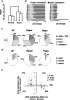
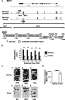
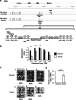
Matsushita, Okamura, Nakabayashi et al
BMC Cancer (2018) 18 (1), 317 DOI: 10.1186/s12885-018-4221-0
AI Summary: In this study, OriGene's Mst1r expression plasmid (Cat# MR226703) was used to overexpress Mst1r in Hepa1c1c7 cells, enabling the researchers to investigate downstream pathways and the role of DNA methylation in liver tumorigenesis.
Snippet: …We obtained data on genome-wide DNA methylation profiles in the normal and tumor livers of C3H mice. We identified promoter DMRs of genes which are reported to be related to cancer and whose expressions are inversely correlated with the DNA methylation, including Mst1r, Slpi and Extl1. … Overexpression of Mst1r in Hepa1c1c7 cells illuminated a novel downstream pathway via IL-33 upregulation. Database search indicated that gene expressions of Mst1r and Slpi are upregulated and the TSS upstream regions are hypomethylated also in human HCC. These results suggest that DMRs, including those of Mst1r and Slpi, are involved in liver tumorigenesis in C3H mice, and also possibly in human HCC. … The present study particularly proposed novel DNA methylation-regulated pathways for Mst1r and Slpi, which may be applied not only to mouse HCC but also to human HCC.;C3H mice have been frequently used in cancer studies as animal models of spontaneous liver tumors and chemically induced hepatocellular carcinoma (HCC). …We obtained data on genome-wide DNA methylation profiles in the normal and tumor livers of C3H mice. We identified promoter DMRs of genes which are reported to be related to cancer and whose expressions are inversely correlated with the DNA methylation, including Mst1r, Slpi and Extl1. … Overexpression of Mst1r in Hepa1c1c7 cells illuminated a novel downstream pathway via IL-33 upregulation. Database search indicated that gene expressions of Mst1r and Slpi are upregulated and the TSS upstream regions are hypomethylated also in human HCC. These results suggest that DMRs, including those of Mst1r and Slpi, are involved in liver tumorigenesis in C3H mice, and also possibly in human HCC. … The present study particularly proposed novel DNA methylation-regulated pathways for Mst1r and Slpi, which may be applied not only to mouse HCC but also to human HCC
Showing 1-1 of 1 papers.
Powered by BizGenius
*Delivery time may vary from web posted schedule. Occasional delays may occur due to unforeseen
complexities in the preparation of your product. International customers may expect an additional 1-2 weeks
in shipping.
Related Products
- Price:
- Actual Price:
Welcome to OriGene AI!
I'm your AI-powered guide to everything OriGene.
Ask me anything:
- Product specs
- Ordering help
- Technical questions
- How to find exactly what your experiment needs
Prefer a live agent? Connect with us by clicking the green chat icon, as seen in the image below or email our team at custsupport@origene.com.
