
c-Myc (MYC) (NM_002467) Human Recombinant Protein
SKU
TP760019
Recombinant protein of human v-myc myelocytomatosis viral oncogene homolog (avian) (MYC), full length, with N-terminal HIS tag, expressed in E.Coli, 50ug

$270.00
In Stock*
Specifications
| Product Data | |
| Species | Human |
|---|---|
| Expression Host | E. coli |
| Expression cDNA Clone or AA Sequence | |
| Tag | N-His |
| Predicted MW | 48.8 kDa |
| Concentration | >0.1 µg/µL as determined by microplate BCA method |
| Purity | > 80% as determined by SDS-PAGE and Coomassie blue staining |
| Buffer | 25 mM Tris-HCl, pH 8.0, 150 mM NaCl, 10% glycerol |
| Note | For testing in cell culture applications, please filter before use. Note that you may experience some loss of protein during the filtration process. |
| Storage | Store at -80°C. |
| Stability | Stable for 12 months from the date of receipt of the product under proper storage and handling conditions. Avoid repeated freeze-thaw cycles. |
| Shipping | Dry Ice |
| Reference Data | |
| RefSeq | NP_002458 |
| Locus ID | 4609 |
| UniProt ID | P01106 |
| Cytogenetics | 8q24.21 |
| RefSeq Size | 2379 |
| RefSeq ORF | 1362 |
| Synonyms | bHLHe39; c-Myc; MRTL; MYCC |
| Summary | This gene is a proto-oncogene and encodes a nuclear phosphoprotein that plays a role in cell cycle progression, apoptosis and cellular transformation. The encoded protein forms a heterodimer with the related transcription factor MAX. This complex binds to the E box DNA consensus sequence and regulates the transcription of specific target genes. Amplification of this gene is frequently observed in numerous human cancers. Translocations involving this gene are associated with Burkitt lymphoma and multiple myeloma in human patients. There is evidence to show that translation initiates both from an upstream, in-frame non-AUG (CUG) and a downstream AUG start site, resulting in the production of two isoforms with distinct N-termini. provided by RefSeq, Aug 2017 |
| Protein Categories | Cancer: Brain and CNS, Cancer: Gastrointestinal, Cancer: Gynecologic, Cancer: Haematopoietic and Lymphoid, Cancer: Head and Neck, Cancer: Lung, Cancer: Sarcoma, Cancer: Skin, Growth Factors, Intracellular Proteins, Transciption Factors |
| Protein Families | Druggable Genome, Embryonic stem cells, Induced pluripotent stem cells, Stem cell - Pluripotency, Stem cell relevant signaling - JAK/STAT signaling pathway, Stem cell relevant signaling - TGFb/BMP signaling pathway, Stem cell relevant signaling - Wnt Signaling pathway, Transcription Factors |
| Protein Pathways | Acute myeloid leukemia, Bladder cancer, Cell cycle, Chronic myeloid leukemia, Colorectal cancer, Endometrial cancer, ErbB signaling pathway, Jak-STAT signaling pathway, MAPK signaling pathway, Pathways in cancer, Small cell lung cancer, TGF-beta signaling pathway, Thyroid cancer, Wnt signaling pathway |
Reviews


Documents
| FAQs |
| SDS |
Resources
| Recombinant Protein Resources |
Other "c-Myc" proteins (6)
| SKU | Description | Size | Price | |
|---|---|---|---|---|
| PH301611 | MYC MS Standard C13 and N15-labeled recombinant protein (NP_002458) | 10 ug |
$3,360.00
|
|
| LC400876 | Lyophilized MYC HEK293T cell transient overexpression lysate (as WB positive control) | 20 ug |
$206.00
|
|
| LY400876 | Transient overexpression lysate of v-myc myelocytomatosis viral oncogene homolog (avian) (MYC) (as WB positive control) | 100 ug |
$436.00
|
|
| TP301611 | Recombinant protein of human v-myc myelocytomatosis viral oncogene homolog (avian) (MYC), 20 µg | 20 ug |
$867.00
|
|
| TP762403 | Purified recombinant protein of Human v-myc myelocytomatosis viral oncogene homolog (avian) (Myc), Leu1-Asp343, with N-terminal His tag, expressed in E.coli, 50ug | 50 ug |
$260.00
|
|
| TP762404 | Purified recombinant protein of Human v-myc myelocytomatosis viral oncogene homolog (avian) (Myc), His316-END, with N-terminal His tag, expressed in E.coli, 50ug | 50 ug |
$260.00
|
|
Citations
CHI-KAT8i5 suppresses ESCC tumor growth by inhibiting KAT8-mediated c-Myc stability
Zhang, Jiang, Li et al
Cell Rep (2025) 44 (1), 115135 DOI: 10.1016/j.celrep.2024.115135
Zhang, Jiang, Li et al
Cell Rep (2025) 44 (1), 115135 DOI: 10.1016/j.celrep.2024.115135
Cited by 2
AI Summary: OriGene contributed recombinant MYC protein (Cat#TP760019), which was used in the study to investigate the interaction between KAT8 and c-Myc, helping elucidate the mechanism by which KAT8 regulates c-Myc protein stability in ESCC.
Snippet: DpnI NEB Cat#R0176S Recombinant MYC protein ORIGENE Cat#TP760019
A Selective Small-Molecule c-Myc Degrader Potently Regresses Lethal c-Myc Overexpressing Tumors
Xu, Yu, Wang et al
Adv Sci (Weinh) (2022) 9 (8), e2104344 DOI: 10.1002/advs.202104344
Xu, Yu, Wang et al
Adv Sci (Weinh) (2022) 9 (8), e2104344 DOI: 10.1002/advs.202104344
Cited by 41
AI Summary: OriGene's recombinant c-Myc protein (TP760019) was used in binding assays to evaluate the direct interaction between the small-molecule degrader WBC100 and c-Myc protein in this study.
Snippet: ine, spleen, and heart at gross and histological levels (Figure S9F, Supporting Information). 3 Discussion Substantial evidence has highlighted the critical role of c‐Myc oncoprotein in driving tumorigenesis in a majority of human cancers, but no drugs are clinically available for the c‐Myc direct targeting yet. Several small‐molecule c‐Myc inhibitors were reported to cause a reduction of;200 ng recombinant c-Myc protein (Origene, TP760019, purity 80%) were incubated with 0.34 µg WBC100-FITC or with the equal mole FITC in 500 µL PBS overnight at 4 ℃
TRIB3 promotes MYC-associated lymphoma development through suppression of UBE3B-mediated MYC degradation
Li, Wang, Yang et al
Nat Commun (2020) 11 (1), 6316 DOI: 10.1038/s41467-020-20107-1
Li, Wang, Yang et al
Nat Commun (2020) 11 (1), 6316 DOI: 10.1038/s41467-020-20107-1
Cited by 62
AI Summary: OriGene products, specifically the TRIB3 shRNA (OriGene, TL313888) and TRIB3 expression plasmid (OriGene, RC210307), were used in this study to manipulate TRIB3 levels in lymphoma cells, enabling the authors to investigate the role of TRIB3 in regulating MYC stability and lymphoma progression.
Snippet: its interactions with intracellular signaling and functional proteins16–19. TRIB3 is emerging as a potential therapeutic target for cancer because abrogating its expression dramatically reduces tumorigenesis and cancer progression17–22. Interestingly, the expression of TRIB2, another member of the pseudokinase family, is elevated in T-cell acute lymphoblastic leukemia (T-ALL)23, and TRIB2 has
The hnRNP raly regulates PRMT1 expression and interacts with the ALS-linked protein FUS: implication for reciprocal cellular localization
Gasperini, Rossi, Cornella et al
Mol. Biol. Cell (2018)
Gasperini, Rossi, Cornella et al
Mol. Biol. Cell (2018)
AI Summary: OriGene products, specifically the pCMV6-Entry and pCMV6-HIS-HA-hFUS wt vectors, were used to generate expression constructs for c-MYC-tagged and HIS-HA-tagged human FUS protein, enabling the study of FUS interactions and localization in this research.
Snippet: polymerase (New England BioLabs) and then cloned in frame with either EGFP (pEGFP-N1, Clontech, in BglII and AgeI restriction sites), or c-MYC (pCMV6-Entry, Origene, in NheI (OriGene) to generate the vector pCMV6-HIS-HA-hFUS wt , expressing the hFUS gene
Downregulation of miR-16 via URGCP pathway contributes to glioma growth
Hong, Qing, Ji et al
Sci Rep (2017) 7 (1), 13470 DOI: 10.1038/s41598-017-14035-2
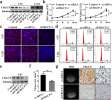
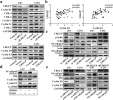
Hong, Qing, Ji et al
Sci Rep (2017) 7 (1), 13470 DOI: 10.1038/s41598-017-14035-2
AI Summary: OriGene products—specifically human RALA/p65, URGCP, and c-myc cDNAs—were used to construct expression plasmids that enabled the investigation of the molecular mechanisms underlying glioma growth in this study.
Snippet: …Human RALA/p65, URGCP and c-myc cDNAs were purchased from OriGene (USA) and inserted into pLenti-C-mGFP vectors. ...;... …Human RALA/p65, URGCP and c-myc cDNAs were purchased from OriGene (USA) and inserted into pLenti-C-mGFP vectors.
miR-133a regulates vitamin K 2,3-epoxide reductase complex subunit 1 (VKORC1), a key protein in the vitamin K cycle
Pérez-Andreu, Teruel, Corral et al
Mol. Med. (2012) 18, 1466-72 DOI: 10.2119/molmed.2012.00062
Pérez-Andreu, Teruel, Corral et al
Mol. Med. (2012) 18, 1466-72 DOI: 10.2119/molmed.2012.00062
Cited by 40
AI Summary: OriGene’s pCMV6-VKORC1 expression reporter plasmid with a c-myc tag was used in this study to assess the direct interaction between miR-133a and the VKORC1 3'UTR in reporter assays.
Snippet: Identified in 1993, microRNAs (miRNAs) are a short class of noncoding RNA molecules (~22 nucleotides [nt]), which bind to the 3′UTR of ... with PmeI and FseI and ligated into an expression reporter plasmid pCMV6-VKORC1 with a c-myc tag (Origene Technologies, Rockville
Showing 1-6 of 6 papers.
Powered by BizGenius
*Delivery time may vary from web posted schedule. Occasional delays may occur due to unforeseen
complexities in the preparation of your product. International customers may expect an additional 1-2 weeks
in shipping.
Related Products
- Price:
- Actual Price:
Welcome to OriGene AI!
I'm your AI-powered guide to everything OriGene.
Ask me anything:
- Product specs
- Ordering help
- Technical questions
- How to find exactly what your experiment needs
Prefer a live agent? Connect with us by clicking the green chat icon, as seen in the image below or email our team at custsupport@origene.com.
