
STING (TMEM173) (NM_198282) Human Tagged ORF Clone

SKU
RC208418
TMEM173 (Myc-DDK-tagged)-Human transmembrane protein 173 (TMEM173), nuclear gene encoding mitochondrial protein

$686.00
In Stock*
Specifications
| Product Data | |
| Type | Human Tagged ORF Clone |
|---|---|
| Target Symbol | STING |
| Synonyms | ERIS; hMITA; hSTING; MITA; MPYS; NET23; SAVI; STING; STING-beta; TMEM173 |
| Vector | pCMV6-Entry |
| E. coli Selection | Kanamycin (25 ug/mL) |
| Mammalian Cell Selection | Neomycin |
| Sequence Data | |
| Chromatograms |
Chromatograms
 Sequencher program is needed, download here |
| Restriction Sites |
SgfI-MluI Cloning Scheme for this gene
|
Plasmid Map

|
| ACCN | NM_198282 |
| ORF Size | 1137 bp |
| OTI Disclaimer | The molecular sequence of this clone aligns with the gene accession number as a point of reference only. However, individual transcript sequences of the same gene can differ through naturally occurring variations (e.g. polymorphisms), each with its own valid existence. This clone is substantially in agreement with the reference, but a complete review of all prevailing variants is recommended prior to use. More info |
| OTI Annotation | This clone was engineered to express the complete ORF with an expression tag. Expression varies depending on the nature of the gene. |
| Components | The ORF clone is ion-exchange column purified and shipped in a 2D barcoded Matrix tube containing 10ug of transfection-ready, dried plasmid DNA (reconstitute with 100 ul of water). |
| Reconstitution Method | 1. Centrifuge at 5,000xg for 5min. 2. Carefully open the tube and add 100ul of sterile water to dissolve the DNA. 3. Close the tube and incubate for 10 minutes at room temperature. 4. Briefly vortex the tube and then do a quick spin (less than 5000xg) to concentrate the liquid at the bottom. 5. Store the suspended plasmid at -20°C. The DNA is stable for at least one year from date of shipping when stored at -20°C. |
| Note | Plasmids are not sterile. For experiments where strict sterility is required, filtration with 0.22um filter is required. |
| Shipping | Ambient |
| Reference Data | |
| RefSeq | NM_198282.4 |
| RefSeq Size | 2223 bp |
| RefSeq ORF | 1140 bp |
| Locus ID | 340061 |
| UniProt ID | Q86WV6 |
| Cytogenetics | 5q31.2 |
| Protein Pathways | Cytosolic DNA-sensing pathway, RIG-I-like receptor signaling pathway |
| MW | 42.2 kDa |
| Summary | This gene encodes a five transmembrane protein that functions as a major regulator of the innate immune response to viral and bacterial infections. The encoded protein is a pattern recognition receptor that detects cytosolic nucleic acids and transmits signals that activate type I interferon responses. The encoded protein has also been shown to play a role in apoptotic signaling by associating with type II major histocompatibility complex. Mutations in this gene are the cause of infantile-onset STING-associated vasculopathy. Alternate splicing results in multiple transcript variants. provided by RefSeq, Sep 2014 |
Reviews


Documents
| Product Manuals |
| FAQs |
| SDS |
Resources
"NM_198282" in other vectors (6)
| SKU | Description | Size | Price | |
|---|---|---|---|---|
| RC208418L1 | Lenti ORF clone of Human transmembrane protein 173 (TMEM173), nuclear gene encoding mitochondrial protein, Myc-DDK-tagged | 10 ug |
$986.00
|
|
| RC208418L2 | Lenti ORF clone of Human transmembrane protein 173 (TMEM173), nuclear gene encoding mitochondrial protein, mGFP tagged | 10 ug |
$986.00
|
|
| RC208418L3 | Lenti ORF clone of Human transmembrane protein 173 (TMEM173), nuclear gene encoding mitochondrial protein, Myc-DDK-tagged | 10 ug |
$986.00
|
|
| RC208418L4 | Lenti ORF clone of Human transmembrane protein 173 (TMEM173), nuclear gene encoding mitochondrial protein, mGFP tagged | 10 ug |
$986.00
|
|
| RG208418 | TMEM173 (tGFP-tagged) - Human transmembrane protein 173 (TMEM173), nuclear gene encoding mitochondrial protein | 10 ug |
$886.00
|
|
| SC321845 | TMEM173 (untagged)-Human transmembrane protein 173 (TMEM173), nuclear gene encoding mitochondrial protein | 10 ug |
$686.00
|
|
Citations
TAX1BP1-dependent autophagic degradation of STING1 impairs anti-tumor immunity
Zhang, Yu, Zeh et al
Autophagy (2025)
Zhang, Yu, Zeh et al
Autophagy (2025)
Cited by 14
Nuclear localization of STING1 competes with canonical signaling to activate AHR for commensal and intestinal homeostasis
Zhang, Yu, Zeh et al
Immunity (2023) 56 (12), 2736-2754.e8 DOI: 10.1016/j.immuni.2023.11.001
Zhang, Yu, Zeh et al
Immunity (2023) 56 (12), 2736-2754.e8 DOI: 10.1016/j.immuni.2023.11.001
Cited by 55
AI Summary: In this study, the OriGene STING1 expression plasmid (RC208418) was used to investigate the nuclear functions of STING1 in regulating AHR activation and intestinal homeostasis.
Snippet: Extensive studies demonstrate the importance of the STING1 (also known as STING) protein as a signaling hub that coordinates immune and autophagic responses to Save;A STING1 expression plasmid (RC208418) was purchased form OriGene, and a PML expression plasmid (370640210600) was obtained from Applied Biological Materials. …
In vitro STING Activation with the cGAMP-STINGΔTM Signaling Complex
He, Hong, Irvine et al
Bio Protoc (2021) 11 (3), e3905 DOI: 10.21769/BioProtoc.3905
He, Hong, Irvine et al
Bio Protoc (2021) 11 (3), e3905 DOI: 10.21769/BioProtoc.3905
Cited by 5
In vitro STING Activation with the cGAMP-STINGΔTM Signaling Complex
He, Hong, Irvine et al
BIO-PROTOCOL (2021) 11 (3) DOI: 10.21769/bioprotoc.3905
He, Hong, Irvine et al
BIO-PROTOCOL (2021) 11 (3) DOI: 10.21769/bioprotoc.3905
Cited by 5
MiR-221 negatively regulates innate anti-viral response
Du, Cui, Li et al
PLoS ONE (2018) 13 (8), e0200385 DOI: 10.1371/journal.pone.0200385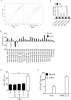
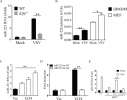
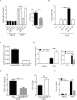
Du, Cui, Li et al
PLoS ONE (2018) 13 (8), e0200385 DOI: 10.1371/journal.pone.0200385
AI Summary: OriGene’s pCMV-MIR MicroRNA Expression Vector was used to clone various miRNAs, enabling functional studies that demonstrated miR-221’s role as a negative regulator in the innate antiviral response.
Snippet: Pcmv5-human ELF4 has been described previously [21]. The plasmids coding human STING, MAVS, TBK1, IRF3, IRF7 and STK38 have been described previously [25]. Various miR-RNAs were cloned into pCMV-MIR MicroRNA Expression Vector (OriGene). RNA interference Cached
The DNA Sensor, Cyclic GMP-AMP Synthase, Is Essential for Induction of IFN-β during Chlamydia trachomatis Infection
Zhang, Yeruva, Marinov et al
J. Immunol. (2014)
Zhang, Yeruva, Marinov et al
J. Immunol. (2014)
Cited by 159
AI Summary: OriGene’s pCMV-cGAS and pCMV-STING cDNA constructs were used in this study to express human cGAS and STING in HEK293T cells, enabling the investigation of their roles in IFN-β induction during Chlamydia trachomatis infection.
Snippet: cDNA constructs for human cGAS (pCMV-cGAS) and STING (pCMV-STING) were purchased from Origene. ... HEK293T transfection and immunoblots HEK293T cells were transfected with pCMV-cGAS (Origene), pCMV- STING (Origene), or pcDNA3.1 vector (60 ng DNA ... Cite SaveSaving
Showing 1-6 of 8 papers.
Powered by BizGenius
*Delivery time may vary from web posted schedule. Occasional delays may occur due to unforeseen
complexities in the preparation of your product. International customers may expect an additional 1-2 weeks
in shipping.
Related Products
- Price:
- Actual Price:
Welcome to OriGene AI!
I'm your AI-powered guide to everything OriGene.
Ask me anything:
- Product specs
- Ordering help
- Technical questions
- How to find exactly what your experiment needs
Prefer a live agent? Connect with us by clicking the green chat icon, as seen in the image below or email our team at custsupport@origene.com.
