
Klhl40 (NM_028202) Mouse Tagged ORF Clone

SKU
MG216861
Klhl40 (tGFP-tagged) - Mouse kelch repeat and BTB (POZ) domain containing 5 (Kbtbd5), (10ug)
-
TrueORF®
TrueORF®
Expression-ready ORF plasmid with C-terminal tag(s)
Click here to learn more.
| Product Data | |
| Type | Mouse Tagged ORF Clone |
|---|---|
| Target Symbol | Klhl40 |
| Synonyms | 2310024D23Rik; Kbtbd5 |
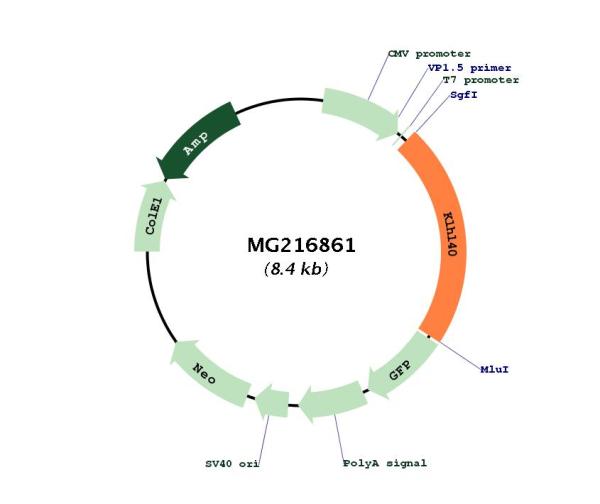
| Vector | pCMV6-AC-GFP |
| E. coli Selection | Ampicillin (100 ug/mL) |
| Mammalian Cell Selection | Neomycin |
| Sequence Data |
ORF Nucleotide Sequence
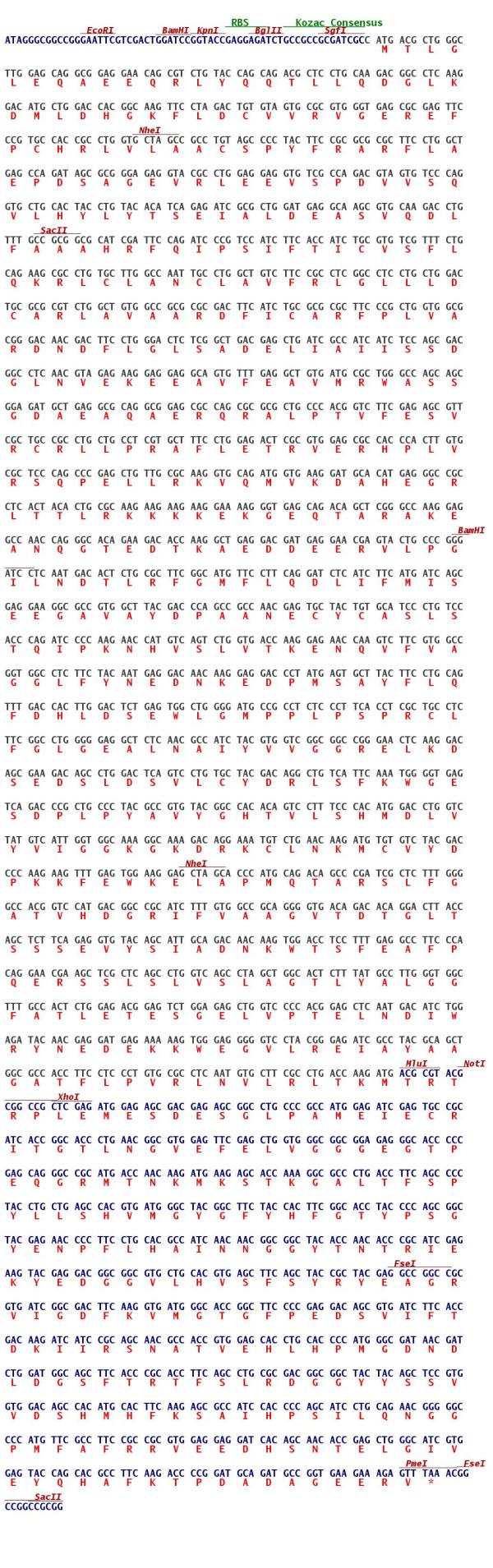
>MG216861 representing NM_028202
Red=Cloning site Blue=ORF Green=Tags(s) TTTTGTAATACGACTCACTATAGGGCGGCCGGGAATTCGTCGACTGGATCCGGTACCGAGGAGATCTGCC GCCGCGATCGCC ATGACGCTGGGCTTGGAGCAGGCGGAGGAACAGCGTCTGTACCAGCAGACGCTCCTGCAAGACGGCCTCA AGGACATGCTGGACCACGGCAAGTTCCTAGACTGTGTAGTGCGCGTGGGTGAGCGCGAGTTCCCGTGCCA CCGCCTGGTGCTAGCCGCCTGTAGCCCCTACTTCCGCGCGCGCTTCCTGGCTGAGCCAGATAGCGCGGGA GAGGTACGCCTGGAGGAGGTGTCGCCAGACGTAGTGTCCCAGGTGCTGCACTACCTGTACACATCAGAGA TCGCGCTGGATGAGGCAAGCGTGCAAGACCTGTTTGCCGCGGCGCATCGATTCCAGATCCCGTCCATCTT CACCATCTGCGTGTCGTTTCTGCAGAAGCGCCTGTGCTTGGCCAATTGCCTGGCTGTCTTCCGCCTCGGC CTCCTGCTGGACTGCGCGCGTCTGGCTGTGGCCGCGCGCGACTTCATCTGCGCGCGCTTCCCGCTGGTGG CGCGGGACAACGACTTCCTGGGACTCTCGGCTGACGAGCTGATCGCCATCATCTCCAGCGACGGCCTCAA CGTAGAGAAGGAGGAGGCAGTGTTTGAGGCTGTGATGCGCTGGGCCAGCAGCGGAGATGCTGAGGCGCAG GCGGAGCGCCAGCGCGCGCTGCCCACGGTCTTCGAGAGCGTTCGCTGCCGCCTGCTGCCTCGTGCTTTCC TGGAGACTCGCGTGGAGCGCCACCCACTTGTGCGCTCCCAGCCCGAGCTGTTGCGCAAGGTGCAGATGGT GAAGGATGCACATGAGGGCCGCCTCACTACACTGCGCAAGAAGAAGAAGGAAAAGGGTGAGCAGACAGCT CGGGCCAAGGAGGCCAACCAGGGCACAGAAGACACCAAGGCTGAGGACGATGAGGAACGAGTACTGCCCG GGATCCTCAATGACACTCTGCGCTTCGGCATGTTCCTTCAGGATCTCATCTTCATGATCAGCGAGGAAGG CGCCGTGGCTTACGACCCAGCCGCCAACGAGTGCTACTGTGCATCCCTGTCCACCCAGATCCCCAAGAAC CATGTCAGTCTGGTGACCAAGGAGAACCAAGTCTTCGTGGCCGGTGGCCTCTTCTACAATGAGGACAACA AGGAGGACCCTATGAGTGCTTACTTCCTGCAGTTTGACCACTTGGACTCTGAGTGGCTGGGGATGCCGCC TCTCCCTTCACCTCGCTGCCTCTTCGGCCTGGGGGAGGCTCTCAACGCCATCTACGTGGTCGGCGGCCGG GAACTCAAGGACAGCGAAGACAGCCTGGACTCAGTCCTGTGCTACGACAGGCTGTCATTCAAATGGGGTG AGTCAGACCCGCTGCCCTACGCCGTGTACGGCCACACAGTCCTTTCCCACATGGACCTGGTCTATGTCAT TGGTGGCAAAGGCAAAGACAGGAAATGTCTGAACAAGATGTGTGTCTACGACCCCAAGAAGTTTGAGTGG AAGGAGCTAGCACCCATGCAGACAGCCCGATCGCTCTTTGGGGCCACGGTCCATGACGGCCGCATCTTTG TGGCCGCAGGGGTGACAGACACAGGACTTACCAGCTCTTCAGAGGTGTACAGCATTGCAGACAACAAGTG GACCTCCTTTGAGGCCTTCCCACAGGAACGAAGCTCGCTCAGCCTGGTCAGCCTAGCTGGCACTCTTTAT GCCTTGGGTGGCTTTGCCACTCTGGAGACGGAGTCTGGAGAGCTGGTCCCCACGGAGCTCAATGACATCT GGAGATACAACGAGGATGAGAAAAAGTGGGAGGGGGTCCTACGGGAGATCGCCTACGCAGCTGGCGCCAC CTTCCTCCCTGTGCGCCTCAATGTGCTTCGCCTGACCAAGATG ACGCGTACGCGGCCGCTCGAG - GFP Tag - GTTTAA
Protein Sequence
>MG216861 representing NM_028202
Red=Cloning site Green=Tags(s) MTLGLEQAEEQRLYQQTLLQDGLKDMLDHGKFLDCVVRVGEREFPCHRLVLAACSPYFRARFLAEPDSAG EVRLEEVSPDVVSQVLHYLYTSEIALDEASVQDLFAAAHRFQIPSIFTICVSFLQKRLCLANCLAVFRLG LLLDCARLAVAARDFICARFPLVARDNDFLGLSADELIAIISSDGLNVEKEEAVFEAVMRWASSGDAEAQ AERQRALPTVFESVRCRLLPRAFLETRVERHPLVRSQPELLRKVQMVKDAHEGRLTTLRKKKKEKGEQTA RAKEANQGTEDTKAEDDEERVLPGILNDTLRFGMFLQDLIFMISEEGAVAYDPAANECYCASLSTQIPKN HVSLVTKENQVFVAGGLFYNEDNKEDPMSAYFLQFDHLDSEWLGMPPLPSPRCLFGLGEALNAIYVVGGR ELKDSEDSLDSVLCYDRLSFKWGESDPLPYAVYGHTVLSHMDLVYVIGGKGKDRKCLNKMCVYDPKKFEW KELAPMQTARSLFGATVHDGRIFVAAGVTDTGLTSSSEVYSIADNKWTSFEAFPQERSSLSLVSLAGTLY ALGGFATLETESGELVPTELNDIWRYNEDEKKWEGVLREIAYAAGATFLPVRLNVLRLTKM TRTRPLE - GFP Tag - V |
| Restriction Sites |
SgfI-MluI Cloning Scheme for this gene
Plasmid Map

|
| ACCN | NM_028202 |
| ORF Size | 1863 bp |
| OTI Disclaimer | The molecular sequence of this clone aligns with the gene accession number as a point of reference only. However, individual transcript sequences of the same gene can differ through naturally occurring variations (e.g. polymorphisms), each with its own valid existence. This clone is substantially in agreement with the reference, but a complete review of all prevailing variants is recommended prior to use. More info |
| OTI Annotation | This clone was engineered to express the complete ORF with an expression tag. Expression varies depending on the nature of the gene. |
| Components | The ORF clone is ion-exchange column purified and shipped in a 2D barcoded Matrix tube containing 10ug of transfection-ready, dried plasmid DNA (reconstitute with 100 ul of water). |
| Reconstitution Method | 1. Centrifuge at 5,000xg for 5min. 2. Carefully open the tube and add 100ul of sterile water to dissolve the DNA. 3. Close the tube and incubate for 10 minutes at room temperature. 4. Briefly vortex the tube and then do a quick spin (less than 5000xg) to concentrate the liquid at the bottom. 5. Store the suspended plasmid at -20°C. The DNA is stable for at least one year from date of shipping when stored at -20°C. |
| Note | Plasmids are not sterile. For experiments where strict sterility is required, filtration with 0.22um filter is required. |
| Shipping | Ambient |
| Reference Data | |
| RefSeq | NM_028202.3, NP_082478.1 |
| RefSeq Size | 2455 bp |
| RefSeq ORF | 1866 bp |
| Locus ID | 72330 |
| UniProt ID | Q9D783 |
| Cytogenetics | 9 F4 |
| Summary | Substrate-specific adapter of a BCR (BTB-CUL3-RBX1) E3 ubiquitin ligase complex that acts as a key regulator of skeletal muscle development (PubMed:25940086). The BCR(KLHL40) complex acts by mediating ubiquitination and degradation of TFDP1, thereby regulating the activity of the E2F:DP transcription factor complex (PubMed:25940086). Promotes stabilization of LMOD3 by acting as a negative regulator of LMOD3 ubiquitination; the molecular process by which it negatively regulates ubiquitination of LMOD3 is however unclear (PubMed:24960163).[UniProtKB/Swiss-Prot Function] |
Write Your Own Review
| Product Manuals |
| FAQs |
| SDS |
| SKU | Description | Size | Price | |
|---|---|---|---|---|
| MC219836 | Klhl40 (untagged) - Mouse kelch repeat and BTB (POZ) domain containing 5 (Kbtbd5), (10ug) | 10 ug |
$637.00
|
|
| MR216861 | Klhl40 (Myc-DDK-tagged) - Mouse kelch repeat and BTB (POZ) domain containing 5 (Kbtbd5) | 10 ug |
$289.00
MSRP
$578.00
MSRP
$578.00
|
|
| MR216861L3 | Lenti ORF clone of Klhl40 (Myc-DDK-tagged) - Mouse kelch repeat and BTB (POZ) domain containing 5 (Kbtbd5) | 10 ug |
$878.00
|
|
| MR216861L4 | Lenti ORF clone of Klhl40 (mGFP-tagged) - Mouse kelch repeat and BTB (POZ) domain containing 5 (Kbtbd5) | 10 ug |
$878.00
|
|
Related Products
Check items to add to the cart or



Citations
*Delivery time may vary from web posted schedule. Occasional delays may occur due to unforeseen
complexities in the preparation of your product. International customers may expect an additional 1-2 weeks
in shipping.