
Pdlim7 (NM_001114088) Mouse Tagged ORF Clone

SKU
MG216070
Pdlim7 (tGFP-tagged) - Mouse PDZ and LIM domain 7 (Pdlim7) transcript variant a, (10ug)
-
TrueORF®
TrueORF®
Expression-ready ORF plasmid with C-terminal tag(s)
Click here to learn more.
| Product Data | |
| Type | Mouse Tagged ORF Clone |
|---|---|
| Target Symbol | Pdlim7 |
| Synonyms | LMP |
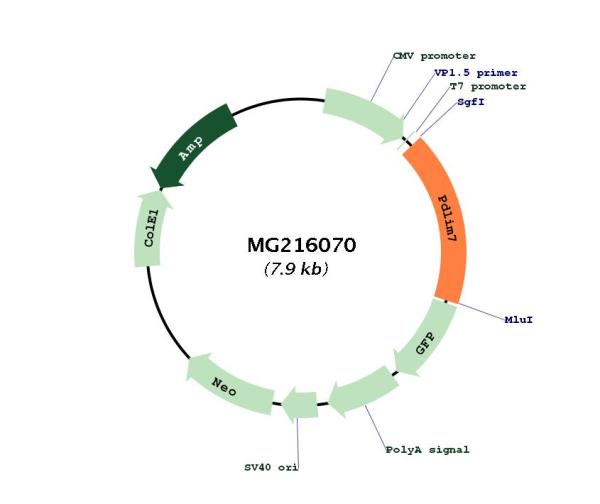
| Vector | pCMV6-AC-GFP |
| E. coli Selection | Ampicillin (100 ug/mL) |
| Mammalian Cell Selection | Neomycin |
| Sequence Data |
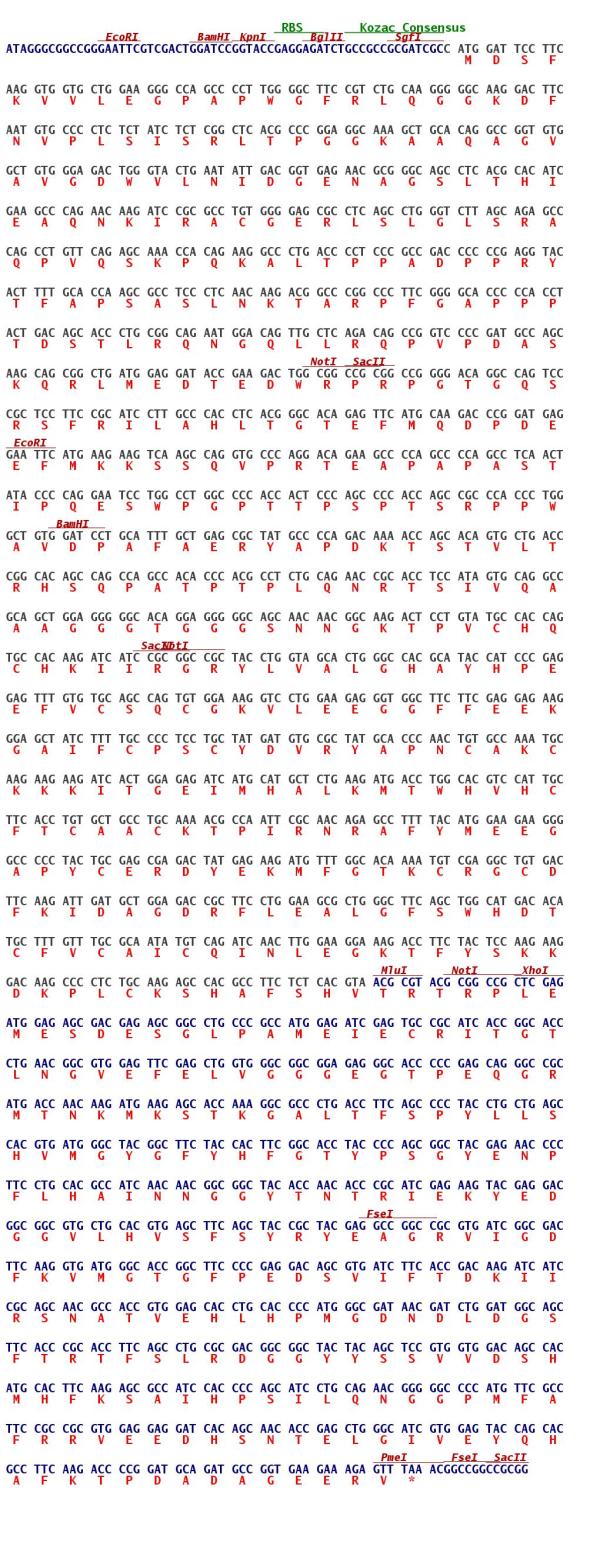
ORF Nucleotide Sequence
>MG216070 representing NM_001114088
Red=Cloning site Blue=ORF Green=Tags(s) TTTTGTAATACGACTCACTATAGGGCGGCCGGGAATTCGTCGACTGGATCCGGTACCGAGGAGATCTGCC GCCGCGATCGCC ATGGATTCCTTCAAGGTGGTGCTGGAAGGGCCAGCCCCTTGGGGCTTCCGTCTGCAAGGGGGCAAGGACT TCAATGTGCCCCTCTCTATCTCTCGGCTCACGCCCGGAGGCAAAGCTGCACAGGCCGGTGTGGCTGTGGG AGACTGGGTACTGAATATTGACGGTGAGAACGCGGGCAGCCTCACGCACATCGAAGCCCAGAACAAGATC CGCGCCTGTGGGGAGCGCCTCAGCCTGGGTCTTAGCAGAGCCCAGCCTGTTCAGAGCAAACCACAGAAGG CCCTGACCCCTCCCGCCGACCCCCCGAGGTACACTTTTGCACCAAGCGCCTCCCTCAACAAGACGGCCCG GCCCTTCGGGGCACCCCCACCTACTGACAGCACCCTGCGGCAGAATGGACAGTTGCTCAGACAGCCGGTC CCCGATGCCAGCAAGCAGCGGCTGATGGAGGATACCGAAGACTGGCGGCCGCGGCCGGGGACAGGCCAGT CCCGCTCCTTCCGCATCCTTGCCCACCTCACGGGCACAGAGTTCATGCAAGACCCGGATGAGGAATTCAT GAAGAAGTCAAGCCAGGTGCCCAGGACAGAAGCCCCAGCCCCAGCCTCAACTATACCCCAGGAATCCTGG CCTGGCCCCACCACTCCCAGCCCCACCAGCCGCCCACCCTGGGCTGTGGATCCTGCATTTGCTGAGCGCT ATGCCCCAGACAAAACCAGCACAGTGCTGACCCGGCACAGCCAGCCAGCCACACCCACGCCTCTGCAGAA CCGCACCTCCATAGTGCAGGCCGCAGCTGGAGGGGGCACAGGAGGGGGCAGCAACAACGGCAAGACTCCT GTATGCCACCAGTGCCACAAGATCATCCGCGGCCGCTACCTGGTAGCACTGGGCCACGCATACCATCCCG AGGAGTTTGTGTGCAGCCAGTGTGGAAAGGTCCTGGAAGAGGGTGGCTTCTTCGAGGAGAAGGGAGCTAT CTTTTGCCCCTCCTGCTATGATGTGCGCTATGCACCCAACTGTGCCAAATGCAAGAAGAAGATCACTGGA GAGATCATGCATGCTCTGAAGATGACCTGGCACGTCCATTGCTTCACCTGTGCTGCCTGCAAAACGCCAA TTCGCAACAGAGCCTTTTACATGGAAGAAGGGGCCCCCTACTGCGAGCGAGACTATGAGAAGATGTTTGG CACAAAATGTCGAGGCTGTGACTTCAAGATTGATGCTGGAGACCGCTTCCTGGAAGCGCTGGGCTTCAGC TGGCATGACACATGCTTTGTTTGCGCAATATGTCAGATCAACTTGGAAGGAAAGACCTTCTACTCCAAGA AGGACAAGCCCCTCTGCAAGAGCCACGCCTTCTCTCACGTA ACGCGTACGCGGCCGCTCGAG - GFP Tag - GTTTAA
Protein Sequence
>MG216070 representing NM_001114088
Red=Cloning site Green=Tags(s) MDSFKVVLEGPAPWGFRLQGGKDFNVPLSISRLTPGGKAAQAGVAVGDWVLNIDGENAGSLTHIEAQNKI RACGERLSLGLSRAQPVQSKPQKALTPPADPPRYTFAPSASLNKTARPFGAPPPTDSTLRQNGQLLRQPV PDASKQRLMEDTEDWRPRPGTGQSRSFRILAHLTGTEFMQDPDEEFMKKSSQVPRTEAPAPASTIPQESW PGPTTPSPTSRPPWAVDPAFAERYAPDKTSTVLTRHSQPATPTPLQNRTSIVQAAAGGGTGGGSNNGKTP VCHQCHKIIRGRYLVALGHAYHPEEFVCSQCGKVLEEGGFFEEKGAIFCPSCYDVRYAPNCAKCKKKITG EIMHALKMTWHVHCFTCAACKTPIRNRAFYMEEGAPYCERDYEKMFGTKCRGCDFKIDAGDRFLEALGFS WHDTCFVCAICQINLEGKTFYSKKDKPLCKSHAFSHV TRTRPLE - GFP Tag - V |
| Restriction Sites |
SgfI-MluI Cloning Scheme for this gene
Plasmid Map

|
| ACCN | NM_001114088 |
| ORF Size | 1371 bp |
| OTI Disclaimer | The molecular sequence of this clone aligns with the gene accession number as a point of reference only. However, individual transcript sequences of the same gene can differ through naturally occurring variations (e.g. polymorphisms), each with its own valid existence. This clone is substantially in agreement with the reference, but a complete review of all prevailing variants is recommended prior to use. More info |
| OTI Annotation | This clone was engineered to express the complete ORF with an expression tag. Expression varies depending on the nature of the gene. |
| Components | The ORF clone is ion-exchange column purified and shipped in a 2D barcoded Matrix tube containing 10ug of transfection-ready, dried plasmid DNA (reconstitute with 100 ul of water). |
| Reconstitution Method | 1. Centrifuge at 5,000xg for 5min. 2. Carefully open the tube and add 100ul of sterile water to dissolve the DNA. 3. Close the tube and incubate for 10 minutes at room temperature. 4. Briefly vortex the tube and then do a quick spin (less than 5000xg) to concentrate the liquid at the bottom. 5. Store the suspended plasmid at -20°C. The DNA is stable for at least one year from date of shipping when stored at -20°C. |
| Note | Plasmids are not sterile. For experiments where strict sterility is required, filtration with 0.22um filter is required. |
| Shipping | Ambient |
| Reference Data | |
| RefSeq | NM_001114088.2, NP_001107560.1 |
| RefSeq Size | 2636 bp |
| RefSeq ORF | 1374 bp |
| Locus ID | 67399 |
| UniProt ID | Q3TJD7 |
| Cytogenetics | 13 B1 |
| Summary | May function as a scaffold on which the coordinated assembly of proteins can occur. May play a role as an adapter that, via its PDZ domain, localizes LIM-binding proteins to actin filaments of both skeletal muscle and nonmuscle tissues. Involved in both of the two fundamental mechanisms of bone formation, direct bone formation (e.g. embryonic flat bones mandible and cranium), and endochondral bone formation (e.g. embryonic long bone development). Plays a role during fracture repair. Involved in BMP6 signaling pathway (By similarity).[UniProtKB/Swiss-Prot Function] |
Write Your Own Review
| Product Manuals |
| FAQs |
| SDS |
| SKU | Description | Size | Price | |
|---|---|---|---|---|
| MC216151 | Pdlim7 (untagged) - Mouse PDZ and LIM domain 7 (Pdlim7), transcript variant a, (10ug) | 10 ug |
$503.00
|
|
| MR216070 | Pdlim7 (Myc-DDK-tagged) - Mouse PDZ and LIM domain 7 (Pdlim7), transcript variant a | 10 ug |
$289.00
MSRP
$457.00
MSRP
$457.00
|
|
| MR216070L3 | Lenti ORF clone of Pdlim7 (Myc-DDK-tagged) - Mouse PDZ and LIM domain 7 (Pdlim7), transcript variant a | 10 ug |
$757.00
|
|
| MR216070L4 | Lenti ORF clone of Pdlim7 (mGFP-tagged) - Mouse PDZ and LIM domain 7 (Pdlim7), transcript variant a | 10 ug |
$757.00
|
|
Related Products
Check items to add to the cart or



Citations
*Delivery time may vary from web posted schedule. Occasional delays may occur due to unforeseen
complexities in the preparation of your product. International customers may expect an additional 1-2 weeks
in shipping.